


By Mark McLaughlin ·
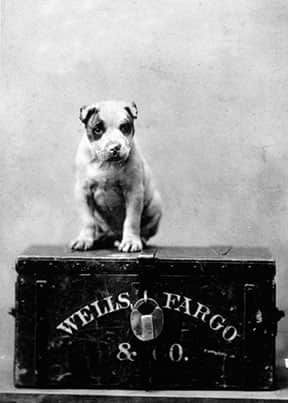
On May 15, 1894, veteran Southern Pacific Det. Len Harris was shot and killed by Anthony Azoff, an unemployed sign painter who had decided to rob the Boulder Creek train depot in Santa Cruz County. An informant named George Sprague had alerted the Railroad Company about the robbery attempt planned by Azoff for the following evening, so Southern Pacific dispatched Detectives Leonard Harris and William Kelly to the office of Santa Cruz County Sheriff Jesse Cope.
As Azoff and Sprague sneaked into Boulder Creek, Harris, Kelly and a local constable, Isaiah Hartman, were hiding inside an empty boxcar that had been placed on the tracks in front of the depot. Thanks to the information provided by Sprague, the lawmen had the element of complete surprise and a decisive advantage in firepower. Now, all they had to do was wait.
At 8:10 p.m., Azoff, Sprague and an unidentified third accomplice approached the depot from the north. All three were wearing masks, but only Azoff entered the Wells Fargo office waiting room. The other two men waited outside on the deserted depot platform. As Azoff silently slipped inside the office, the bold bandit pulled a huge, six-shooter out from under his coat. The old-fashioned Colt revolver was 14 inches long and loaded with .44 caliber slugs that could blow a hole through a wooden door. Azoff immediately leveled the fearsome pistol at Wells Fargo agent William Gass and ordered, “Throw up your hands!” Azoff then tossed an empty sack at Gass and told him, “You take this bag and put all the money you have in it, and be damn lively about it, too!”
Gass had just started stuffing cash into the bag when Det. Harris advanced to the outside door behind Azoff and called out in a loud voice: “Hold up your hands and surrender, as you are surrounded!” But instead of obeying Harris, Azoff wheeled around quickly and opened fire on the veteran detective. The robber fired several times in rapid succession, working the pistol as skillfully as an expert cowboy. He fired the first shot through the door that separated him from Harris, and then, leaping to a window, fired two more rounds before the detective could use his own weapon.
Two bullets struck Harris in the abdomen and the wounded detective collapsed to the floor with a groan. The whole event took less than 10 seconds, so by the time Det. Kelly and Constable Hartman reached the scene, Azoff had hit the street running north toward Boulder Creek Bridge. Kelly shot several rounds at the fleeing assailant and Hartman fired his shotgun, but Azoff escaped into the darkness. The two officers then opened fire on George Sprague, who was still out on the depot platform.
For some reason, Det. Harris had not told the other officers that Sprague was the informant and not to be harmed. Sprague threw up his hands protesting his innocence and was quickly handcuffed by the officers. Despite being mortally wounded, Harris was able to confirm Sprague’s identity as the secret informant and he was released from custody. The mysterious unknown third accomplice had vanished; Sprague claimed he had never gotten a good look under the man’s mask.
News of the shooting quickly reached Southern Pacific’s General Superintendent J.A. Fillmore in San Francisco, who immediately ordered a special train to rush the critically injured detective to a hospital in Oakland. Harris, however, insisted that they take him to his daughter’s house in Alameda where a team of doctors attempted to save his life. Family members and friends prayed for Harris, many of them remembering when a train robber shot and nearly killed the veteran lawman in September 1891. Tragically, this time Len Harris couldn’t overcome his injuries and he lapsed into a coma and died around midnight on May 16.
Word of the murder quickly spread. Lawmen in Santa Cruz, Sacramento and San Francisco were alerted by telegraph to be on the lookout for the killer, Anthony Azoff. He was described as a 35-year-old male of Russian origin who stood 5 feet 9 inches tall and weighed 160 lbs. He sported a long, drooping mustache and was considered armed and extremely dangerous.
Despite the fact that Azoff had only an hour head start before the first posse hit the road behind him, he was nowhere to be found. Finally, on May 18, a cyclist reported seeing someone matching Azoff’s description walking on the road to San Jose. The man was wearing a waist belt loaded with large revolver cartridges and carrying a long, old-fashioned pistol. It was dark when two policemen spotted Azoff, leveled their weapons at his head and arrested him.
Before getting locked in the county jail, Azoff was taken to a packed courtroom for a preliminary hearing where several respectable citizens identified him as Anthony Azoff and he admitted to being the murderer. Azoff stood before the judge with a cynical smile on his face, but when he turned his head and saw the angry crowd he began to look a little nervous. At the trial on June 25, George Sprague’s testimony convinced the jury that Azoff had planned the robbery, while Agent Gass identified Azoff as the man who had attempted to hold him up and had shot Det. Harris. It took the jury just 45 minutes to find Azoff guilty of first-degree murder, a conviction that carried a mandatory death penalty. Despite the guilty verdict and death sentence, Azoff continued to project a cocky and defiant attitude as he was led off to San Quentin Prison for a short stint on death row.
Azoff’s execution was set for Sept. 12, 1894, but repeated legal appeals by his lawyer delayed it until June 7, 1895. On the morning of hanging day, Azoff marched up to the gallows with his head held high, despite being heavily manacled. Among the spectators was young Jack Harris, there to witness the hanging of his father’s murderer.
The executioner carefully fixed the knot of the noose around Azoff’s neck and then slipped a black hood over the prisoner’s head. Just before the trap door snapped open, Azoff called out in a loud voice, “Good-bye, boys. Here goes a brave man.” The violent defiance of Anthony Azoff had finally been extinguished by a hangman’s noose.
Tahoe historian Mark McLaughlin is a nationally published author and professional speaker. His award-winning books are available at local bookstores or at thestormking.com. You may reach Mark at mark@thestormking.com. Check out his blog at tahoenuggets.com.


