


Editor’s Note: This is the fifth part in a series covering the tourism impacts that locals and visitors alike have experienced this summer. Read more in the series:
Part I, “Tahoe’s tourism tipping point,”
Part II “Grappling with garbage & grievances,”
Part III, “Trash kills bears,”
and Part IV “Microplastics: Tahoe’s tiniest trash.”
Read the February 2021 followup to the original series:
“Tahoe’s trash trouble continues.”
The skies in the Tahoe Sierra has been blanketed by an orange post-apocalyptic haze. The air quality has been unhealthy for weeks. People are on edge, not just from COVID, but from the massive number of wildfires burning in California and the West. Campfires, fire pits and charcoal grills are banned. National forests are shut down, and the state is on fire.
“It’s not if there is a fire but when.”
–Christina Restaino
An empty backpack sits unfilled by my closet. I’ve yet to put together an emergency go-bag and think I really need a plan if a fire breaks out. All it takes is one ember from a grill, a cigarette butt thrown on the ground or a couple that wants to reveal the gender of their child with a pyrotechnic display to set the forest in flames.
Download the Wildfire Evacuation Checklist
Fires started earlier than usual this year. According to the California Department of Forestry and Fire Protection, 7,900 wildfires have burned more than 3.3 million acres in California this year to date. Fire season generally peaks in the fall when the environment is at its driest.
When weather conditions indicate wildfires could occur, the National Weather Service issues Red Flag Warnings for communities to be prepared for extreme fire behavior that may happen within 24 hours. Red Flag Warnings are issued when there is a combination of warm temperatures, low humidity and strong winds. The Tahoe Sierra has seen a large number of Red Flag Warnings issued for the area since August.
Along with the damage that fires can bring to forests and communities, air quality from these fires has been hazardous. The AQI (Air Quality Index) measures the quality of the air and the higher the number the greater the level of air pollution and the greater the health concern. The scale runs from 0 to 500, with 500 being life-threatening.

The Tahoe Sierra’s AQI has been abysmal. It has averaged 170 in Truckee for weeks and in Tahoe Vista hit 400. At these levels, it is best to remain indoors with windows closed and not exercise outdoors. Smoke can cause eyes to burn, a searing sensation in the throat, headaches and for some people, severe respiratory issues.
Fighting fires falls to many local, state and national agencies and fire districts including the Tahoe Fire and Fuels Team and the Tahoe Living With Fire program that focus on fire preparedness and prevention.
The Tahoe Fire and Fuels Team, an interagency collaborative working group, was formed
after the Angora Fire in 2007 on the South Shore of Lake Tahoe. The group is proactive about fuel management in the Tahoe Basin, works with Tahoe Living with Fire and provides information and resources for fire prevention and preparedness. The team consists of representatives of Tahoe Basin fire agencies, CAL FIRE, Nevada Division of Forestry, University of California and Nevada Cooperative Extensions, the Tahoe Regional Planning Agency, the U.S. Forest Service, conservation districts from both states, the California Tahoe Conservancy, and the Lahontan Regional Water Quality Control Board.

The Tahoe Living With Fire program’s emphasis is to educate and help homeowners, residents and communities prepare for wildfire. This includes how to create defensible space, how to retrofit a home for wildfire, how to evacuate livestock and animals. And, they also educate people about the role that fire plays in the ecosystem.
“We live in a fire-prone ecosystem,” says Christina Restaino, director of Tahoe Living With Fire.
A series of dry lightning strikes over the last month have started many fires in California and in the Tahoe Sierra. Restaino explains that historically lightening is what causes many of the fires in mixed conifers forests. There are three kinds of fires: Ground fires usually started by lightning and burns on or below the forest floor where dead vegetation becomes dry enough to burn. Surface fires, which are the most common, burn along the forest floor and move slowly, killing or damaging trees. Crown fires that spread rapidly by wind and move quickly by jumping along the tops of trees. Fire feeds on fuel on the forest floors from pine needles, pinecones, dead logs, bark and small trees. When the forest floors burn, small trees catch fire and create what is called ladder fuels, which can jump to the forest’s canopy.
“Fires are burning at high severity, making the fires run faster, and creating more damage ecologically, and to human life, property and health. Climate change is a part of this, too, and it’s a very significant one. We are getting these hotter temperatures, and when the temperatures are hotter, the relative humidity is also lower. The fuels on the forest floor are drying quicker and earlier in the season,” explains Restaino.

Being in a drought year hasn’t helped the wildfire situation and scientists say that fire seasons are growing longer in the West.
“It’s becoming a longer fire season and starting earlier. It’s directly tied to changes in the timing of spring snowmelt runoff and why these conditions are becoming so explosive for wildfires,” says Restaino.
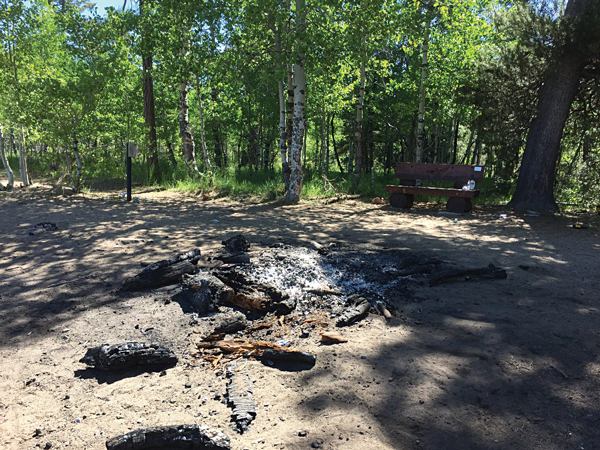
The cause of some of the fires currently burning in California remains undetermined and are still awaiting investigation. Restaino, however, admits that often it’s an illegal campfire that has escaped and with so many more people in the Tahoe Sierra that fire danger has increased. And, these fires are often fast-moving and destructive.
Restaino says the fire danger has increased this summer due to the growing number of visitors using the outdoors for recreation in the Tahoe Sierra. She admits that the organization struggles with getting its message to second homeowners and to vacationers. It puts together outreach campaigns, uses social media, puts up banners and posters, and typically hosts events.
“It’s hard to message, especially for people that don’t live in the mountains,” says Restaino. Educating people that don’t live in the Tahoe Sierra needs to be addressed, she says, noting that cigarettes, bonfires, illegal campfires and fireworks are a few of the things that people from urban areas don’t realize can spark a raging fire in the forests.
Preventing wildfires remains essential throughout fire-prone regions like the Tahoe Sierra, which includes staying informed on local conditions, creating defensible space around homes, adhering to burn bans that are in effect now, complying with restrictions during Red Flag Warnings and disposing of cigarette butts properly.
Restaino says it’s important to be proactive, prepared and knowledgeable about the dangers of fire, even when on vacation. She recommends Twitter as one of the best sources to follow when it comes to fire updates. Follow hashtags of the fires in the area and the local sheriff or police department. She also suggests signing up for Reverse 911, an alert notification system used for emergency alerts, and to tune in to local radio stations and listen for instructions.
“It’s not if there is a fire but when,” says Restaino.
Defensible space
Defensible space is essential to mitigate wildfires, says Restaino. Many fire districts will inspect residential properties free of charge and identify areas to improve defensible space, including having trees and shrubs at least 30 feet from a home.
“Sixty to ninety percent of homes burned are burned from ember exposure and not from active flames approaching the house. Embers are generated from lack of good defensible space, like woodpiles next to your home or hundreds of pinecones around your house or shrubs under the window,” explains Restaino.
Other prevention measures include using well-irrigated perennials in landscaping or using low-growing or non-woody deciduous plants; creating islands of plants with space between; creating separation between layers of vegetation; and avoiding the use of mulch as it is combustible.
As well, homeowners should eliminate ladder fuel, which includes ground vegetation that could allow fire to climb from the ground to trees like tall grasses, shrubs or low-hanging tree branches. The Tahoe Living Fire website, tahoelivingwithfire.com, provides detailed information on defensible space measures.
Plan for fire when camping
Whether camping in a developed area or in the back country, make sure to have a plan in the event of a fire. Look at the weather forecast before leaving, check to see if there’s a Red Flag Warning and determine which direction are the winds coming from. Explore the ingress and egress of the camp area to make sure there is a way to get out. And be sure to apply for a permit in Forest Service areas so rescuers know where to look in case of an emergency.
Prepare for evacuation
Have a plan and leave early. Stay informed and if you can’t get out from your neighborhood or campsite, consider getting into a water body. Wear only cotton or wool clothes, including long pants, a long-sleeved shirt or jacket, a hat and boots. Carry gloves, a face covering, water to drink and goggles. Keep your cell phone, a flashlight and portable radio with you at all times. Have enough water in the car for three days.
Make sure to have an emergency go bag ready for evacuation and pack the car when fire warnings are issued.
Banned
- Campfires
- Fire pits & recreational fires
- Charcoal grills
- Burning debris
- Target shooting in some locations
- Fireworks
- All fire during Red Flag Warnings including gas grills and smokers
Be prepared
Air quality index | airnow.gov
Cal Fire | fire.ca.gov
Incident Information System fire tracking | inciweb.nwcg.gov
Reverse 911 | smart911.com
Tahoe Fire and Fuels Team | fireadaptednetwork.org
Tahoe Living With Fire | tahoelivingwithfire.com
Emergency evacuation kit | redcross.org or ready.gov/kit
U.S. Forest Service | fs.usda.gov
Sign up for emergency alerts
City of South Lake Tahoe | cityofslt.us
Douglas County | douglascountynv.gov
El Dorado County | ready.edso.org
Nevada County | mynevadacounty.com
Placer County | placer.ca.gov
Town of Truckee Nixle alerts | local.nixle.com
Washoe County | washoecounty.us
To-Go Bag essentials
- Important documents (bank, IRS, trust, investment, insurance policy, birth certificates, medical records)
- ATM, credit and debit cards
- Driver’s license
- Passport
- Medications
- Prescription glasses
- Cell phone and charger
- Computer backup files and computer
- Inventory of home contents (consider making a video inventory now)
- Photographs of the exterior of the house and landscape
- Personal toiletries
- Enough clothing for 3-5 days
- Family heirlooms, photo albums and videos
- 1 gallon of water per person for 3 days
- 3 day supply of food for each person
- Pet food, carrier and medications
- Photos of cars and each person and pet in the family
- Battery-powered or hand-cranked radio and a NOAA Weather Radio with tone alert and extra batteries for both
- Flashlight and extra batteries
- First aid kit & first ad book
- Whistle to signal for help
- Camping bags for each person, tents and gear for shelter
- Moist towelettes, garbage bags and plastic ties for personal sanitation
- Wrench or pliers to turn off utilities
- Can opener for food
- Local road map
- Complete change of clothing including a long-sleeved shirt, long pants and sturdy shoes. Consider additional clothing for cold weather
- Fire extinguisher
- Matches in a waterproof container
- Mess kits, paper cups, plates and plastic utensils, paper towels,
- Paper and pencil
- Books, games, puzzles or other activities for children


