


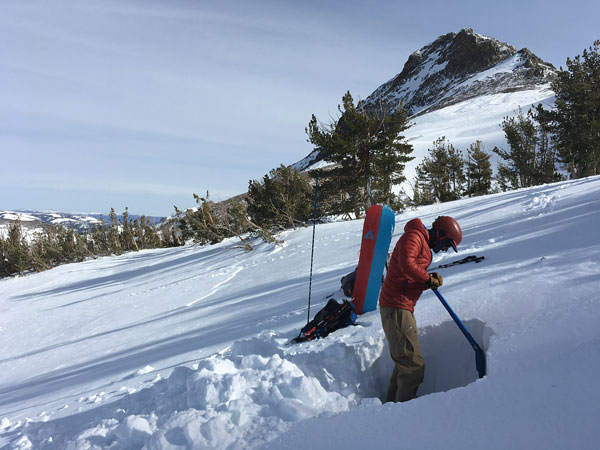
Endless sheets of untouched white spread across magnificent mountain vistas with only you and a few friends to claim it. It’s a back-country dream that has lured many to the Sierra Nevada in search of solitude, serenity and adventure.
But what is the risk? And how does one prepare for it?
This winter season, as coronavirus limits capacity at area ski resorts, back-country travel is predicted to soar in the Tahoe Sierra. If you are new to off-piste winter exploration, it is essential to understand some basic information that is critical to every safe and successful outing. Otherwise, your back-country fantasy could soon become a dangerous situation for everyone involved.
What is the back country?
In a nutshell, back-country travel means moving through any area that is not maintained or supervised by resorts or other entities. In the back country, your safety is 100 percent reliant on yourself and those with whom you are traveling. There is no ski patrol and even if you are able to reach emergency services by phone or radio, search and rescue may be many hours away.
Back-country travel is a commitment both in terms of risk and preparation. While the rewards of tranquility, fresh powder and communion with nature are immense, the potential hazards are equally real.
You can spend decades perfecting these skills, but there are a few basics everyone should know before stepping foot into the winter wilderness. One of the most important things is you must already be an expert-level downhill skier before you tackle back-country skiing.
We’ve put together a handful of simple concepts to help you plan any potential back-country travel this year, including area-specific recommendations for gear, training, guide services, avalanche awareness and more.
Get the gear
Safe back-country travel requires a unique set of equipment that may be purchased at a number of area sports shops. Rather than buying online, it’s always a good idea to support a local vendor. Their knowledgeable staff will also help you find the right gear for your needs and provide an invaluable local perspective on how to prepare for the Tahoe Sierra back country. They also offer demos and rentals for those looking to give it a try before committing to a big purchase.
Back-country travel options
You won’t get far through the Tahoe Sierra’s snowy back-country on your feet alone. Just ask the Donner Party. Here are the most common options for accessing winter recreation outside of a resort.
Alpine touring skis | This is the most popular choice for back-country winter mountain travel today. When paired with climbing skins, this setup features a detachable rear binding that allow skiers to hike uphill in order to access the mountains. The heel can be resecured when it’s time to go downhill for normal alpine turns.
Telemark skis | This old school touring setup is now more of a niche sport. The skis are the same, but the binding features a permanently free heel. You’ve probably seen them on the mountain styling their unique dropped-knee turns.
Splitboard | Basically, it’s a snowboard that breaks in half to form two skis for uphill travel. Thanks to local advocates such as Jeremy Jones, splitboards have soared in popularity in recent years. After all, there’s no feeling quite like snowboarding through untouched powder and earning your turns is the best way to get there.
Cross-country skis | Perfect for trails, but difficult to use on deep snow or steep pitches, you probably won’t venture too far from the beaten path on cross-country skis. However, they are a light, simple option for exploring mellower areas closer to home.
Snowshoes | Tried and true, the original back-country mode of travel is easy to use. Although not as efficient as skis, these classic tools can take you to many special, untouched places if you’re willing to put in the effort. If you are new to the game and looking to explore the back country with minimal hassle, this is the way to go.
Snowmobiling | In addition to having all the safety gear and training, you’ll also need to be an expert-level snowmobiler already before you venture into the back country. As well, you also need to be your own mechanic. There’s no one to call if your sled breaks down.
Essential safety gear
While hypothermia and trauma from collision with a tree are always risks, the biggest hazard of the back country comes in the form of an avalanche. According to avalanche.org, there were 23 fatalities by avalanche in the United States during the 2019-20 winter season. The following gear is essential to keep safe in avalanche terrain – if you know how to use it.
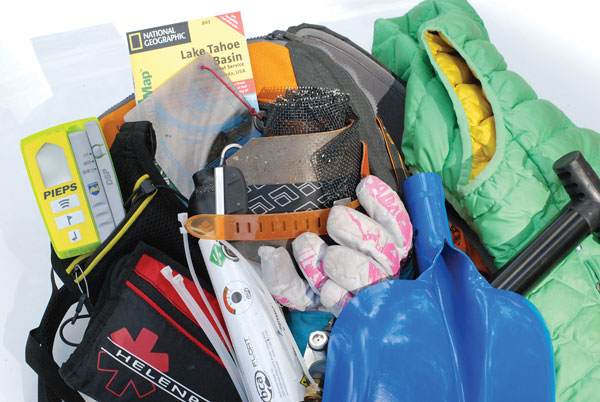
Beacon | When someone is buried in an avalanche, a signal beacon can lead rescuers to their location. This specialized equipment requires proper training and hours of practice to use effectively in a situation where seconds can mean the difference between life and death.
Probe | This collapsible pole allows rescuers to pinpoint the location of a burial victim. It can also be used to indicate various layers and depth of snowpack.
Shovel | This is the essential tool for digging out a buried skier. It also comes in handy when accessing avalanche conditions during ascent and digging a snow cave if you happen to be caught in the back country overnight.
Airbag pack | More and more back-country users are wearing backpacks that contain an inflatable pouch that can be deployed in the event of an avalanche to help keep them afloat and protect their head and neck from deadly impact.
Climbing skins | These grippy sheets of fabric stick to the bottom of your alpine touring skis or splitboard to allow for uphill travel in variable conditions.
In addition to sport-specific gear, all back-country travelers should be prepared at minimum with warm layers, water, high-calorie food, a headlamp, a helmet, a communication device (not a cell phone; there is no service in the back country) and a first aid kit.
Get the training
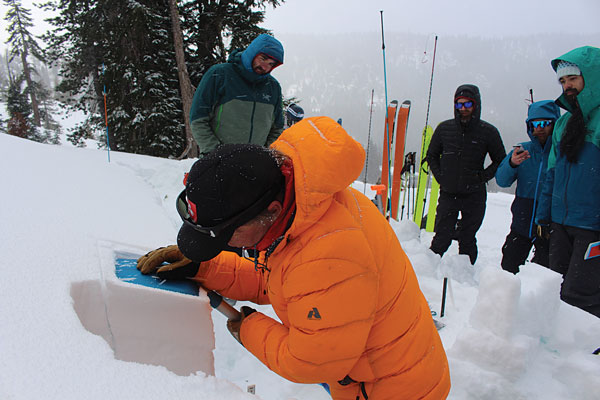
The best gear in the world isn’t worth much if you don’t know how to use it. Several area guide services offer avalanche training and guided back-country tours. It’s an investment well-worth making, especially when life and limb are in the mix.
These courses will teach you how to recognize avalanche terrain, access the risk and respond in the event of an emergency. A number of local nonprofit groups and professional guide services, including several downhill ski areas, offer American Institute of Avalanche Research and Education (AIARE)-certified training along with introduction to back-country skiing and splitboarding excursions in the Tahoe Sierra. There are also snowmobile-specific avalanche courses available. Call early as courses for the 2020-21 season are filling up fast. Find local courses at avtraining.org.
Events
Tahoe Backcountry Safety Awareness Week | Until Dec. 18
Daily video series & live virtual panel Dec. 17 at 7 p.m.
Free | takecaretahoe.org/backcountry
Backcountry Film Festival | Until Dec. 31
Benefits Tahoe Backcountry Alliance | winterwildlands.org
Check the conditions
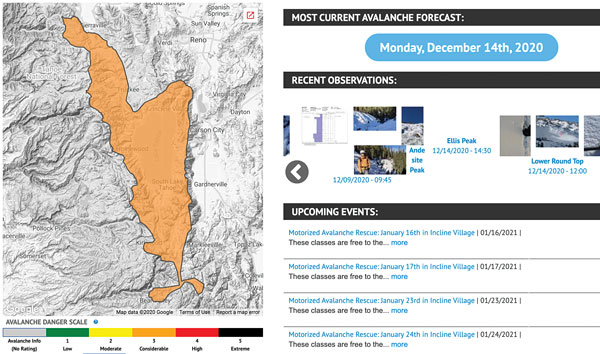
Sierra Avalanche Center is the No. 1 resource for current back-country conditions in the Tahoe Sierra. Their daily avalanche report is issued by 7 a.m. each day with an up-to-date danger scale and general conditions available on their website or sign up for the daily report by email. They also maintain a database of observations and incidents from throughout the region. Back-country users may also submit their observations to Sierra Avalanche Center online.
Keep in mind this information is merely a guidepost; conditions are constantly changing depending on time and location. It’s up to you to access conditions on the ground as you travel through the back country and plan your expedition accordingly.
Get involved
The Tahoe Sierra is fortunate to have a strong back-country community that works hard to share information and fundraise for important projects. Here are a couple of local programs that offer training, information and the opportunity to meet like-minded adventurers.
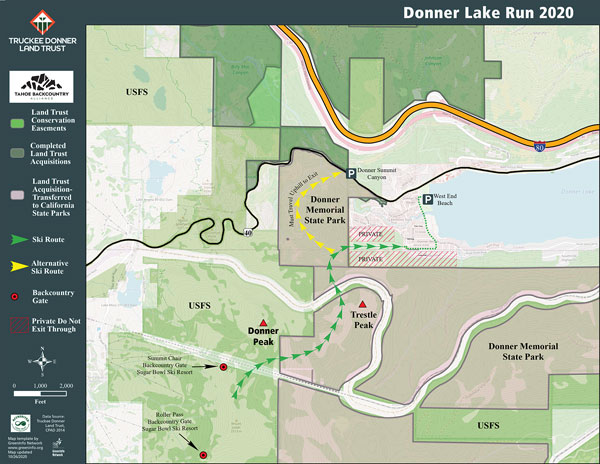
Tahoe Backcountry Alliance | As the voice of the human-powered winter back-country community, the Alliance’s mission is to advocate for and inform the community on critical issues affecting winter back-country recreation in an around Lake Tahoe. In the past year, they have secured parking for the iconic Donner Lake Run on Donner Summit, implemented a micro-transit shuttle program on the West Shore, formed plans to install a trailhead counter program, and helped organize the Tahoe Backcountry Awareness Week through Dec. 18 to educate the public about the dangers of the back country and why training is imperative before you go.
Tahoe Backcountry Women | Tahoe Backcountry Women is a Facebook group for women in the Tahoe region to network for the purpose of sharing experiences about back-country skiing. It sponsors events throughout the winter to seek to gather women together and promote education about back-country skiing.
Resources
AIARE courses | avtraining.org
Avalanche information & education | avalanche.org
Sierra Avalanche Training Center | sierraavalanchecenter.org
Sno-Park Permits | (916) 324-1222, ohv.parks.ca.gov
Tahoe Backcountry Alliance | tahoebackcountryalliance.org
Tahoe Backcountry Women | Facebook
Where to go
The Tahoe Sierra is known for its endless supply of back-country exploration. You could ski here for a lifetime and never take the same line twice. If you’ve taken the time to prepare and train, there are a number of locations that can be great for first-time personal outings.
Please note, that while the zones listed below are popular with beginners, they are by no means inherently safe. Many back-country travelers have been rescued here, and some have died. We cannot stress enough the importance of seeking adequate guidance before venturing into any back-country area.
Skiers and snowboarders should be experts riders already before attempting to ski any back-country line. In addition, we always recommend going with a local guide service as weather and terrain can change quickly in the remote Sierra Nevada.
Many areas require Sno-park passes, which may be purchased online from the California Highway Department or from local shops.
Sunrise Bowl | This low-angle bowl above Tahoe Donner in Truckee is a fantastic spot for getting the hang of your backcountry skills. From the trailhead atop Glacier Way head for the ridgeline before descending to Ski Slope Way.
Mount Rose Highway | Mount Rose Wilderness is a vast winter playground between Incline Village and Reno, Nev. A popular beginner option is to park at the summit for snow play near the highway. Skiers seeking the bowls of Tamarack Peak park a bit further east by the first big switchback. While this zone has been a first-time tour for many folks, it has also seen major avalanches.
Castle Peak | Park at the Sno-park at the Castle Peak exit off Interstate 80 to access the trail in Castle Peak Wilderness. A steady climb leads to the ridge line and the Pacific Crest Trail where numerous options await. This area high on Donner Summit has been the site of multiple rescues over the years and is easy to get lost once you leave the trail. As always, be prepared and make conservative decisions.
Blackwood Canyon | This relatively flat canyon becomes steeper as you go is easily accessed from the Sno-park south of Tahoe City. It is a popular spot for snowmobilers and cross-country skiers.
Waterhouse Peak | From the summit of Luther Pass, this South Lake tour features world-class tree skiing in relatively moderate avalanche terrain. The twin summits offer mellow runs, old growth forest, amazing views and an easy 1,500-foot climb.


