


Courtesy Tahoe Backcountry Alliance
Get educated | If you really want to get into the backcountry, you need to take a class.
Get your friends educated | Make sure everyone in your party has taken an AIARE Avy 1 and Avy Rescue course. Does your group have the skills to safely recreate and self-rescue should something go wrong? Seems obvious, but do you know if everyone in your group can ski in variable terrain and deep pow?
Prepare to be self-reliant | Bring the equipment and skills you need to take care of yourself and others in the event of gear malfunction, accident or an emergency. This includes Wilderness First Aid Skills.
Check the weather & avalanche forecast | Plan your trip in advance; let somebody know where your group is headed. Does the weather look good where you’re going? Will conditions change while you’re out there? Check the Sierra Avalanche Center forecast daily.
Be safe | Follow safe back-country travel protocol. Do a beacon check before you enter avalanche terrain, make snowpack observations, know your group’s limits, don’t ski directly above or below parties in avalanche terrain. Be prepared to adjust your expectations and plans for the day when conditions change.
Be respectful | Pack out your trash, control your dog, limit loud music and excessive noise, and think about where you go to the bathroom.
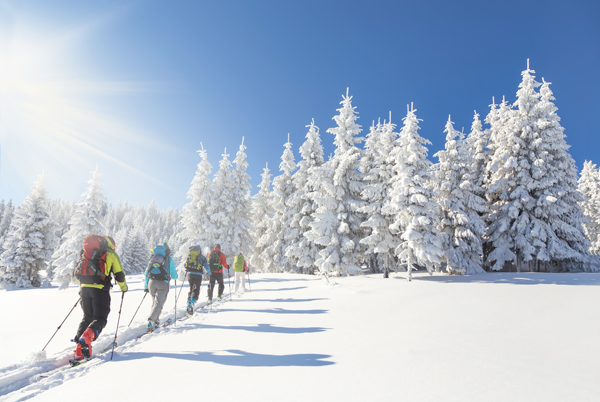
Be courteous going uphill | Set an efficient, user friendly and safe skin track. If there’s already a safe, established skin track, don’t create new, unnecessary routes to the same destination. Please don’t boot in the skin track and try to build a skin track around (rather than in) the descent line (if it is safe to do so).
Be safe going uphill | Ascend single file, yield to downhill traffic, control your dog, give people space, wear a headlamp for visibility if it’s dark, avoid travel near cliffs, in gullies or in terrain where a downhill skier can’t see you.
Observe closures & back-country access rules | Each forest, state park or wilderness zone may have its own rules and regulations. Educate yourself about the zone you are headed into. Be especially aware of avalanche control work on roadways and in and around ski areas.
Practice | Find safe places to hone your skills before heading into bigger terrain. Practice with your avalanche transceiver multiple times, work on your skinning (and skiing) technique, build fitness and test out your gear before you head out into the back country. Meadows are great practice zones.
Think before you park | Should you park parallel, angled or perpendicular to fit more cars? Park as close as safely and reasonably possible to other vehicles to maximize the number of parking spots. Don’t park on private property, don’t park in zones that haven’t been plowed yet and be prepared to dig out a spot beyond the plow line. Know the local regulations and avoid disturbing residents.
Keep COVID-19 in mind | Be mindful and practice good pandemic etiquette. Please don’t create crowds on summits or parking lots, and if you’re sick, stay home. For more pandemic-specific check out TBA’s Backcountry Safety During COVID-19 on its website.
TO READ THE COMPLETE 1st TAHOE SIERRA BACK-COUNTRY GUIDE, PLEASE SEE THE DIGITAL EDITION.


