


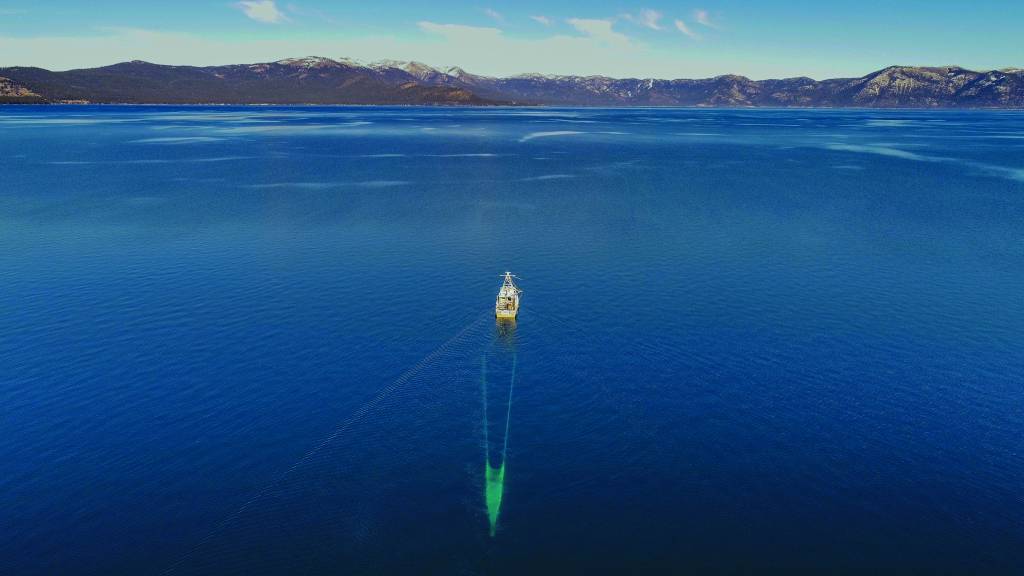
Lake Tahoe’s clarity could see a 20-foot increase in clarity in the coming years following a rapid decline of the invasive Mysis shrimp, according Dr. Geoffrey Schladow on July 28. The Mysis shrimp, an invasive species introduced into Lake Tahoe in the 1960s in a failed attempt to bolster the population of trout, could be the greatest cause of changes in lake clarity.
While there are a number of factors at play in the pollution and subsequent loss of clarity, new data points to the connection between the Mysis shrimp population and lake clarity.
Schladow, director of UC Davis Tahoe Environmental Research Center (TERC) in Incline Village, Nev., made the announcement during a talk following the release of the Tahoe State of the Lake Report 2022. While Schladow said the lake could regain a 20-foot increase in clarity by 2023 or 2024, it will be short lived, he said.
“Mysis dropped to critical low numbers in early 2021 and are currently close to zero … they will come back,” he said, adding that it’s impossible to eradicate any invasive species.
The Mysis population is expected to remain in decline for three to four years, he noted, before rebounding, which could mean a drop in lake clarity when then it occurs.
“Mysis are associated with the largest change in the biology of the lake,” he said.
Schladow noted that past events in the collapse of Mysis shrimp in the lake have been followed by short-term gains in lake clarity. When the Mysis have rebounded, the lake’s clarity has in turn diminished again. TERC researchers expect to see that same pattern again with the current decline in the Mysis population — a quick increase in lake clarity, followed by a decline once the Mysis recover.
The Mysis may be the single largest influencer on the clarity of Lake Tahoe, according to Schladow, but that remains unknown as limited research has been conducted on the shrimp since its introduction. But researchers do know that the Mysis feed on the native Daphnia and other zooplankton, species which help clean the water. When their numbers decline, so too does lake clarity. This intertwined food web may be an answer to the long-term recovery of Tahoe’s famed clarity.
TERC released its annual Tahoe Clarity Report in mid-July, which showed a 2-foot drop in clarity in 2021 from the previous year. This is part of a relatively flat 20-year period in which researchers have seen few gains or decreases in lake clarity.
Schladow noted that research on the lake’s biological impacts, including the Mysis, has been limited and funding is needed to conduct this critical research.
“There is sub-minimal biological monitoring in the lake … we need more funding,” he said.
Mysis: a main culprit
Lake Tahoe’s food web is complicated by the influence of humans, who have intentionally and unintentionally, introduced invasive species into the lake through the Mysis shrimp, nonnative fish and invasive clams, among others.
The nonnative Mysis was introduced into Lake Tahoe to feed native lake trout in an effort to increase their size and numbers. However, the trout were unable to feed on the Mysis and, thus, their numbers dwindled.
Mysis sit on the bottom of the lake during the day to avoid the sunlight. But the trout can’t see them on the bottom. When the Mysis rise to the surface at night to feed, the trout also cannot see them. So rather than the trout eating the Mysis, the Mysis, a new predator in the lake, were able to feed on the native Daphnia and other zooplankton. When the Daphnia populations increase, so does lake clarity. That only happens when the Mysis population declines.
TERC researchers are also working on a project with nonprofit Shrimply Blue to harvest the Mysis shrimp in the future to turn them into dog treats. The high-protein Mysis make for tasty dog treats and research is being conducted to develop a way to harvest the shrimp without impacting the fish population.
Schladow also noted the explosion of algae in Lake Tahoe in 2021, which has tripled since 2020 (which was double the 2019 number) and is linked to excessive nutrients entering the lake. The surge may be tied to wildfire smoke, which TERC scientists are researching.
The in-depth State of the Lake Report also examines the impact of sediment entering the lake, the impacts of climate change and weather, forest conditions and other research; far more than can be covered in a single article. Read the entire report online. | tahoe.ucdavis.edu/stateofthelake
Help fund TERC’s research
Tour the Tahoe Science Center
Incline Village, Nev. | By appt.


