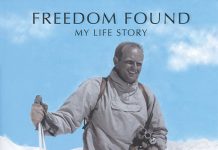
The first of the season edition of Ski Magazine and The Ski Journal dropped into my post office box last week, but, unfortunately, it is still 105 long days until mid-December when many of America’s ski resorts advertise they will open. There are a few of them at oxygen-starvation altitudes that will open earlier and some that are in a sub-zero climate so that they can lay down snowflakes from a multimillion-dollar arsenal of snow guns just so you can ski at least one week earlier.
Skiing earlier is sort of for bragging rights for anyone younger than 30. However, I readily admit that for the first decade or so that I skied, I was right there, too, at the head of the rope tow line, waiting to make my first tracks of the season. But, as I settled into my seven-day-a-week ski-movie-showing-schedule in the early 1950s, I knew I would be skiing somewhere in the world almost every day starting in February and ending when the snow melted at Mammoth after the Fourth of July weekend, so I didn’t rush it.
Unfortunately, a couple of years ago I stepped out of a binding while traversing at 3 mph. The ski I stepped out of landed on its edge and when I came down square on it, I broke my back. That’s the end of that story and more or less the end of 73 years of making right and left turns on skis.
Today, I am often asked, “Do you miss it?”
Of course I miss it, but my good luck continues because we have a home on the side of a hill in Montana at the Yellowstone Club where the main ski run goes past our front porch. The ski run is less than a 100 feet away, so I can pretend to be making turns while watching other people skiing. Life is really good, because now I can be imaging my turns while I can be writing my stories at the same time.
I decided to quit after the accident because I just don’t want to fall again and have my wife push me around in a wheelchair for the rest of my life. Call me a coward or whatever you want, but I am doing it my way as I have done my entire life while producing hundreds of ski and other action sport movies along the way.
I have learned that the older the bones, the easier they break, and that comes from personal experience the hard way.
There have been a tremendous number of innovations and changes since I painted a sign for Pete Lane’s ski shop in Sun Valley in exchange for a top of the line pair of skis in 1948. The retail cost of those skis was a whopping $29.95. You read that number right. Twenty-nine dollars and ninety-five cents, and that included bindings. Minimum wages were 25 cents an hour, so it took 120 hours to earn that kind of money for a pair of skis. Unless, of course, you could paint signs, as I could, with my college education mostly courtesy of the United States Navy.
The year, I painted that sign for a pair of skis, there were only 13 ski lifts in America and I had a season pass to four of them, including Sun Valley, Idaho. I was living the good life as defined in the pages of the ski publications today.
My top-of-the-line, soft, leather ski boots with genuine box toes so my feet would not freeze offered little control of my skis, but when you don’t know the difference there is no difference.
Of course, in the old cheap days, a pair of skis would last only 20 or 30 days in the bumps because there was no such thing as groomed snow. The hickory or ash just plain wore out.
The ski publications almost never have an article about the injuries connected with skiing. When I was promoting my films, whenever I would mention accidents in interviews, I would get letters from executives in the ski industry about how bad it was to talk about that side of skiing. No doubt about it: skiing is a risk sport, but over the years equipment companies worldwide have spent untold amounts of money making bindings, so that they release before the leg bone or the skis break, so it is far easier and more enjoyable to learn or excel. I was lucky, because in all of those years, I only had one skier injured while I was filming, while he was demonstrating an amazing new safety binding.
But, now my wife tells me not to get on the injury prevention bandwagon again. However, the only way you can guarantee that you will not get hurt while skiing is not to go skiing. I got hurt a lot more times during the dozen or so years that I windsurfed than the more than 73 years that I skied. Broken ribs, torn rotator cuff, inhaled a Portuguese Man O’ War, but after rehab and healing, I’m none the worse for wear, as far as I know.
So far, I have yet to get hurt in my current high-impact sport called golf. Well, actually, my brain does get hurt almost every time I play if you consider how bad my score is. I just keep track of the good shots just as I used to keep track of the good ski turns. Sometimes, I try to keep track of how many balls I lose, the lower the number the better the round.
May the powder snow be in your dreams until you figure out where the white comes from in December.
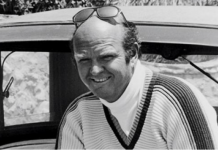
Warren Miller is history’s most prolific and enduring ski filmmaker. Visit warrenmiller.net or visit his Facebook page at facebook.com/warrenmiller.