


With the 2014 Winter Olympics at Sochi about to begin, all eyes have been on the weather conditions there and whether this subtropical resort on the Black Sea will have sufficient snow cover for the Games.
Recent storms in the higher mountains have put down a nice base and meteorologists are now warning that, rather than lack of snow, avalanches and poor visibility are bigger potential problems. The Russians have installed hundreds of snowmaking machines, and, just in case, squirreled away 16 million cubic feet of snow from last winter in eight large vaults protected under isothermal blankets.
As was the case in Vancouver in 2010, weather is a critical, uncontrollable variable during Winter Games. Organizers for the 1960 Winter Olympics at Squaw Valley experienced that stress first hand. Site preparation for the Winter Olympiad had taken five years and more than $15 million. No previous Olympic host community had ever attempted even a fraction of what organizers put together at Squaw. The only thing they couldn’t control was the weather, and without a snowmaking system in place, they were at the mercy of Pacific storms to generate a substantial Sierra snowpack. Similar to this year, the weather pattern in late 1959 featured persistent high pressure over California with an alarming lack of snowfall.
With the eyes of the nation and world on Squaw Valley and no Pacific storms in sight, Olympic organizers were getting nervous. American Indians were brought in to perform snow dances, but failed to generate the needed precipitation. Fortunately, a professional weather forecaster from Southern California named Irving Krick was on the payroll. Krick was a pioneer in using silver iodide particles in cloud seeding to produce precipitation and by the early 1950s had operated 150 rainmaking projects in 18 states and six countries. His business earned more than $1 million a year.
Krick was designated official weather engineer for the Squaw Olympics, in part because he had provided a forecast for the 1960 Games in 1958. Counting on Krick’s calculations, the Games were scheduled to start on Feb. 18, after predicted unsettled weather ended. The decision to use Krick’s forecast greatly upset the U.S. Weather Bureau and the American Meteorological Society; both organizations considered him a fraud.
The Northern California chapter of the AMS notified the Olympic Organizing Committee of their “concern and displeasure” with his appointment. They warned that the rogue weatherman had been dismissed as a member of the AMS and was not bound by the Society’s concept of professional ethics. The AMS called Krick’s long-range forecast two years before the Olympics a “scientific impossibility” that did professional meteorology a disservice.
Undaunted, Krick also promised that if mountain snow depths were inadequate for the skiing events, he would come to Squaw Valley and produce what was needed. In preparation, in late 1959, he positioned 20 ground-based cloud seeding generators around the valley. Conditions in November and December were so dry that Krick fired up the generators only once to no avail.
New Year’s Day came and went with no snowfall. In the second week of January, weather patterns began to appear more favorable for seeding. As storm clouds moved in, Krick’s generators began pumping out streams of silver iodide particles that drifted into the sky, and it began to snow. By Jan. 10, more than 3½ feet of snow buried the valley floor with more than 7 feet blanketing the upper elevations. Olympic organizers and local residents were both relieved and jubilant.
Of course, Krick claimed credit for the snow, but cold logic suggests that the storms would have arrived with or without his efforts. And the storms kept coming. By the end of January, Tahoe City had received nearly 10 inches of precipitation; nearly double normal for the month. More severe weather in the opening days of February caused havoc with ski course preparation and athletes’ practice. During the first half of the month, warm subtropical storms raised snow levels to 8,500 feet and nearly 8 inches of rain soaked Olympic Valley. A week before the opening ceremonies, another warm system barreling in out of the Pacific Ocean lashed the mountains with more moisture.
The persistent rain melted some of the lower-elevation snowpack, which created flood conditions near the newly completed Olympic Village. The parking lot made of packed snow mixed with sawdust was nearly washed out. In addition, wind gusts exceeding 100 mph toppled trees and blew rock debris onto the speed skating oval. One 75-foot-tall tree crashed only 30 feet from the Olympic administration building, tearing down power lines, but sparing the structure.
Damage in the Lake Tahoe area was estimated at $500,000. Swollen with rain and snowmelt, Squaw Creek threatened to spill over its banks and wash away the sprawling parking area on either side. The Olympic venue was in real trouble and desperate organizers talked about hauling in snow by truck. The water-logged snowpack made course management nearly impossible for maintaining ideal alpine and cross-country skiing conditions.
In an emergency meeting, H. D. Thoreau, the managing director for the organizing committee of the Games, stated, “The Squaw Valley site is now in serious condition because of the continued unprecedented rain storms. All possible measures are being taken to protect Olympic facilities from the potential damage.”
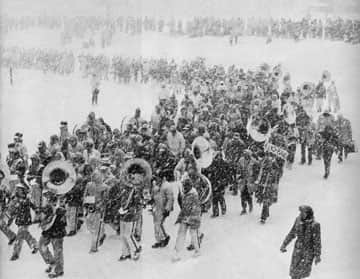
Fortunately, cold air rushing in behind the front dumped plenty of fresh snow on the mountain and covered the flood-damaged parking lot. The ongoing heavy snowfall and monumental traffic jams forced Olympic officials to postpone the opening ceremony by about one hour. As it turned out, the timing was perfect. The snowstorm quit, the wind let up and the skies cleared. Bright sunshine poured down on the grateful athletes and crowds of spectators. To some it was a biblical event.
The change in conditions was so dramatic that Russian delegates began thinking about the intense competition in science and technology between the Soviet Union and the United States and wondered, “Have the Americans perfected weather control?” The rest of the Games went on without a hitch, cementing the Tahoe-Sierra’s reputation as a winter sports Mecca
No one in the scientific community would admit that Krick had anything to do with the timely snowfall, but at the conclusion of the highly successful Squaw Valley Winter Olympics, Thoreau thanked Irving Krick saying, “We were, indeed, fortunate in the selection of our dates for the Games from the standpoint of good weather.”
Tahoe historian Mark McLaughlin is a nationally published author and professional speaker. His award-winning books are available at local stores or at thestormking.com. You may reach him at mark@thestormking.com. Check out Mark’s new blog at tahoenuggets.com.


