


By Tim Hauserman

From left, Ted Guzzi, Toogee Sielsch and Dwayne Crenshaw install a third pipe in a pond leveler at the main beaver dam on Taylor Creek. | Sierra Wildlife Coalition
[blockquote2]
“The ducks are bathing and the fish are swimming and it looks like the Truckee River should look, bustling with life and promise.”
[/blockquote2]
With Lake Tahoe below its natural rim, the only water flowing into the Truckee River is through springs and small streams. And yet, the mile of river upstream of what are normally the rapids near River Ranch is at least a foot deep. The ducks are bathing and the fish are swimming and it looks like the Truckee River should look, bustling with life and promise. We can thank a family of industrious beavers who have damned off the entire Truckee River above the rapids and have created a little piece of watery paradise.
With fall colors blossoming, now is a great time to hike or ride your bike along the Truckee River Bike Trail. The pond creation skills of the beaver make it even more enjoyable. While beaver dams in the past have been considered destructive, and some lament the loss of all those aspen trees brought down to create the dams, scientists now believe that these dams serve an environmental purpose.
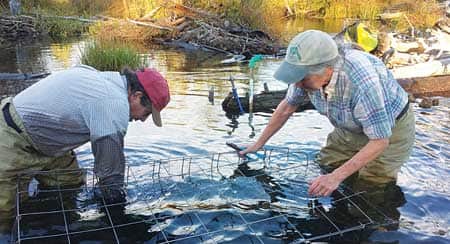
Ted and Sherry Guzzi install a protection cage for pipe inlets in the lower beaver dam at Taylor Creek. | Sierra Wildlife Coalition
Sherry Guzzi from the Sierra Wildlife Coalition says that beaver dams “hold water on the land longer and allow it to recharge the water table, and help create habitat for fish and wildlife.” Researchers in Utah have found that beavers provide a direct positive impact to farmers and ranchers downstream by allowing the water to last later into the season.
The dams also slow down and capture sediments on their way to Lake Tahoe and other bodies of water, acting as filtering or cleaning mechanisms. Research has found that the amount of phosphorus (which causes algae growth) entering Lake Tahoe took a spike upward when dams were removed from Taylor Creek to allow for the annual Kokanee salmon spawn in the fall.
Living with beavers

Beavers at the U.S. Forest Service Visitor Center at Taylor Creek. | Ted Guzzi, Sierra Wildlife Coalition
North American Beavers are great swimmers, but are awkward on land. They build dams to create a deep pond of water to swim in. They also build a den to live in, either in the midst of the dammed pond or nearby. The dens are accessible via underwater entrances and they place sticks on the top of the muddy structure to prevent other creatures, such as bears, from entering the den. Beavers eat whatever green vegetation they can find, but prefer soft, deciduous trees like aspens and cottonwoods.
Beavers mate for life and raise a group of young beavers for several years before the junior beavers have to go out and find their own new home. When it’s time for them to go, the young beavers are vulnerable to predators as they might have to travel over land for long distances to find their new spot.
In the Tahoe region, there are beaver dams in many areas including Ward and Blackwood Creeks on the West Shore, Taylor Creek, Mount Rose meadows, Antone Meadows, Sagehen Creek north of Truckee, and in the area below the fish hatchery in Lake Forest. They are also found in Lake Tahoe itself. I spotted one on 4th of July several years ago. It was swimming right through the boats in the marina in Tahoe City amongst the thousands of revelers.

The Sierra Wildlife Coalition has installed pond levelers in local beaver dams to allow for excess water to drained off and keep the pond at an acceptable level. | Sherry Guzzi, Sierra Wildlife Coalition
The Sierra Wildlife Coalition is actively trying to help landowners who have problems with beavers. One common complaint is that they destroy aspen trees. Guzzi says that if you paint the trees with an exterior latex paint mixed with fine sand, the beavers will not like the gritty surface and stay away.
Another beaver complaint is that the dams can cause flooding. The Coalition has successfully installed pond levelers in dams. These are drainage pipes installed through the dam to allow for excess water to be drained off and keep the pond at an acceptable level. Levelers have been installed at Taylor Creek, Snow Creek and in Tahoe Donner to prevent the water from flooding the trails.
The benefits of the beaver dam on the Truckee are quite clear, but it will not be long lasting. Once the Truckee starts to swiftly flow again the dams will be washed out, but this is not a problem for the beavers because they will then have plenty of water in the river to play in. So, get out there and enjoy this marvelous work of nature while you can.
For more information on beavers, visit the Sierra Wildlife Coalition page on Facebook


