


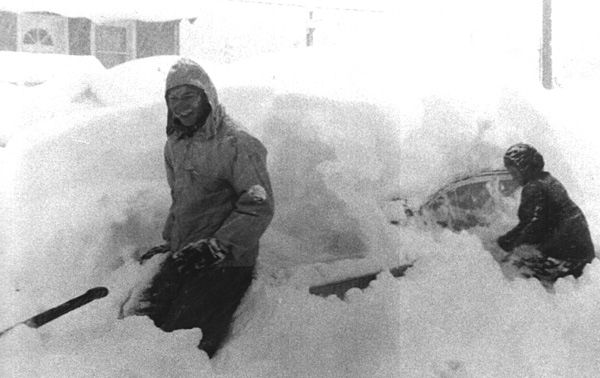
What a difference a year makes. Last winter was the wettest on record and a boon for local ski resorts, as well as for water storage throughout California and western Nevada. Winter 2016-17 singlehandedly broke California’s five-year drought with nearly 10 feet of precipitation on Donner Pass. Unfortunately, recent snow surveys have confirmed what many of us already knew about this winter and as of this writing, the dysfunctional winter of 2018 has delivered less than 20 inches of precipitation so far to the Northern Sierra — less than half of what was expected by late February. Of course, just a couple of strong atmospheric rivers could pump us up above 80 percent of average, which is definitely possible.
READ MORE about the Alpine Meadows avalanche here
Reservoirs are still in good shape from last year, but hydrologists are already concerned about the outlook moving forward. One dry year does not constitute a drought, but California water agencies and the state government are already considering bringing mandatory water-conservation restrictions back into force.
The calendar may imply that winter is over,
but we’ll have to wait and see if
the Storm King agrees.
For most Tahoe-Truckee downhill ski areas, the Easter holiday represents the traditional end of the season. But just because the resorts begin winding down in April doesn’t mean that winter is over. In fact, some of the biggest storms of the season occur after the official end of winter on March 20. Often called equinox storms, longtime locals may remember the epic late March storm in 1982 that dumped 15 feet of snow on Donner Pass and triggered a deadly avalanche at the Alpine Meadows ski area. Fewer residents will remember the Easter storm of 1958 that also hammered the mountains with near record snowfall.
Sixty years ago, during the winter of 1957-58, a strong El Niño event in the Pacific Ocean markedly influenced the prevailing weather patterns. Most of California received above average precipitation that year and the Tahoe Sierra was no exception. Frequent storms during January, February and March lashed the Golden State with wind, rain and snow. Cold storms in March generated a rash of severe thunderstorms and unprecedented tornado activity in the lower elevations.
History of Lake Tahoe and the Comstock
March 22 | 5 p.m. | The Chateau | Incline Village, Nev.
The Donner Party: Weathering The Storm
March 24 | 2 p.m. | Galena Creek Visitor Center | Reno, Nev.
The U.S. Weather Bureau reported that the winter of 1958 was the wettest season in 90 years. At Sacramento and San Francisco, the two-month period of February through March was the wettest and second wettest on record, respectively.
In the higher elevations of the Sierra Nevada, the snow kept piling up. As April approached, many Californians were hoping for an end to the stormy winter season. Sierra ski resorts were boasting a bountiful snowpack and resort managers were praying for good weather during the traditionally busy Easter vacation. Unfortunately for all concerned, one of the worst storms of the season barreled into the region just in time for Easter week. Heavy snow fell in the mountains with snow levels occasionally plummeting to as low as 1,500 feet.
For several days, massive snow slides stopped all train, truck and automobile traffic trying to get through the mountains. In 1958, Interstate 80 was not yet completed, but Highway 40 over Donner Pass was closed for five consecutive days by the storm. When the highway finally reopened, chain controls were in force from Auburn to Truckee. A dozen avalanches near River Ranch on State Route 89 closed that road for nearly a week.
The 106-inch snow depth at Blue Canyon was the second deepest on record, surpassed only by the 110 inches measured in April 1952. The precipitation gage at the Soda Springs weather station was completely buried by the heavy snowfall, but at nearby Norden, 10 feet of snow fell in five days. On April 4, the snowpack at 9,000-foot exceeded 27 feet.
Northern California’s coastal cities were spared the snowfall but endured intense downpours of rain. On April 2 in San Francisco, nearly an inch of rain fell in just 60 minutes, the city’s third greatest one-hour rainfall on record. In the Central Valley, precipitation during the first week of April exceeded that normally received during all April, May and June.
California was so hard hit by the storm that the entire state was designated a disaster area by President Dwight D. Eisenhower. Although only 2 inches of rain fell at the Reno weather station, it was the second wettest April since 1870.
The Tahoe Sierra ski areas took the brunt of the powerful spring storm. At Squaw Valley, construction crews preparing the site for the upcoming 1960 Winter Olympics were shut down by the intense weather. Olympic planners had been hoping for a mild winter so that early spring construction could begin on the installations, but their optimism dimmed in the relentless barrage of storms.
Donner Summit Lodge at Soda Springs reported that an estimated 1,500 people were stranded there by snowdrifts. Sugar Bowl ski resort on Donner Summit was the hardest hit of all the local ski areas. An avalanche at Sugar Bowl wiped out three towers on the Mount Lincoln double chair lift, closing it for the season. Ski racers slated to compete there in the Far West Ski Association Divisional Alpine Championships on April 12 and 13 would have a long walk to the top of Mount Lincoln.
Southern Pacific railroad reported that rail service between Reno and northern California was badly crippled. One eastbound train had run into an avalanche at Crystal Lake, 15 miles west of Donner Summit. Engineer Ralph Spanger and fireman F.B. McNamara were in the cab at the time they rammed the slide. Both men were pinned in the engine for two hours until rescuers arrived. McNamara suffered broken ribs when the snow crashed through the locomotive’s windshield.
The westbound streamliner “City of San Francisco,” which had been trapped by avalanche for three days in 1952, was being held under snow sheds for safety at Norden with 97 passengers onboard. Thirty hours later railroad crews were still struggling to remove engineer Spanger’s train so the “City of San Francisco” was shuttled back to Reno. Although one passenger described it as “a trainload of concentrated frustration,” all passengers had high praise for the railroad. Max Van Dyke of Rawlings, Wyo., typified the reaction of the passengers: “I felt entirely safe at all times,” he told United Press. “There was nothing but high morale in our car throughout the night.”
The calendar may imply that winter is over, but we’ll have to wait and see if the Storm King agrees.


