


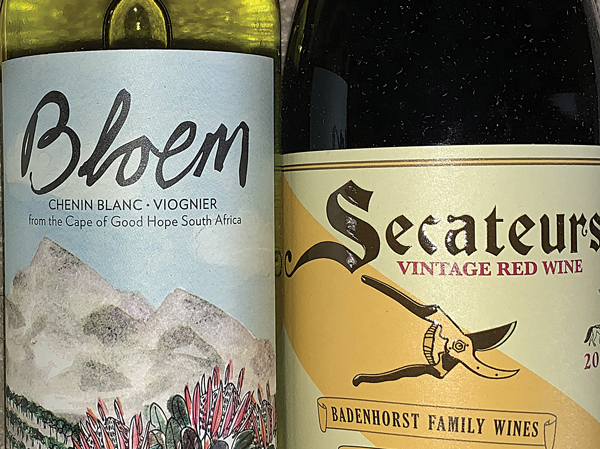
With all that is going on in these most unique days, what better time for a mental vacation. Since we all have unlimited travel points in the world of the imagination, we can go as far as we want. Being a wine fanatic, I’m thinking we head off to lesser-known wine regions the world over.
So jump on your magic carpet and buckle up for the ride. First stop: South Africa where like California the best wine regions are near the coast — in this case near the Southern Cape.
A good place to start is with South Africa’s signature grape, Pinotage, which is a cross between Pinot Noir and Cinsault.
Interestingly when wine curriculum is taught, South Africa is included in the New-World category, in spite of the fact wine production there began in the 1600s. This is pertinent not just for historical accuracy, but also because the producers here focus on classic varietals and the wines are usually more restrained and earthy than what we find in New-World offerings.

The main wine regions by the Southern Cape region have a variety of topographies, geologies and climates. Climate is greatly influenced by a cool-water current from Antarctica that winemakers call the Cape Doctor. In addition, the long history of the industry here has allowed producers to match the correct grapes with the best area in which to grow them.
A good place to start is with South Africa’s signature grape, Pinotage, which is a cross between Pinot Noir and Cinsault. These unique reds have not caught on elsewhere; maybe deservedly they are an acquired taste, but for the adventurous, they are worth a shot.
On the white-wine front, Chenin Blanc is a South African favorite, and most are zippy and energetic, although richer versions are also available. Whites from Rhone grapes are also a strength and feature blends of Viognier, Marsanne and Roussanne. These are typically a little lighter on their feet than their French counterparts. Sauvignon Blancs are another strong suit and are stylistically similar to Kiwi versions. All of these benefit from the cooling influence of the Cape Doctor and are good food matches.
Reds made from Cabernet and Merlot are the closest thing I know to a cross between quality Bordeaux and Napa versions. They are structured and earthy with some generous fruit. More mountainous coastal areas make for wonderful Rhone-style reds; a varietal that does especially well is Cinsault, as well as Syrah and Grenache. Value versions are ripe and full of dark fruits and the higher end of this type are more in the vein of actual Rhone wines with game and minerality notes and are meant to age.
As with any new region you are exploring, ask your local purveyor for suggestions.


