


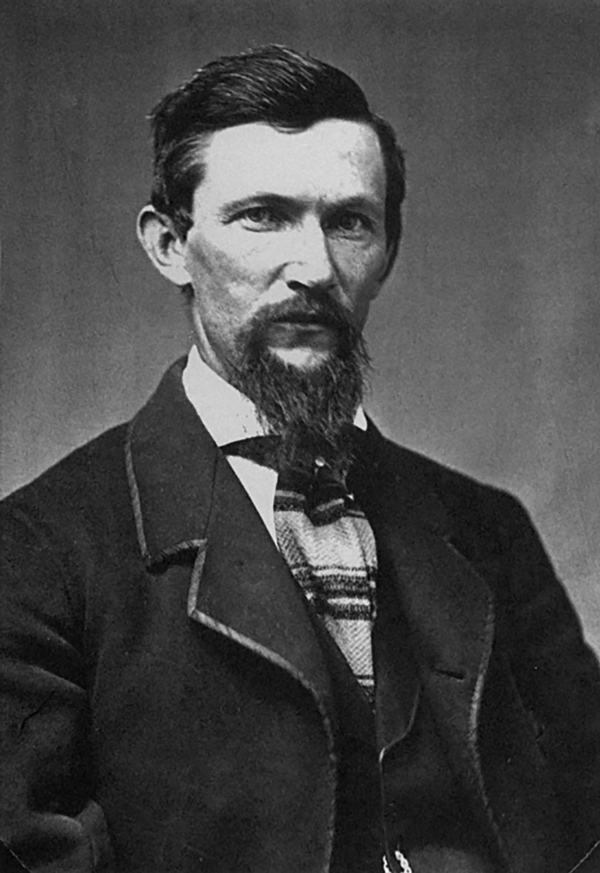
This summer commemorates the 160th anniversary of Samuel Langhorne Clemens’ 1861 arrival in Nevada Territory along with his older brother Orion. Orion had a job waiting for him as the secretary to Territorial Governor James W. Nye, but Samuel was on his own for finding work. He hired on as a mine laborer, an exhausting stint that lasted about a week. Then he and a friend decided to establish a logging claim at Lake Tahoe, which they called a “timber ranch.” Like working in a mine, the physical labor required to manually cut down the massive pines in the Tahoe Basin was too much for a man like Clemens, who was characterized by a contemporary as “scandalously lazy.”
Read Part I
Despite his failure at becoming a timber baron, Clemens found the Tahoe Basin exceptionally beautiful. He wrote: “I’ll build a county seat there one of these days that will make the Devil’s mouth water if he ever visits the earth.” In the decades ahead, Clemens as Mark Twain would travel the world, visiting its most famous sights, but he always considered Tahoe the most beautiful lake of all, the “masterpiece of the universe.”
“Three months of camp life on Lake Tahoe would restore an Egyptian mummy to his pristine vigor and give him an appetite like an alligator. I do not mean the oldest and driest mummies, of course, but the fresher ones.”
–Mark Twain, “Roughing It”
Beyond the lake’s unparalleled scenery, in his book “Roughing It,” Twain playfully extolled the virtues of the therapeutic qualities of the pure water and regional climate: “Three months of camp life on Lake Tahoe would restore an Egyptian mummy to his pristine vigor and give him an appetite like an alligator. I do not mean the oldest and driest mummies, of course, but the fresher ones. The air up there in the clouds is very pure and fine, bracing and delicious. And why shouldn’t it be? — it’s the same the angels breathe.”
Like many of their friends, it was not long before the Clemens brothers came down with silver fever. Stories of rich mining strikes and instant wealth were told over beer and whiskey every night in the saloons. Freight wagons laden with valuable ore, sometimes garnished with bricks of pure gold and silver, constantly rumbled down Commercial Row in Carson City. Samuel and Orion were soon speculating in the business, purchasing “feet” of ore with mining companies in the Esmeralda Mining District. The district’s principal town, Aurora, was located about 75 miles southeast of Carson City. Samuel took up residence there to keep watch over their various mining ventures. At times they appeared wealthy on paper, but it was spurious and their speculation in Aurora’s mines was a bust. Samuel survived on the money his brother sent him from Carson City.
The Clemens brothers were not the only ones to fail in their undertakings in the mining industry. Despite newspaper headlines proclaiming numerous lucrative silver and gold strikes, it has been estimated that only about one in 1,000 of Aurora’s mining claims proved profitable. An 1875 article in Mining and Scientific Press explained: “During the great stock fever of 1862, ’63 and ’64, the credulous and then comparatively inexperienced people of California were most wretchedly humbugged and swindled by having wild cats [worthless mines] of all kinds, sized and colors palmed off upon them as genuine mines by unscrupulous stock sharps and swindlers.”
These were difficult times for the man who would later become one of America’s most celebrated writers and humorists. Clemens had been a prestigious and well-paid Mississippi River pilot earning $250 a month before he came west. Now his money was gone, and it seemed that his chance to strike it rich had eluded him.
In “Roughing It,” he complained: “We were stark mad with excitement…drunk with happiness…smothered under mountains of prospective wealth…arrogantly compassionate toward the plodding millions who knew not our marvelous canyon…but our credit was not good at the grocers.” Later he quipped that “a mine is nothing but a hole in the ground, owned by a liar.”
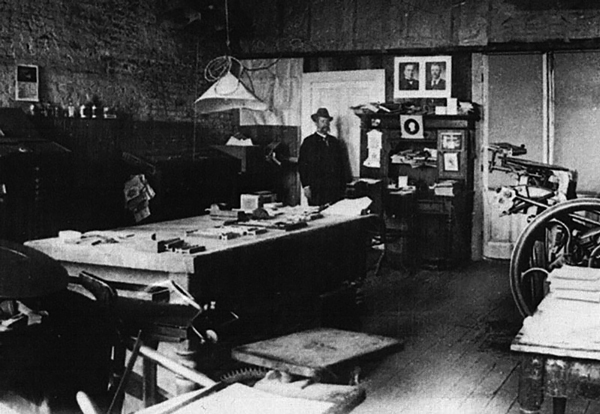
He should have been wielding a quill pen, not a miner’s pick, but things were about to change. Cooped up in his cabin at Aurora during the spring of 1862, Clemens decided to pursue the narrative skills he had briefly tapped while writing articles and sketches when he worked at Orion’s Missouri newspaper, the Hannibal Journal. His job was typesetter, but he also enjoyed producing witty copy. A few of these early sketches appeared in Eastern newspapers and periodicals in the 1850s. In an April 1862 letter to Orion, he asked his brother to send him a writing portfolio along with a dozen steel pens.
Most accounts of his first literary efforts in Nevada Territory start with several burlesque sketches he submitted to the Territorial Enterprise newspaper in Virginia City under the pseudonym Josh. They were short, humorous stories about hard-luck miners. The sketches were funny and fit perfectly with the tone of whimsy popular on the Comstock. He was hired for $25 per week.
But his first submission to the Territorial Enterprise was a letter in which he reviewed an 1862 lecture given at the mining camp of Dayton by Judge George Turner. Turner had been appointed Chief Justice of the Supreme Court of the Territory of Nevada by Abraham Lincoln in 1861. In her 1996 biographical profile, “Sam Knew Them When,” Sylvia Crowell Stoddard writes about her grandfather Samuel P. Davis, a legendary pioneer Nevada newspaperman. Sam Davis’ appraisal of the Chief Justice was caustic, calling the judge “the shallowest, most egotistical and mercenary occupant of the Supreme Bench.” Clemens piled on, calling Turner “Mr. Personal Pronoun.” His amusing missive caught the attention of Joe Goodman, editor of the Territorial Enterprise, who promptly offered the young author a job on the newspaper’s staff.
On his arrival in Virginia City, Clemens teamed up with a young staff reporter named William Wright, who wrote under the pseudonym Dan De Quille. De Quille penned serious political and mining news, but his real talent lay in writing ironic sketches and humorous hoaxes. The two young writers quickly became friends and roommates. Along with De Quille, editors Joe Goodman and Rollin Daggett helped Clemens perfect his writing craft and story development, skills that he would employ to great success. Writing under the pen name Mark Twain he became the most popular correspondent on the Comstock. The Nevada origins of Sam Clemens’ nom de plume, Mark Twain, has been debated by historians, but as with most stories regarding this great American writer, it is worth exploring.
Stay tuned for Part III in the next edition and at TheTahoeWeekly.com.


