


By Kat Kerlin, UC Davis
A new trend of pool toys containing glitter and microbeads is complicating the already pervasive environmental problem of microplastic pollution.
Read our story on “Microplastics: Tahoe’s Tiniest Trash”
University of California, Davis, scientists studying plastics pollution encourage beachgoers to take care to leave natural waterways as clean or cleaner than they found them this summer by reducing their use of all forms of plastic at the beach and leaving pool toys full of microbeads and glitter at home.
A microplastics bomb
Pool toys are intended for use in pools, where, if they break, the damage is limited to that pool. But such toys are often brought to lakes, oceans, rivers and other water bodies. When they burst, their glittery, beady contents spill across the water and pollute aquatic and human environments.
“Glitter is impossible to clean up in your house. Imagine trying to clean it up from a lake or beach.” –Katie Senft
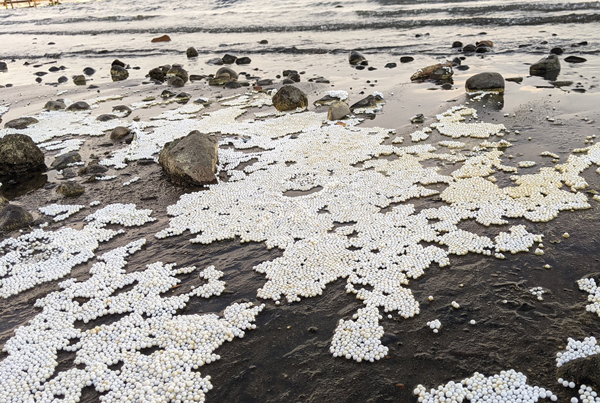
Alison Toy, education program manager of UC Davis Tahoe Environmental Research Center (TERC), came upon such a scene at Lake Tahoe’s Moon Dunes Beach in early July. Thousands of tiny foam balls floated across the surface. She quickly shared the damage and the offending pool toy on her Instagram account, which spurred a cleanup and regional media interest.
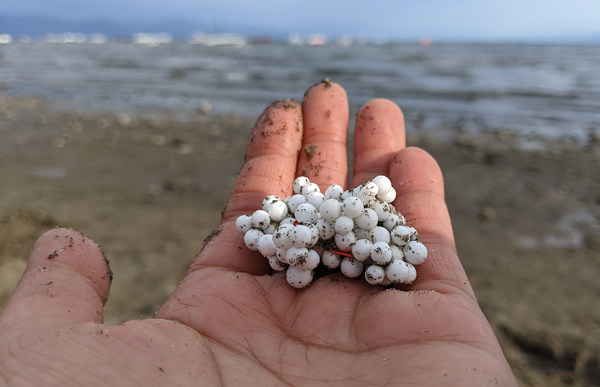
“It was like a microplastics bomb exploded on the beach,” said Toy’s colleague Katie Senft, a TERC staff research associate who studies microplastics. “It was heartbreaking to see polyethylene balls all over our beautiful shoreline.”
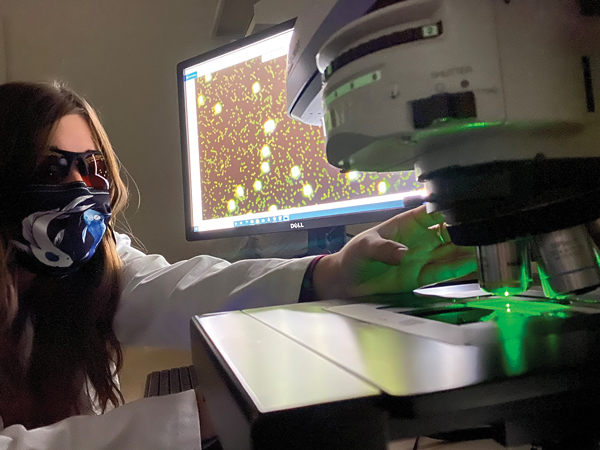
Senft is leading a research project to determine the fate of microplastics at Lake Tahoe. It involves trawling for plastics and examining the bellies of fish and clams to understand food chain impacts. A microplastic is about the size of a rice grain or smaller. Senft has found fragments of toys, bottles, diapers, chip bags and more.
All that glitters
A 2015 study from UC Davis estimated that 8 trillion microbeads are emitted every day into U.S. waters. Pool floats full of microbeads and glitter that can smash against rocks and rip open add a troublesome layer.
“Glitter is impossible to clean up in your house,” Senft said. “Imagine trying to clean it up from a lake or beach.”
“Think about how many particles you might release in a simple teaspoon of glitter,” says Jenessa Gjeltema, assistant professor of medicine and epidemiology at UC Davis School of Veterinary Medicine. “What may have been intended to be used for only a few minutes may then remain in the environment for hundreds or thousands of years. Glitter may seem like a wonderful magical moment, but it’s a moment that extends for such a long time afterward and we are only at the tip of the iceberg of learning what the effects of that will be.”
How to help
- Keep pool floats with microbeads and glitter away from natural waterways and reduce plastic use in general. If you do bring a float to the beach, choose something that won’t easily rupture and make sure to pack it out if it does.
- Be a conscious consumer and consider the life cycle of plastic.
- Microfibers from clothes — and laundry machines — often make their way into waterways. Buy clothes made from natural fibers such as cotton, rather than synthetic material.
- Bring reusable bags while shopping, use reusable water bottles and choosing reusable storage containers over single-use plastic bags.
For more information, visit ucdavis.edu.


