After making ski movies for more than 50 years, I know that an editor can change the direction of the film right up and until the time that it is handed off to the lab to print the images and add the soundtrack.
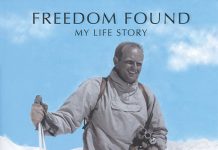
The same thing happens in publishing a book and I have been involved in the creation of my autobiography/memoir for almost five years, putting my life in words adding my collection of photographs for credibility (yes, I really did all of those dumb things). The writing, at least, appears to be over and it’s ready to be scrupulously edited and published. As other memories creep to the surface, I will be tempted to make changes in the manuscript until the last moment.
While writing the autobiography, I have encouraged everybody I talk with to do the same thing with his or life. Unfortunately, most of the people I suggest this to say, “My life is not very interesting.”
I counter that argument with a simple one. “Your children know very little about your life prior to when they got to be 12- or 14-year-old, i.e.: what shaped you and the person that you became? A profession that you would rather be doing than the one that you spent your life pursuing?”
I found that as my autobiography appeared out of my computer, I found the reason for a lot of the mistakes I made in life, what I should’ve done and didn’t, and paid the price later in life. The courses I should’ve taken in college, but the people I met along the way, taught me valuable lessons and became the most influential people in my life. Writing an autobiography is time-consuming, but it is simple to do: just put 12 lines on a piece of white paper and each line is a month of that year. When you think of something that happened in your life and you can remember when it happened, you insert it in that month and that page of that particular year.
For some reason, your brain loosens up and you remember things that happen on both sides of that event. A case in point is that I remembered in 1937 that I built my first surfboard in the seventh grade in junior high school and I, subsequently, somehow remembered the name of my junior high school woodshop teacher that year. His name was Mr. Breemeyer. He taught me an awful lot about hand tools, carpentry skills, cabinetmaking skills and that all helped me later in life when I finished my short career as a ski instructor and when starting my film career, I had a 3- to 4-year career as a construction worker.
I started out as a ditch digger digging the trenches for the concrete foundations for houses and earned the generous salary of $1 per hour. I worked hard and within a year I got a full-time job as a rough carpenter framing houses and was able to get into the carpenters union and then I earned $2.25 per hour.
I joined the union because I wanted to be able to quit working for a contractor if the snow was good. With a union card, I could take a Friday or Monday off to go to the mountains to take more ski movies and when I got back I would go back to the union hall and go to work for another contractor. This allowed me to have a daytime job that did not require a lot of concentration except to keep my fingers out of the skill saw and work on my second, third and fourth feature-length ski film at night.
I felt that my autobiography should include the bad with the good. I did some things that I am not proud of but they were legal at the time. I never spent a night in jail and am lucky because my grandfather gave me the best advice I’ve ever had when he said, “Never tell a lie because you don’t have a good enough memory.” But my wife accuses me of not telling the absolute truth because it might ruin an interesting story.
There are some dates that cannot be juggled in the book such as the day we were sunk in a typhoon while we were heading to Pearl Harbor from Guadalcanal at nearly the end of WWII. The logbook of one of the rescuing ships is contained in my memoirs. There are some photos of my sisters and myself sitting on the beach at Topanga Canyon in Southern California. I was 5-years-old at the time and had already learned how to body surf, sort of. Surfboards had not yet come to Southern California and I was fortunate because a family from Hawaii had immigrated to mainland and one of them taught me how to ride waves by body surfing.
In my story is an important conversation that I had with astronaut Capt. John Phillips while he was orbiting the earth in a space capsule every hour and a half. The reason he asked NASA to patch through a call to me was that he took several of my ski film DVDs in the space capsule with him and had looked at them so many times he was bored. He also grew up watching my movies when he lived in the New Hampshire and learned to ski as a youngster. He is an interesting guy with a great family and they came to ski with us in Montana a year later.
Now that my share of the efforts in the creation of this autobiography is finished, I want to stress to all seniors that they should be writing all his or her memories down. So many people can learn from others’ experiences. With this project finished, I am turning my attention to becoming a better golfer. At 89½, I’m finally old enough.
Warren Miller is history’s most prolific and enduring ski filmmaker. Visit warrenmiller.net or visit his Facebook page at facebook.com/warrenmiller.