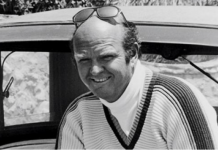
After almost a year aboard a couple of ships in the South Pacific, I finally had accumulated enough points to earn a discharge and a $100 mustering out check.
I was walking down Market Street with that $100 check in my pocket when an 8mm Bell & Howell movie camera caught my eye. That check was enough to buy the camera for $79 and three rolls of film for $9 or $10 each. That purchase changed my life.
When I got home, I put my surfboard in the back of the car and was at Malibu by 9:30 in the morning with my new 8mm life-changing, camera.
By the time I exposed my first roll of film, I had realized that this was going to be an expensive hobby because I needed a tripod and a telephoto lens to get decent images. On the way home late that afternoon, I started spending money on what I thought was going to be a hobby. I found a good, used tripod for $25 and telephoto lens for about the same. Before I knew it, I needed a splicer to glue the rolls of film together, a movie scope to look at the footage, a pair of rewinds, an editing bench, plus a projector and screen, which were expensive and would have to wait a while.
While I was gathering all of this equipment, of course, I became addicted to Kodachrome.
I enjoyed filming a big day at Malibu and then showing the results at a friend’s house to the hoot and hollers of our friends. Three-fourths of the way through the summer, I got a phone call from the wife of a friend of mine inviting me to a tuna casserole dinner. And, oh, by the way, will you bring your screen and projector and surfing pictures. Thus began the tuna casserole circuit. This is where I started to learn how to edit film after mentally writing the script for it and then narrating it live. Of course, my shows were without music.
After about 10 or 12 of these tuna casserole, surfing dinners, the ocean water was getting cold and wetsuits had not been invented yet, so Ward Baker and I left Southern California in the Buick towing a $200 teardrop trailer and my projector and the surfing pictures.
In Utah, our first stop on that adventure, most of the skiers had never seen surfing, so I had a ready audience. That winter, while Ward and I traveled the West, I showed the surfing pictures wherever I could.
Ward also had an 8mm camera and we took countless rolls of film of each other skiing so that we could look at them and learn to ski better. By spring, we had shot a lot of ski action and I decided to show that ski action to my friends in Malibu and San Onofre.
By now, I was supporting myself as a carpenter in the daytime and messing around with my 8mm movie editing gear in the evening. Ward’s and my Southern California friends had seen my surfing movies and were now enjoying our ski movies.
After the first two winters of ski bumming in Sun Valley, Idaho, living in the parking lot and scrounging for invitations to dinner and finding sneaky ways to ski, in the fall of 1948 I got a job teaching skiing at Sun Valley.
I still carried my 8mm camera in a small leather case on my belt around my waist so if I saw a good, backlit chairlift shot or a falling-down skier I took a picture for future use.
One day, a pupil asked, how do you like that camera? I told him that I thought it was the greatest thing since sliced bread. He replied, I am glad you like it because I am the president of the company. That was Chuck Percy who went on to become a Senator from Illinois.
Luck was riding on my shoulder when I told Chuck Percy and his comptroller Hal Geneen that I wanted to get into the travel lecture business and they generously offered to loan me a 16mm Bell & Howell camera with three lenses. They gave me instructions to pay them out of my income when I started getting paid to show my movies. The two of them jump-started my ski film business.
I produced my first movie when I was teaching at Squaw Valley the year that they opened in 1949-50 and they only had one chairlift, two rope tows, four ski instructors and accommodations for 42 people.
I was growing the business for 14 years before I hired a cameraman. Having never taken a business course, I had no idea what I was doing in running the business; I just loved what I was doing. I learned the hard way, through many mistakes how to keep track of the details that are required in running a business successfully.
Until I hired Don Brolin, I did all of the photography, all of the editing, wrote the scripts, chose the music and then went on the road and narrated each performance live. I did the shows live because I never had enough time to learn how to put my voice on the film.
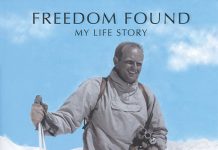
I recently completed my autobiography. I guess I was really a pack rat. Going through years of memorabilia, I had found a file of productions since I had hired my first cameramen. Counting TV spots, stock footage, sales of resort films, TV shows, subjects ranging from horseracing to the Colorado River, there are 626 films.
Warren Miller is history’s most prolific and enduring ski filmmaker. Visit warrenmiller.net or his Facebook page at facebook.com/warrenmiller. Read more of Warren’s stories at TheTahoeWeekly.com.