


By Mark McLaughlin ·
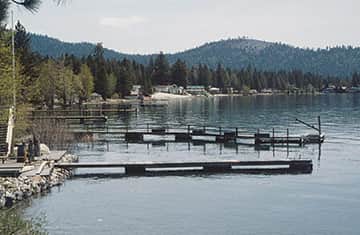
The heavy winter of 1996 pumped Big Blue to its maximum legal limit of 6,229.10’. | Courtesy Mark McLaughlin ·
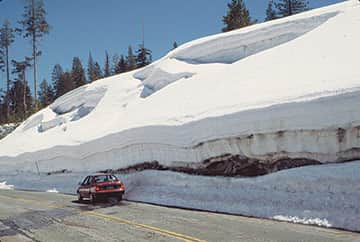
The second wettest winter in 1995 raised Lake Tahoe nearly 7 feet. | Courtesy Mark McLaughlin ·
Editor’s Note: Part I may be found at TheTahoeWeekly.com.
California is currently being hit hard by a four-year drought, with the Tahoe Sierra also suffering exceptionally dry conditions. Climatologically, the region frequently swings between desiccating drought and overwhelming floods. It’s a classic example of extreme, but natural, climate variability in the region. And dare I say it: It’s unlikely to be related to human-influenced climate change because it’s a pattern signature that scientists have associated with the Far West for millennia.
And, despite the headlines, are water levels at Big Blue the lowest in history? No, not even close. The lake was nearly 3 feet lower in the early 1990s until several bomber winters combined to push Tahoe to its maximum legal limit in a short period of time.
Despite a National Weather Service forecast for another drier than normal winter in 1992-93, storms came out of the gate fast and furious. Just 48 hours after the official NWS prediction was released, powerful cold fronts began assaulting the Tahoe Sierra. At South Lake Tahoe, rangers on Echo Summit recorded nearly 17’ of snow in early December. It was the biggest start to a winter in 10 years.
An invigorated jet stream drove storm after storm into the Tahoe region, and by the third week of January the upper mountain snowpack at Squaw Valley was approaching 20-feet deep. During the first 10 days of February, another 11.5’ of snow smothered Donner Pass. Ultimately, nearly 42’ of snow fell that winter, ranking it as the 30th snowiest of record at Donner Pass. As California’s reservoirs began to fill, the San Francisco Chronicle prematurely declared the drought over.
The exceptionally wet winter of 1993 did a wonderful job in temporarily breaking the grip of severe drought in the mountains, but it was only a start. Later that summer, Tahoe fell below its rim again and would remain there through the dry winter of 1994. And, once again, the primary source of the Truckee River had no water to share.
It took the awesome winter of 1994-95 to finally generate the big turnaround in the drought and extremely low water levels in the Tahoe Sierra. In November, cold storms barreled in out of Alaska. Records for cold and snow were broken throughout Nevada while Sacramento endured its coldest November in history. Then, everything stopped and the month of December went down as one of the driest ever.
In January 1995, the jet stream changed course again and a barrage of warm moist storms tapped from the sub-tropical Pacific surged in. Tahoe picked up between 13” to 16” of rain with high elevation snow, about 250 percent of normal for January, statistically our wettest month. The gloomy wet weather was persistent; it rained or snowed nearly every day. The roller coaster pattern of wet-dry-wet-dry months continued when a mild February melted low-elevation snow and delivered only 24 percent average precipitation. Reno experienced its warmest February since 1888.
March came in like a lion and the region was hammered with incessant storms. Precipitation values soared to 335 percent of normal throughout the northern Sierra and Nevada. Locals proclaimed it “The snowiest March we’ve ever seen.” The ideal ski conditions that winter made for Northstar’s busiest ski season in its 24-year history.
The El Niño-influenced winter of 1995 was a game changer in the Tahoe Sierra. Nearly 50’ of snow fell on Donner Pass, the 13th greatest amount ever recorded. The 9’ of precipitation that winter was nearly double normal and the second wettest year since 1871. On May 2, 1995, snow surveyors measured 10.5’ of water stored in Squaw Valley’s upper mountain snowpack, more than three times normal.
Tahoe’s water level had been languishing 2’ below the rim at the start of the 1995 winter, but by the following summer, Big Blue had made an unprecedented seasonal rise to nearly 6,227’, its highest level in almost a decade. The lake had roared back into healthy territory virtually overnight, but the real drama was yet to come.
During winter 1995-96, El Niño conditions in the tropical Pacific Ocean dramatically switched to a cooler La Niña episode. Global weather patterns changed, but powerful storms hit the Tahoe Sierra again. Lake Tahoe’s water level surged closer to its federally mandated maximum legal limit of 6,229.10’. During the third week of May, nearly 10” of rain soaked the region, the third most for any May on record. The subsequent runoff jacked Tahoe up to its legal limit, forcing Federal Water Master Garry Stone to release so much water through the Tahoe gates that commercial river rafting below the dam was delayed into late July due to unsafe conditions.
More than 78” of precipitation fell on Donner Pass that winter, about 160 percent of normal, and Lake Tahoe and other reservoirs on the Truckee River system were all at record storage levels. Stone continued to release Tahoe water throughout the summer of ‘96, but the outflow was limited due to the high rate of release by other downstream reservoirs in the system. As the winter of 1996-97 approached, Lake Tahoe had little room for more storage. And, that’s when the Storm King struck with a vengeance.
Stay tuned for the dramatic conclusion in the next issue.
Tahoe historian Mark McLaughlin is a nationally published author and professional speaker. His award-winning books are available at local stores or at thestormking.com. You may reach him at mark@thestormking.com. Check out his blog at tahoenuggets.com, or read more Sierra Stories at TheTahoeWeekly.com


