


Tea — comforting, healing, satisfying and flavorful — is a ritual for many people. Making fresh tea from native Tahoe plants is an adventure.

Native Tahoe plants that can be used to make tea.
Whether you grow your own plants or forage for them, there are many ways in which to harvest and brew your own medicinal teas. Teas can be immune boosters, natural diuretics, anti inflammatories, digestion and nausea aids, and help with menstrual cramps and menopause.
Watch the “Tahoe Plants=Tasty Teas” presentation
Slow Food Lake Tahoe and the Truckee Demonstration Garden in partnership with UC Davis Tahoe Environmental Research Center (TERC) recently hosted the “Tahoe Plants=Tasty Teas” workshop at the demonstration garden in the Truckee Regional Park. Katie Townsend-Merino, project manager of the garden, was on hand to give tours of the garden, which was flourishing with herbs, lettuces and all manner of vegetables.
[blockquote3]
“If you do forage, look for large patches of plants
and leave enough so the plant can reproduce.
Know when and where to collect plants.”
[/blockquote3]
About 20 people were at the donation-based workshop while the sounds of Moonalice serenaded us from the Truckee Amphitheater. Bree Lewis and Alison Toy from TERC gave the presentation on the how to harvest and make teas from plants growing in Tahoe and the benefits they offer.

From left, Katie Townsend-Merino, project manager of the Truckee Demonstration Garden,
Bree Lewis, education program assistant, and Alison Toy, program coordinator,
from UC Davis Tahoe Environmental Research Center.
Lewis explained that when collecting native plants, it is important to collect plants when they are most beneficial and to make sure to spread out your picking so you do not take all the plants from one area. Pinch off leaves and flowers or fruit and collect at different angles; don’t pull out the whole plant. She suggested collecting your plants in mesh bags, which allow the plant to breath.
If you do forage, look for large patches of plants and leave enough so the plant can reproduce. Know when and where to collect plants. Lewis explained that picking plants along the highway or a main road might not be the best choice because the plants have been exposed to exhaust and runoff from the road.
“It’s important to assess for environmental toxins,” Lewis says.
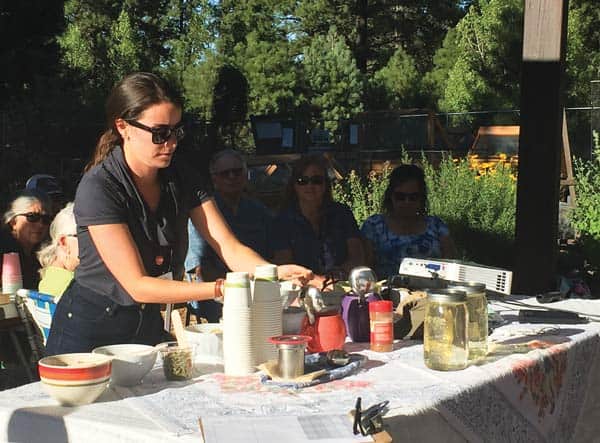
Bree Lewis demonstrates how to make tea from Tahoe plants.
Once you’ve gathered your plants, lay them out on newspaper, remove unwanted parts, rinse, pat dry and let dry. Plants can also be dried using a dehydrator, hanging them from a string or freeze-drying them. Crush or use the plant whole; bag, label and date the plants because they lose their nutrients over time.
There are numerous methods to steeping and brewing tea. Use 1 to 2 teaspoons per cup and steep for 2 to 3 minutes. Sun tea needs at least 1 hour in the sun or at least 12 hours using the cold brew method. For medicinal teas and tonics, Lewis suggests using 1 tablespoon per cup and allow tea to steep for 15 minutes or more. Adding lemon or lime slices to your cup of tea adds a great tangy taste and vitamin C.
Make your own Tahoe tea
Lewis focused on a number of Tahoe plants that are excellent for tea.
Rose buds | A floral flavor and can be beneficial for skin, liver health, weight loss and act as a natural laxative.
Rosehips | A sweet, tart flavor and are best collected after the first frost. The tea can be used as a diuretic, laxative and inflammation reducer.
Pennyroyal | In the mint family; not to be ingested if you’re pregnant. The buds and flowers are used for making tea. Pennyroyal helps reduce inflammation and aids in digestion and helps with nausea.
Stinging Nettle | In the woods of Tahoe, you are bound to come on Stinging Nettle. This plant has a strong, earthy flavor. The leaves need to be picked before the flower blooms. It is beneficial for weight loss and rashes and provides an energetic boost.
Red Clover | The buds make a delicious tea that is beneficial for women. This brew helps with menstrual cramps and menopause.
Strawberry Leaves | Its fruity flavor helps with skin issues and rashes, as well as weight loss.
Thimbleberry Leaves | Pick the leaves before the plant blooms. They are beneficial in treating rashes.
Dandelion | There are an invasive plant in Tahoe. The flowers, buds, leaves and roots can be used for numerous things besides tea, such as dandelion salad or dandelion pesto. The tea is a natural diuretic, helps with inflammation and supports the immune system.
Priya Hutner is a writer, health and wellness consultant, and natural foods chef. Her business, The Seasoned Sage, focuses on wellness, conscious eating and healthy living. She offers healthy organic meals for her clients. She may be reached at pria78@gmail.com or visit theseasonedsage.com. Visit TheTahoeWeekly.com to read more.


