


October, the month when baseball fever is at its peak, is usually one of the driest times of the year in California. This year, however, the Tahoe Sierra was pounded by moisture-laden atmospheric rivers that dumped near-record amounts of rain on the region. It was a nice dose of medicine for our drought-stricken lakes, streams and reservoirs.
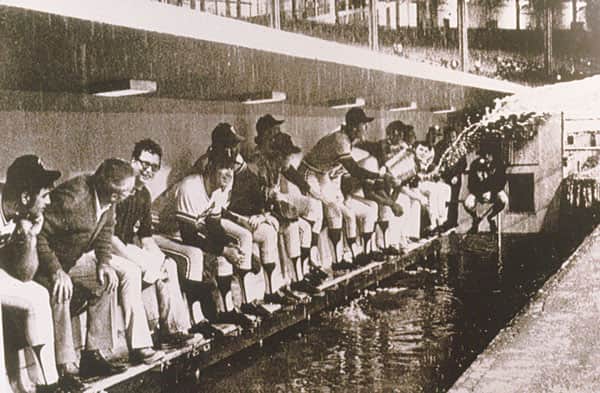 The Golden State was spared a direct hit, but San Francisco recorded more than 7 inches of rain. At Candlestick Park, the deluge flooded the outfield and parking lot.
Mainly sourced from the subtropics, the warm systems meant little snow except for the highest peaks around Tahoe; the summit of Mount Shasta picked up 10 feet of snow in just four days. There may have been little snow, but it was wet. Tahoe City and South Lake Tahoe each picked up about 7 inches of water. The top winner was the Ward Creek watershed on the west side of Lake Tahoe, which came in with nearly 20 inches of precipitation in October 2016. Total precipitation in the Truckee and Tahoe basins averaged an impressive 475 percent of normal.
Historically, there is little statistical correlation between wet Octobers and subsequent winter months, with slightly more than half turning out wetter than average. There is room for optimism, however. The wettest October on record occurred in 1889, a winter that ranks No. 4 of all-time with nearly 65 feet of snow at Donner Pass. The second wettest October was in 1962, a winter that ranks No. 36 in snowfall since 1879. Most of the rain in October 1962 fell in just four days over Columbus Day weekend, when the remnants of Typhoon Freda roared in out of the Pacific just in time to wreak havoc with baseball’s wildly popular World Series.
The nation’s media attention was focused not on the approaching storm with Category 3 hurricane strength, but on the drama in San Francisco where the Giants were at home for Game 6 in the World Series, down three games to two against the omnipotent New York Yankees. Game 7, if necessary, was also scheduled at Candlestick Park. The mighty Yankees were going for their 20th World Series Championship, but the scrappy Giants intended to stop them at home.
As potent Typhoon Freda crossed the Pacific Ocean, she merged with a vigorous cold front to become an intense mid-latitude cyclone bearing down on the California coast. During its long ocean crossing from Asia, Typhoon Freda was downgraded to extra-tropical strength, but she still packed winds like a full-blown hurricane. The storm steered north before its center made landfall in Northern California, but four days of high wind and torrential rain took 56 lives and caused between $3 billion and $5 billion in damage. More than a half-century later, this storm still ranks as one of the most powerful to ever hit the West Coast.
In the Bay Area, wind and rain in advance of the main storm system forced the postponement of Game 6 in San Francisco on Friday, Oct. 12. There had been rain delays in New York also and the teams were anxious to play, but meteorologists warned both residents and baseball fans that Freda was no ordinary storm.
Three hundred miles offshore, Freda suddenly veered sharply north. Tracking up the West Coast, the storm blew down millions of trees along 1,000 miles of coastline. Flying debris took the lives of many people caught outdoors or in their cars. In Oregon, where the storm is still remembered as The Big Blow, wind gusts reached 170 mph and damage was extreme.
The Golden State was spared a direct hit, but San Francisco recorded more than 7 inches of rain. At Candlestick Park, the deluge flooded the outfield and parking lot. Despite the conditions, hundreds of die-hard baseball fans camped out Friday night in hopes of getting one of the 2,200 bleacher seats available for Saturday’s sold-out game.
Giant’s pitching coach Larry Jansen considered the rain delay fortuitous, figuring that it gave another day’s rest for his veteran left-handed hurler, Billy Pierce. Thirty-five-year-old Pierce, 12 and 0 at Candlestick that season, was matched against the legendary Whitey Ford, the Yankee’s ace left-hander and most successful pitcher in World Series history.
Other San Francisco players were exhausted, as well, and appreciated the delay. Willie Mays told reporters that the team was tired from the long 162-game season plus the playoffs against the Los Angeles Dodgers to win the pennant.
The Yankees were getting bored, but they were still favored to win the sixth game and the series. Torrential rain on Saturday postponed that game, too. Concern mounted when the flooded field forced the postponement of Sunday’s game also. By now both managers wanted their players out practicing and on Sunday the two teams were bused to a minor league field in Modesto. Sixteen thousand frustrated fans showed up at the 5,000-seat park to watch their favorite sluggers — Mickey Mantle, Roger Maris, Willie Mays and Yogi Berra — lay some wood on the ball.
Meanwhile, in the Sierra, the storm set precipitation records. Blue Canyon at 5,000 feet on the west slope picked up more than 9 inches of rain in 24 hours. Nearby Lake Spaulding was hammered with 23 inches of rain in three days — a new record. More than 200 weather stations in Northern California reported their greatest three-day rainfall event ever. In fact, 30 stations received half their annual average precipitation from this one system.
Storm or no storm, the World Series had to go on. By Monday, Oct. 15, sunshine combined with three helicopters hovering over the field had dried the sodden turf enough for the athletes to play ball. Nearly 44,000 screaming fans showed up to cheer the Giants on. A well-rested Pierce delivered a three-hit, 5 to 2 victory over the Yankees to dramatically tie the series at three games apiece.
Game 7 was another thriller. Played under sunny skies, it saw the Yankees ahead 1 to 0 in the seventh inning when the Giants came to bat. Mays tagged a fastball, but a dazzling one-handed catch by rookie Tom Tresh snuffed the potential drive. May’s line drive could have been a double — and an instant later it would have become a run on a rousing triple by Willie McCovey.
The Giants, who all season long had specialized in come-from-behind victories, lost when brilliant pitching shut them down for good. It was a classic clutch performance by the Yankees, and it gave them their 20th World Series Championship. Even Typhoon Freda couldn’t change that pattern.
Tahoe historian Mark McLaughlin is a nationally published author and professional speaker. His award-winning books are available at local stores or at thestormking.com. You may reach him at mark@thestormking.com. Check out his blog at tahoenuggets.com or read more at TheTahoeWeekly.com.


