


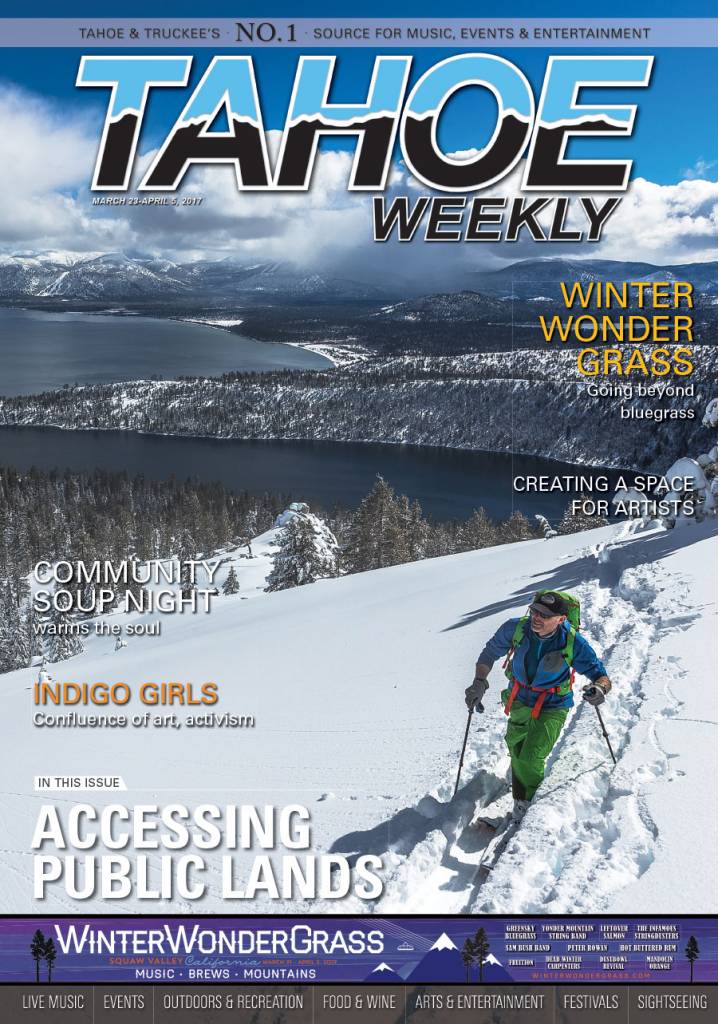
There are many things that draw people to the Tahoe Sierra – world-class ski resorts, unparalleled mountain biking and hiking trails, the breathtakingly blue waters of Lake Tahoe and the scores of mountain streams and lakes that dot the mountains, and the abundance of recreation opportunities that the mountains afford residents and visitors alike.
Click here for the Digital Edition
But we each must do our part to protect this unique environment from the ravages of human interaction from litter and traffic, to preserving Tahoe’s famous clarity, and perhaps, most importantly, maintaining access to public lands.
The region is home to thousands of acres of public lands – state parks, U.S. Forest Service lands, California Tahoe Conservancy, even the Army Corps of Engineers maintains public lands at Martis, among many others. Most of us will enjoy these public lands during our time in Tahoe from marveling at the dam in Tahoe City on state park land to exploring the back country whether skiing and snowshoeing to snowmobiling and mountain biking to hiking.
Balancing the need to preserve the mountain environment for generations to come while maintaining access to popular back-country destinations has become a growing issue as water quality improvement projects have lessened or removed parking and trail access to Tahoe’s back country. Keeping public access issues in the forefront as local and state agencies do the essential task of protecting Tahoe’s natural environment is something in which Tahoe Weekly is committed.
As part of that ongoing commitment, Kayla Anderson revisits the issue of back-country access that the Tahoe Weekly first reported on in the fall of 2015. Kayla looks at the accomplishments of local agencies working together and the problems that still plague back-country users, namely winter parking, for her feature “Accessing Public Lands” in this issue.
– Katherine Hill


