


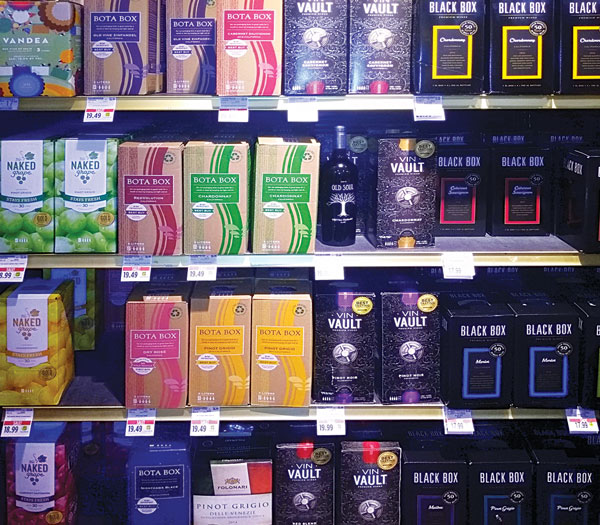
Bota Box, Black Box, Naked Box, Bota Brick: There hasn’t been this much zaniness in wine names since the critter craze. But just what are we getting in our cardboard-and-plastic-bag treasures?
Well let’s start with the juice. Despite the claims of artisanship, these are almost always huge production, industrial wines made in tanks the size of a cargo ship. But this does not automatically make them swill. As a matter of fact, the production goal is usually to produce a consistent juice while not pushing the aromas, body or flavors anywhere but right down the middle.
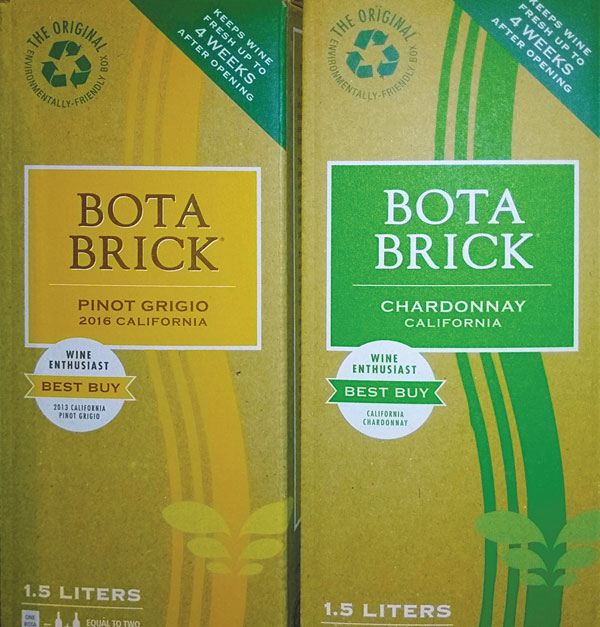
We have already addressed the questionable nature of statements of winemaking artisanship in box-wine production, but what about the blurbs claiming a shelf life of up to several weeks after opening. First thing to know is that if you are going to store these at all after opening, it should always be in the refrigerator. Even if these are hermetically sealed, the juice itself is not made with the base product or winemaking techniques that bode well for a long life. Yes, at least one marketer actually wrote the multi-week claim on the outside of the box. An oversight I’m sure.
So what are the benefits of this wine that’s in a bag that’s in a box? Well, actually there are many.
No. 1 is that they are environmentally advantageous. The materials are increasingly becoming more recycle friendly at the higher levels of the recycle rating scales. Another green factor is the larger amount of juice in said containers. There is also the matter of shape and size, square-edged and consistent, which means less space is needed to store and display fewer overall containers. Weight savings compared to glass allow for lower energy use in transport.
No. 2 is convenience, which fits in well with our “Best Wine Summer Ever” theme as beaches, boats, backpacking or just about any mobile wine application are sweet spots for box wine convenience.
No. 3 is the usually tasty, if simple, wine itself.
No. 4 is that safety and compliance are strengths of box wines in areas where glass is a hazard.
And, what about recommendations you ask? Well, not so much. It is a matter of consistency from any particular producer. This is because of varied fruit sources and within vintage variation because wines of this volume are typically made several times per year as opposed to one lot. While many think value is a feature, after years of tasting these wines, I believe one can buy equal or better juice for the same or lower per-bottle prices.
Not to end on a sour note, it can safely be said that box wines are a net plus and their features are amplified in summer.


