


I’ve always been intimidated by the idea of canning and yet was called to embark in the process. I felt this way about making homemade bread — and now I do it routinely.
When I was young, I loved visiting my grandparents’ house. Their garden was immense, surrounded by several apple trees and rolling hills. Each year they canned green beans, stewed tomatoes, applesauce and the overflow of vegetables yielded from their garden. I loved going to their basement and foraging through the jars on the dusty shelves.
My good friend Moni Monteverde has the ultimate green thumb and her vegetable gardens and fruit trees were ripe for the picking. We decided to spend the day harvesting and canning.
My good friend Moni Monteverde has the ultimate green thumb and her vegetable gardens and fruit trees were ripe for the picking recently. We decided that we’d spend the day harvesting and canning some of her bounty. On the list of our projects were chokecherry syrup, apple butter and pickles.
Canning supplies seem to be in high demand of late. I had a canning pot and rack, jars and lids but, alas, no tongs. I arrived at her house and we set out to find recipes that we would use to ensure we didn’t kill anyone or ourselves with our method. We came across a YouTube channel of Homestead Tessie’s Survival Mobile Home Living. Her ethos of not wasting any parts of the produce called to us and we loved her canning advice. The book “Put ‘em Up!” by Sherri Brooks Vinton was also a great resource.
I realized I am definitely less methodical than Moni when it comes to cooking and recipes but when it comes to canning it’s important to follow instructions. Moni pointed out that when canning at an altitude over 1,000 feet, we needed to adjust some of our ingredients and timing for some of the foods we were planning to can.

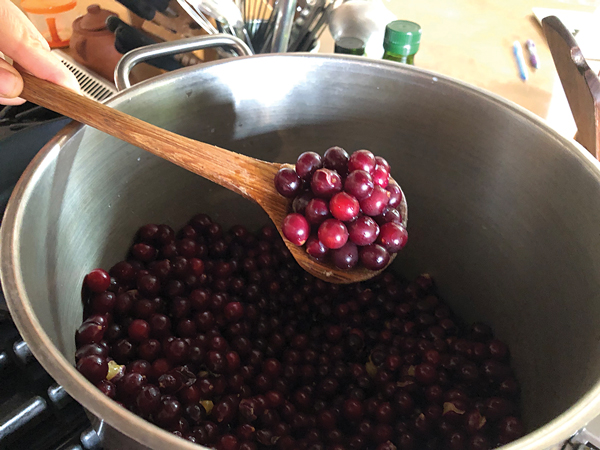
Our first recipe was a chokecherry syrup. We started with a large pot and cooked down the fruit and then mashed it through a sieve. We got about 4 cups of juice. Moni handed me a flour sack towel and I squeezed the mashed berries to get a bit more juice. Once ready, we put the liquid back in the pot. We used Pomona’s Universal Pectin, which included a calcium packet. We mixed the calcium in the water and added that and the lemon juice to the pot. We measured the honey for sweetener and mixed in 1 teaspoon of pectin. We were making syrup, so we didn’t want it to thicken to jelly. We added this to the pot and brought it to a boil. In the meantime, we boiled the water for the canning process and sterilized our jars and lids.
Once our syrup was ready, we poured it through a funnel into pint jelly mason jars. Moni dipped a chopstick into the jar to remove any air bubbles and wiped down the jars’ tops, as Homestead Tessie suggested, so no mold will form. Moni then used a finger-tight method to tighten the outer ring, twisting it only until the jar moved. We placed the jars on the rack and submerged them in boiling water for 15 minutes. While that was happening, we went to the yard and picked 6 pounds of apples for applesauce and apple butter.
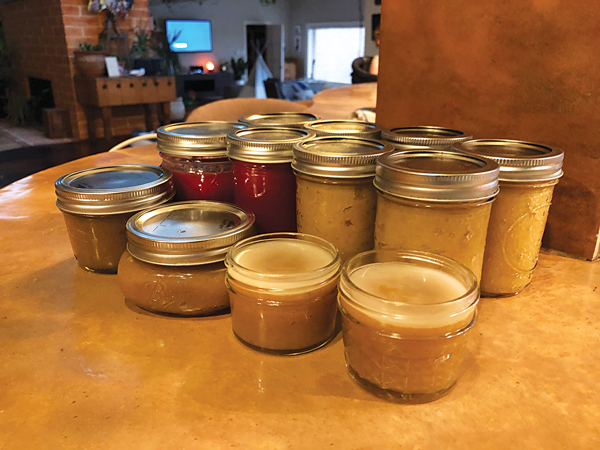
Applesauce & apple butter
The jars of syrup were done; we pulled them out and let them cool. The seals were tight, and all looked good. We removed the outer rings for storage. We both deemed that our syrup was a successful venture.
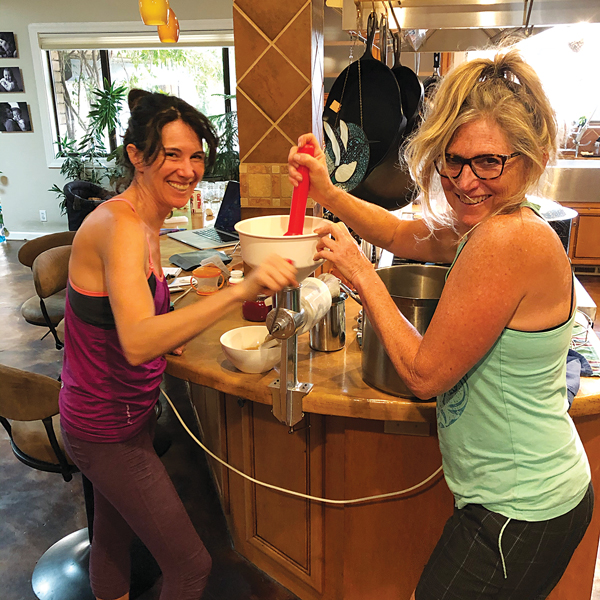
To prep the apples, we removed the stems and worms and cooked them in water. We ran the apples through a food mill and split them into two different pots. For the batch of apple butter, we added cinnamon, cardamom, ginger, allspice, sugar and lemon. For the applesauce, we kept it simple using only apples and lemon juice. We returned the milled apples for apple butter to the stove and cooked for another 45 minutes to enable the apple butter to thicken.
We attempted another method of preserving using canning wax. We placed the applesauce into jars and sealed them with melted wax. Both the applesauce and apple butter were delicious although we were disappointed in the yield — only 4 pints of each.
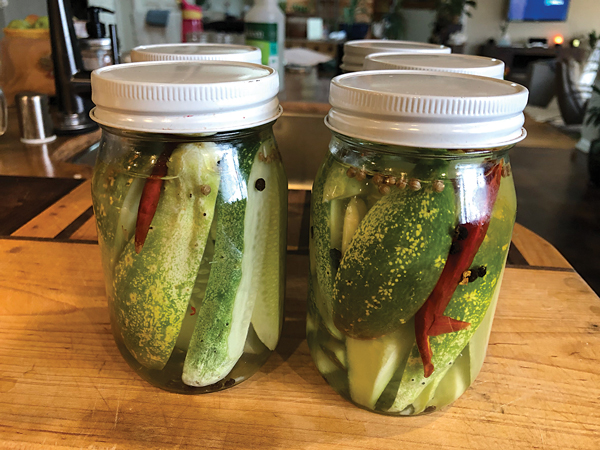
Quick pickles
While things cooked and boiled, we harvested cucumbers and prepared quick pickles for the refrigerator. We sliced them lengthwise and added distilled vinegar mixed with salt and a tad of sugar, coriander seed, black peppers, fresh dill and some of Moni’s Japanese Santaka Peppers, which were hot. We sealed the jars and refrigerated them. They were delicious and some of the best pickles I’ve tasted.
While it does take a fair bit of time to can, it was delightful day spending time with a friend, putting up fresh fruits and vegetables. I’m looking forward to when we to harvest tomatoes for another round of canning.
I am less intimidated, and Moni was a pro for her first time. I loved the idea of canning produce to enjoy in the winter months to come.
Easy Apple Butter
From the kitchen of Priya Hutner
3 lbs. medium apples, stems & worms removed
3 t lemon juice
2 t ground cinnamon
1 t cloves
1 t ground ginger
1 t ground cardamom
½ C sugar, honey or maple syrup
Stir all ingredients together in a medium-sized pot. Cover and cook on low heat, stirring occasionally. Remove pot from stove and let cool. Run apples through food mill and return to heat to thicken the apple butter for about 45 to 60 minutes. Let cool and jar or can.


