


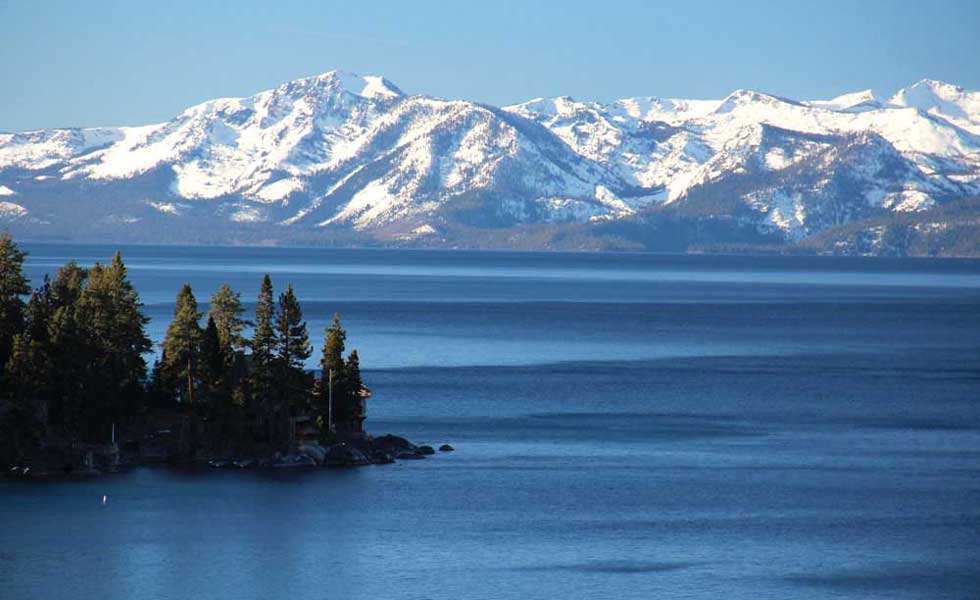
Despite the global pandemic and a dry, warm autumn so far, the exhilarating season of crisp temperatures, dazzling snow and thrilling winter sports is fast approaching. Residents and visitors all have their favorite times of year in the Tahoe Sierra, but the region’s climate is ideal virtually year-round. Few places on the planet can boast meteorological conditions as inspiring for their contrast between soft, summer serenity and dynamic, winter weather.
The marvel is that statistically, all the snow falls on just 50 days, meaning three days of fair weather for every day of fresh powder.
During the summer season, consistently clear days combine with mild temperatures and low humidity to create a unique mountain environment. The remarkable weather is the perfect complement to outdoor activities. In June, July and August, the probability of sunny skies exceeds 90 percent on any given day and average, afternoon high temperatures range between 70 and 80 degrees F. During winter, powerful storms originating in the Pacific Ocean dump 12 to 20 feet of snow at the 6,000- to 7,000-foot elevation levels, with nearly double that higher near the Sierra Crest. The marvel is that statistically, all the snow falls on just 50 days, meaning three days of fair weather for every day of fresh powder.
Weather in the Sierra Nevada
The region’s climate is closely representative of the Sierra Nevada as a whole. It is the interplay between the Pacific Ocean and the mountain barrier that creates the sharply defined seasonal weather patterns, which bring variety and change. Climate in the west is driven primarily by a semi-stationary, high-pressure system in the eastern Pacific Ocean. When the clockwise circulation is near or centered over California, it serves to block the eastward movement of Pacific storms. Precipitation is forced northward and the jet stream and storm track enter the continent over British Columbia and the Alaskan panhandle. It resides in this position most of the summer producing clear skies with a warm, dry regime in the Sierra Nevada.
Rarely in summer, but frequently in winter, this persistent blocking dome of high pressure will recede well to the west and south toward the Hawaiian islands. When that happens, low pressure storm systems steered by an enhanced jet stream originating from either the Gulf of Alaska or mid-latitudes of the Pacific Ocean, invade the West Coast.
The source of the vector determines snow levels and precipitation character — from rain to slush to powder. A Sierra winter is made up of storm periods lasting from several days to a week or two. These atmospheric river events are interspersed with fair-weather conditions that may prevail for just a few days or as long as a month, producing spectacular bluebird days. The bulk of annual precipitation recorded in the Tahoe Sierra occurs from December to May with most of it falling as snow above 7,000 feet.
Factors impacting snow
A major factor for big snowfall totals is that eastbound, Pacific-generated storms intensify as they are forced up and over the Sierra massif in an atmospheric cooling process known as orographic uplift. The towering range also serves as a divide separating the relatively warm, moist airstreams originating over the ocean from cold, dry air masses sourced from interior North America. These atmospheric and topographic features combine to produce average snowfall totals of more than 400 inches; in wet winters depths can exceed 20 feet or more. California’s official annual snowfall record is 73.6 feet (1906-07), while the deepest snowpack measured at a weather station in the state is 37.5 feet (March 1911) — both occurred at Tamarack, southwest of Lake Tahoe.
Despite occasional overwhelming snowfall, weather-wise locals know that the region is located in a banana belt east of the Sierra Crest, spared from the heaviest precipitation that falls on the west or windward side of the range. Consider that Tahoe City averages slightly more than 32 inches of precipitation annually, while Blue Canyon at a similar latitude but slightly lower elevation on the Sierra west slope, receives 66 inches, more than twice that amount. Precipitation is rainfall plus snow melted for water content. There is no doubt that winter activities would be a much greater challenge if snow and rainfall amounts were doubled on this side of the hill.
Lake Tahoe’s influence
Unlike other bodies of water in the Tahoe Sierra, Lake Tahoe has never been known to freeze. Massive Big Blue creates a maritime influence in the Tahoe Basin that keeps the local climate cooler in summer and warmer in winter than the town of Truckee just 14 miles from the North Shore. During summer heat waves, Truckee’s high temperatures can soar well above 90 degrees, but near Lake Tahoe temperatures are often 10 degrees cooler or more. The lake’s relatively warm water also affects snow levels. Although the town of Truckee is nearly 400 feet lower in elevation than Lake Tahoe, it averages 10 percent more snow each year due to lower temperatures and its proximity to spillover from Donner Pass.
During the summer months when seasonal monsoon moisture surges northwest from the Gulf of Mexico, severe thunderstorms may form over the region. Thunderstorms can pack a deadly punch to hikers, boaters and others exposed to its array of meteorological weapons — gusty winds, damaging hail, lightning strikes and most deadly of all, flash floods. When thunderstorms develop, get off lakes and mountaintops and away from streambeds.
The magic of spring & fall
The off-peak seasons of spring and fall bring their own charm; storm activity diminishes rapidly and the chilly temperatures of winter moderate. In Tahoe City during May, the average high is 60 degrees in the shade, but with an expected 26 days of intense sunshine most days feel much warmer. Overnight lows hover around freezing, the perfect temperature range to enjoy spring skiing in the morning followed by a round of golf in the afternoon.
Autumn is spectacular. Aspen leaves shimmer with golden hues, while soft, calm days often infuse regional lakes with a mirror-like quality. Maximum temperatures in September average 70 degrees, cooling another 10 degrees during October. Precipitation expectation increases during the course of the two-month period, but this time of year the weather is frequently pleasant.
The fall season has always been a favorite for hard-working locals craving days off and diminished crowds. It’s one of the best times of year for exploring the Sierra Nevada before the snow flies. Weather in the Tahoe Sierra can change moods in a flash, so visitors and locals should always pay attention to the forecast and keep their eyes to the sky. In his book, “Time Enough for Love,” science-fiction author Robert Heinlein’s wrote: “Climate is what you expect. Weather is what you get.”


