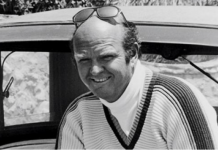
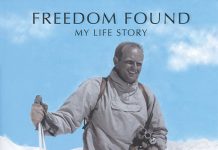
I am in the final stages of editing my biography after a 4-year struggle writing about the ups and downs through a lot of years: much fun, some pathos. Some parts of my life are probably only interesting to me, but I’ve put it all down, never the less.
I have been privileged to live through a lot of changes during the first few decades of my growing up and living in Southern California. It was a virtual desert in 1924 when I was born and I think there are a couple of memories worth sharing.
The ice truck that came through the neighborhood once a week was pulled by a giant horse and all of the families that could afford ice that week got 25 lbs. chipped off of the big ice block. We kids followed along behind it and scrambled for the small ice chips that fell out of the wagon in the process before they melted on the hot asphalt. These were real treats as this was long before we could afford to have any kind of store-bought cold drink, ice cream or a Popsicle.
There was still one street car left in Hollywood that was pulled by a horse.
You could buy a brand new 1930 Model A Ford for less than $600 and a well-running, one-year-old car for somewhere between $100 and $200. The higher-priced ones had almost new tires.
There was a great big red streetcar that ran west on Santa Monica Boulevard to the ocean front in Santa Monica and then the tracks turned left and went south along the beach as far as Redondo Beach. I could ride that entire distance for 25 cents, but usually hitchhiked because 25 cents was almost two weeks profit from selling Saturday Evening Post magazines door to door.
Manhattan Beach and Hermosa Beach had each built a pier as a tourist attraction. The subdivisions of both towns had cut up the sand dunes into vacant lots only 25-feet wide. They also specified a 3-foot setback, so that the cottages could only be 19-feet wide. This was plenty of room to build a weekend beach cottage, but today, the lots are full of houses that are 19-feet wide, three stories high and 90-feet long, that the views are almost all gone.
Today, when I watch a robot landing on Mars after years-long journey, I realize that I have lived through such huge, gigantic changes in everything in America. The only place you can see a horse drawn carriage today is for tourists such as in Central Park in New York City or the Budweiser Beer wagon in a parade somewhere.
Who is to judge which days were better? Who cares?
Our phone number in Encino in 1930 was Van Nuys 63M and anyone could listen in who wanted to. No government getting nosy, but there was plenty of corruption in those days, too. Mulholland, Chandler and Huntington poisoned the wells in the West San Fernando Valley and dropped the price of land to as low as $50 an acre with an orange orchard that was now dead because of that lack of water. The moguls wanted to build the government-bond financed aqueduct to Los Angeles from Mono Lake 300 miles away and make a gazillion dollars.
Where my parents smart enough to buy any acreage?
Not even close.
In Topanga Canyon, we lived in a $5-a-month shack with an outhouse. There was a yacht club that was run by the Los Angeles Athletic Club with big regattas on Sunday amidst big surf sometimes. My life was changed forever by a fisherman from Hawaii who lived there who taught me to bodysurf when I was 5-years-old.
The young children of today are spending a lot of their spare time exercising their thumbs in computer games instead of paddling for a wave on a surfboard or just bodysurfing. To me, the water, the mountains, just being outside means freedom much more than sitting on the couch with a computer game.
Today, there is a waiting list for people to take a space ride and a few laps around the earth along with some weightless time. Why not, if you can afford the $20 million ticket to ride? I was lucky to go to many of the ski resorts of the world before they were ski resorts. I took the long hard climb to where ski lifts would carry you today.
I have no desire to travel to Mars or to the moon for that matter. If I wanted to do that, I could go out into the desert east of Las Vegas or to the Craters of the Moon in southern Idaho. I was lucky enough to wander around out there a few times when I produced movies for Nissan about racing across that desolate desert part of the world.
When the trains were coming out from Chicago to Pasadena in the winter to sell the passengers Southern California land, they tied oranges to the tall desert cactus making them look like desert Christmas trees.
My first real improvement of swimming through the water to catch a wave bodysurfing was when Owen Churchill invented the swim fin in the 1930s. For $7 plus tax, I was now able to catch a wave and ride for four or five body lengths. As I grew, I could ride bigger and bigger waves. It was a little bit short of a walk on the moon, but I was way ahead of all of my school friends in the wave department, many who didn’t even know how to swim.
Memories are just what you make of them. As I wind down on writing about my 88 years of living a way-better-than-good life, I have written about some of the stuff that won’t be in the finished bio or, as I’m calling it, “A Narration of my Life,” because some of it is just for me. My wife pointed out that some experiences seem pretty negative, but it’s good for me to get it out of my psyche … a catharsis, so to speak.
Warren Miller is history’s most prolific and enduring ski filmmaker. Visit warrenmiller.net or visit his Facebook page at facebook.com/warrenmiller.