


Author’s Note: This article is adapted from, “Snowbound: Historic Tahoe-Sierra Winters,” a book in progress scheduled for release in 2014 by Mic Mac Publishing.
In late March 1880, a temporary lull in what had been a cold and stormy winter, combined with a dramatic warming trend, lured Truckee-Tahoe residents into a false sense of spring and the end of winter. Despite the prevailing optimism, the Storm King had a cruel April Fool’s joke to play on residents in the region.
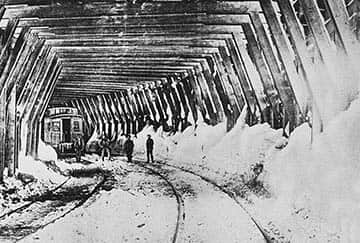
On April 1, a vigorous storm slammed into the region. It buried the mountains under 4 feet of snow in just 24 hours. An avalanche near Emigrant Gap took out 1,500 of snow shed and buried Central Pacific Railroad tracks under 75 feet of snow, ice and rock. Racing to the scene, a repair train smashed into a stalled passenger car, nearly killing several occupants asleep in their berths. Hundreds of men were deployed to shovel the tracks to get the line reopened.
The powerful storm was only the first in a series of intense, low-pressure systems barreling in from the Pacific Ocean. For three weeks in April, blizzard-like conditions prevailed in the mountains, where the late season storms would ultimately dump a total 298 inches of snow on Donner Pass. Within the first 48 hours of the assault, 5 feet of new snow buried settlements around Lake Tahoe and halted all mail delivery or food supplies from Truckee.
Avalanches in the high country destroyed additional lengths of snow shed, leaving even more track completely exposed to drifting snow and slides. Crushed sheds blockaded the vital trans-Sierra train route for days at a time. As the snow piled up, all Truckee train engineers, firemen, conductors and brakemen, as well as division’s entire track maintenance crew were on “constant duty 48 hours and in some cases 60 hours.” All railroad personnel were required to help clear each blockade and then promptly resume regular train duties “without so much as an hour’s rest.” Snowplows were frequently jumping the track as they sped back and forth clearing the line. Each time, teams of men, often Chinese laborers, had to dig the derailed locomotives out and get them back on the tracks.
By the middle of April, chaos reigned in the mountains and railroad traffic crawled when it wasn’t stopped completely by slides or crushed sheds. On April 15, a west-bound passenger train that had been lurching its way across the Sierra for two days, but the crew of No. 9 knew that they were getting close to Emigrant Gap Station and out of the deepest snow. The veteran engineer was determined to escape the storm-swept mountains, but he was worried about the last three coaches crammed with passengers. They were half crazed with fear and running out of food. Any more delays could cause a real panic. Suddenly, just as the lead locomotives cleared a snow shed, they ran into avalanche debris across the tracks. The abrupt halt and track location on a steep ravine brought absolute silence among the coaches. But before anyone could react, another huge snow slide struck the train dead center, taking out three freight cars with a roar. Amazingly enough, the three rear passenger coaches remained intact and on the track. It took another 48 hours before rescuers dug though the slides, but they found all passengers and crew alive and grateful.
A particularly intense and powerful storm for any time of year ripped into the mountains during the third week of April in a grand finale super storm. It was described as “the heaviest and most protracted one ever encountered on the line of the Central Pacific.” Beneath all the new snow was an old snowpack with a crusty, icy surface. The fresh snow had no grip on its base and avalanches did major damage.
Fighting the worst weather in its 13 years of operating over the Sierra, CPRR maintained a frantic pace trying to keep the tracks clear. Hundreds more men were sent into the blizzard with shovels. Complicating matters, Western Union telegraph lines were down and for most of the storm there were little to no communication over the mountains.
The real action was in the high country where unprecedented storm conditions challenged the exhausted railroad and labor crews in an epic battle. Central Pacific now had 2,000 men in the mountains along with 25 engines, all working hard to open the blockade. One California-bound passenger train that had left Reno on Monday, April 19, was still stranded by collapsed sheds between Cascade and Emigrant Gap on Thursday, April 22. The railroad company delivered provisions to stave off hunger. Meanwhile, the westbound Tuesday train from Reno was on hold in Truckee where they were “faring sumptuously every day.”
Giving no respite, more potent storms hammered the mountains. For three consecutive days, 2 feet fell every 24 hours, completely inundating Truckee. By the third week of April, with the town buried under 16 feet of new snow and the ice measuring 10 feet thick on Donner Lake, the Truckee Republican newspaper proclaimed the storm to be unequaled in living memory. Schools were closed and businesses did their best to keep their front doors clear of snow. Mountain locations across the central Sierra were reporting 5, 10 and even 20 feet of new snow. The epic storm shut down the railroad for days, making it the worst stoppage since the line was built, and the only one that ever occurred in April. Incredibly, despite all the danger, not one railroad man died that month.
The record storm broke on April 24. Within a day or two, the last railroad blockade was finally cleared and long-delayed westbound trains began to pull out of Truckee. Hundreds of passengers, tired of biding their time in Truckee’s saloons and restaurants, cheered as the eight passenger trains and 300 freight cars finally headed to California. Those same passengers would later gasp as they passed the destroyed sheds and locomotive wrecks that gave evidence of hard-fought battles between man and the elements. The Truckee Republican summed it up well: “Taken all together, it was the greatest fight ever made…It is an event that deserves to be immortalized.”
Donner Summit received 783 inches (65.25’) of snow in the winter of 1880, ranking it as the third snowiest of record. Amazingly, nearly one-third of it fell in April.
Tahoe historian Mark McLaughlin is a nationally published author and professional speaker. His award-winning books are available at local stores or at thestormking.com. You may reach him at mark@thestormking.com. Check out his blog at tahoenuggets.com.


