


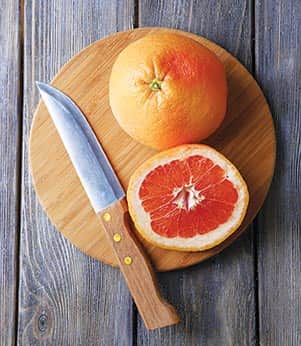
Last week, I talked about knives and why that if I was buying one knife I would chose a French knife.
Basically, I would make that choice because, overall, the French knife is probably the most versatile knife out there. So, if you are now going to go out and get a knife for yourself, what do you look for?
First, as I said last week, the knife has to feel comfortable in your hand. When I hold a knife, I pinch the blade between my first finger and thumb with the knife balancing on my middle finger that is in contact with the heel of the blade and the front of the handle where the steel enters the handle (the bolster). This puts the knife in a perfectly balanced position in my hand, giving me total control.
For a lot of knives, especially when the steel runs only part way through the handle, you will notice the knife to usually be a little more blade heavy. This goes along with how comfortable the knife feels in your hand and how you hold it. If you hold it only by the handle not pinching the blade, the knife will still be blade heavy and more cumbersome to work with.
There are other things to also look at, like the handle. If you get a knife with a wood handle, be sure it is hard wood not soft or it will get dinged up easily and eventually won’t feel comfortable anymore. Soft wood also will absorb moisture and odors more easily. With a wooden-handled knife, look for the steel to go all the way to the butt.
As for plastic or polypropylene handles, they are becoming a lot more popular because they won’t absorb anything and can be comfortable and often less slippery when wet. That type of handle doesn’t mean lower quality. One important thing to consider is the amount of carbon in the steel. A high-carbon knife is going to be a much better quality knife that will keep its sharpness much longer, but it will take more work to get that edge back once it starts to dull. High-carbon knives also are a little more brittle, so they need more care to keep from chipping. Most all knives now, including the high-carbon knives, are stainless steel. This will help reduce the possibility of rusting, but you should always wash your knife immediately and dry it with a towel because even stainless steel knives can rust after a while.
It used to be the German knives were the only way to go for nice quality knives. Henkel, Wusthof and Sabatier are some of the most well known German knives. They are known for being high quality and heavy duty. I have always been partial to the Sabatier, because they felt better to me and I’m not a fan of the heavy bolster that flairs out at the back of the blade on a lot of Henkel knives. That bolster makes it so you can’t sharpen all the way to the back of the blade and eventually you end up with a portion of the blade near the back end not touching the board. That’s a personal thing, however.
That said, Japanese knives have made a leap in popularity when it comes to choices. A lot of the Japanese knives have a higher carbon ratio and harder steel, so it will hold a good edge, but again, take much more work to sharpen. Another difference is that the Japanese knives have a much lesser edge angle, which means the blade is thinner and sharper. A typical German knife has an angle of about 20 degrees compared with Japanese knives that are usually 16 degrees or less. This means that the blade will glide right through things easily, but will not be as great for heavy chopping or bone work.
I have to admit, I’ve only used a Japanese knife once and it was lighter and made slicing like cutting through butter. Cutting vegetables and meat was so easy, but when I had to do some chopping, I went right back to my French knife.
What does this all mean when it comes to buying knives? First, I would recommend buying individual knives rather than a set. This way you can feel each knife. One brand of French knife can be great for chopping, but a different brand can work better for slicing. You can spend a little more on the knives you really use the most.
If buying for a gift, whether getting an individual knife or a set, get it somewhere it can be returned. Think about the user and if they are more apt to put in the effort of working on the harder steel as needed or if the quicker edge work of softer steel would be better in the end. Are they more apt to buy their meat already to cook or do they break down whole chickens and things like that. Basically, how much time do they spend in the kitchen?
If the answer is little, then probably a little softer steel that is easier to maintain and rework the edge might be the way to go. That doesn’t mean less quality, just easier maintenance. If they love throwing parties and are always working in the kitchen, then go with the harder steels.
Remember, knives don’t make the cook, they make the cook’s job easier, and it is not always the most expensive knife that is the best knife for the individual.
Smitty is a personal chef specializing in dinner parties, cooking classes and special events. Trained under Master Chef Anton Flory at Top Notch Resort in Stowe, Vt., Smitty is known for his creative use of fresh ingredients. He has been a chef for PGA’s Memorial Tournament for more than 15 years and ran the main kitchen at the World Games. For more information and archived copies of Stir it Up, visit chefsmitty.com. Smitty welcomes questions and comments at smitty@chefsmitty.com, tmmsmitty@gmail.com or (530) 412-3598.


