


By Chef David “Smitty” Smith ·
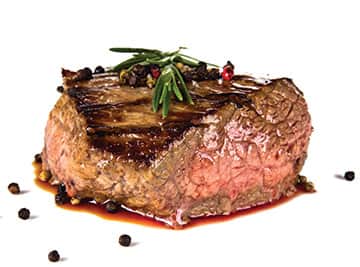
After talking about knives for a couple of weeks (I’ve gotten some more questions and I’ll e-mail some thoughts on those directly to you), it’s time to get back to food.
Summer is quickly coming to a close, but grilling season, however, still has a long way to go. This article isn’t necessarily just about grilling, but rather the steaks themselves and how you prepare them, as well as cook them. It doesn’t matter if you are grilling, using a heavy skillet or even the oven, you can chose the best steak for you.
The first thing to think about is how do you like your steak cooked? Rare, medium rare or maybe with all the hype of food born sickness possibilities, maybe you need your steak well done.
Maybe you just like a well done steak because that’s the way you like it. Inevitably, every chef has been asked at one point or other if cooking a nice prime rib eye to well done bothers him or her. Of course, the answer is usually no. Why should it bother us how you like your steak? You’re the one that’s going to have to eat it.
What cut you chose to cook, that is more important to me than how done the steak is. I’m always going to go for the rare to maybe medium rare piece of meat. OK, almost always. Think about a nice, slow-cooked prime rib. Everyone knows just by looking at it that the rare section is going to be in the middle and the ends are going to be well done. If I’m getting my choice here, I’m going to choose the end slice from the small eye end of the roast.
Roast a top round and I’m going right to the center of it where it is nice and blood red. It’s true that the end cut of the rib is well done, but well done does not necessarily mean dry and tough. This is where the cut of meat comes in.
The prime rib is a much fattier cut of meat than a round. This means that even at well done, unless really cooked to beyond death, it can still be moist. The leaner cuts of meat don’t have that fatty marbling throughout (those small white flecks you see dotting certain cuts of meat) to keep it moist. This is the same with single steak portions. The more you cook a leaner cut of meat, something from the back end or leg of the cow, the drier and tougher it will get. Moist cooking or marinating the leaner cuts will help produce a steak that will be juicer when cooked to more well done temperatures.
Did you ever go into a market and buy a piece of London broil for dinner? Usually, when I see a steak labeled London broil, it is actually a slice of a round. London broil is not really a specific cut of meat, but rather the way you cook it. London broil is moist cooking or marinating the steak and then cooking it to medium rare, but again to the eater’s choice. Either flank steak or a piece of round steak is normally used for London broil.
In the end, when you are standing there, looking at all the various choices in the meat box, think about how you like your steak and then make your decision. If you’re on a budget, but like your steak rare to medium rare, then there is nothing wrong with choosing a piece of the round to cook. If you like to marinade for flavor, any cut will be good, but the marinade will add moisture to the meat, so the leaner cut might be a great option.
Also, when it comes to natural flavor as opposed to seasonings, look for those little white flakes of marbling. Yes, those cuts such as rib eyes, T-bones, porter house and New York strips will be a little, and sometimes a lot, more expensive, but will have more natural flavor and moisture. If you like well done but not cotton-mouth dry and tough, get a something with a little marbling or marinate it.
Next week, I’ll look at seasoning steaks and when is the best time to apply that seasoning.
Smitty is a personal chef specializing in dinner parties, cooking classes and special events. Trained under Master Chef Anton Flory at Top Notch Resort in Stowe, Vt., Smitty is known for his creative use of fresh ingredients. He has been a chef for PGA’s Memorial Tournament for more than 15 years and ran the main kitchen at the World Games. For more information and archived copies of Stir it Up, visit chefsmitty.com. Smitty welcomes questions and comments at smitty@chefsmitty.com, tmmsmitty@gmail.com or (530) 412-3598.


