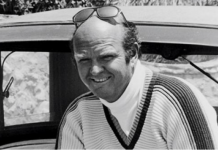
While finishing up my autobiography recently, I decided to include some of my old cartoons from a book I published in the summer of 1947. It’s called “Are My Skis on Straight?” Two cartoons in particular pointed out rather clearly what inflation has done to skiing.
When Ward Baker and I walked through the Challenger Inn lobby the first time, we had never paid more than $2.50 to ride a chairlift in Utah or California and never more than $2 to ride a rope tow anywhere.
Imagine our surprise when we saw the rates posted on the bulletin board and they read as follows:
- Chairlift: single ride, $3.00.
- Chairlift: all day, $4.00.
- Chairlift: three day pass, $11.00.
- Chairlift: one week pass, $22.50.
- Chairlift: one month pass, $75.00.
- Chairlift: full season pass, $150.00.
But Sun Valley, at that time, was undeniably the best in the world and worth it.
There is no need to quote the rates of chairlifts and gondolas today because most people I know who ski have already looked up next season’s price on the Internet. I have not checked them yet myself, but the last time I looked at them most major ski resorts charge more than $100 per day. However, Colorado, for example, has a package so that you can buy a season pass for about $360 and that includes Breckenridge, Keystone, Vail, Arapahoe Basin, as well as numerous other resorts in California.
For a person who skis a lot, this is an incredible bargain because it would be possible to ski 180 days at these resorts for $2 per day. Of course, that $2 a day does not include your accommodations or groceries or extracurricular activities or the latest and greatest ski equipment that you might be able to wear out in two years if you ski that 180 days each year.
Going back to my cartoon book, the luncheon menu was a real shocker to me and Ward in January of 1947. This, of course, was four or five years before the invention of McDonald hamburgers for $.15. The price for a hamburger was $.75 and a cheeseburger was a $1. Coffee was $.25 and a pot of tea was $.35.
This is the time of year that the ski areas are scrambling to find good employees to fill the slots needed for the winter, but when the Sun Valley Lodge was built out in the middle of a cow field, the only people who lived there were ranchers. There were no employees available in the Wood River Valley where it was built, so Averill Harriman, who owned the Union Pacific Railroad headquartered in Omaha, Neb., offered the following for employees: they gave you a round-trip ticket on their train from Omaha, Neb., to Ketchum, Idaho, room and board, and $125 a month. The jobs ranged from washing dishes in the kitchen and mopping floors or any job you can imagine at a new ski resort.
A lot of the people that applied and received the free train ticket and traveled to Sun Valley never used their free return ticket to Omaha. They settled in Ketchum, raised families and some of their grandchildren are already old enough to have children of their own, and still live there.
Many of the ski instructors came from Austria because Averill Harriman, who was president of the railroad, had skied in St. Anton for four or five winters until the scepter of World War II loomed too ominously on the horizon.
Minimum wages in the United States before and just after World War II hovered around $.25 an hour with jobs hard to find because of the 1929 stock market crash and the resulting depression, so the available jobs in Idaho were welcomed.
When Sun Valley opened, there was only one motel in Ketchum, so when Harriman built the lodge he also built employees accommodations with two people in a comfortable room with shower and toilet facilities down the hall. A few of the people that came to perform management positions were given adjoining rooms and shared a relatively private bathroom.
Today in Colorado, California, Washington, Idaho, Montana and Wyoming, there are hundreds of places to build a perfect ski resort such as Sun Valley. However, that will probably never happen in the foreseeable future. The government, the Forest Service and the tree huggers are good at shutting down the chances of anybody ever building a major ski resort in America again so that more people can enjoy the freedom of skiing.
In my opinion, that is a real shame because anyone whoever visits any ski resort between Portland, Maine, and Snow Summit in California has his or her life changed forever once they make that first ski run. Add to that the fact that ski resorts provide thousands of jobs nationwide and everybody that works in one won’t be in front of you on the freeway tomorrow morning when you’re struggling to get to your cubicle in a high-rise office building.
That first winter in Sun Valley in 1946-47 changed my life forever. I was born and raised in Hollywood and I was lucky enough to wrap my pair of wet, woolen gloves around a soggy wet rope tow at Mount Waterman and start on my life-long journey.
The freedom that I found that first time on that flat hill has been with me ever since.
The freedom that I found that first time on that flat rope tow hill has been with me ever since. I don’t know what I might have done instead of skiing my life away all over the world since that first day on skis without edges.