


By Mark McLaughlin ·
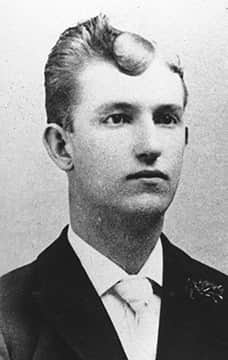
Jane and Myron Lake had worked hard to parley a modest nest egg into a small fortune. Their 1865 hotel venture at the short-lived Sierra mining town of Meadow Lake northwest of Donner Pass had earned them a tidy profit, but the effort had sorely tested their marriage.
After the Meadow Lake adventure, the couple returned to Lake’s Crossing (Reno) with more wealth, but less love, between them. In 1862, the Nevada Territorial Legislature had awarded Myron Lake a toll bridge franchise to charge for crossing the Truckee River. In 1868, the tracks for Central Pacific’s transcontinental railroad reached the Lake’s property near the Truckee River and Myron had another opportunity to increase his wealth. Lake knew that the railroad would take over all the horse-drawn wagon traffic crossing the mountains via Donner Lake, and that the vast number of freight wagons working that route would switch to the roads heading to Carson City and points south.
To get there, every wagon or stage passing through the Truckee Meadows would have to pay a toll to use Lake’s bridge, and he stood to make money hand over fist. Myron demanded that the railroad plot a townsite along the Truckee River and he bargained with Central Pacific until he got what he wanted.
Details of the deal were revealed during his divorce trial in 1879: “I had a written agreement with Charles Crocker of the Central Pacific Railroad. But the agreement was made between Crocker and myself. It was made with him individually and not as a representative of the railroad company. By the terms of that agreement I was to deed Crocker about 90 acres of my claim which was patented to me by the state in 1865. In exchange, Crocker or the CPRR Co. was to deed to me 110 acres south of the Truckee River.”
Lake’s description of his contract with Central Pacific may lack clarity, but in the end, Myron and Jane Lake owned nearly all the land that later became downtown Reno. Last but not least, Lake demanded that his new town be named after Civil War General Jesse L. Reno.
After Central Pacific gave Myron Lake everything he wanted, they received the right-of-way across the Lake’s property. It seemed that hard-bargaining Myron Lake had the Midas touch, but he wasn’t satisfied with his good fortune. Taking advantage of his monopoly of the only bridge over the Truckee River, Lake demanded an exorbitant $1 for each horse-drawn vehicle that crossed it. At first, people on horseback, pedestrians and even domestic animals also were charged stiff rates, but Lake later gave free passage to town residents and collected only half-fare from anyone who lived in the valley.
Despite his generosity, people were jealous of Lake’s lucrative business — his bridge receipts sometimes totaled as much as $2,500 in a single day. (Comstock miners, among the highest paid in the world, earned $4 per day.) In 1871, Myron Lake began developing more land along the Truckee River and he donated a parcel of land there to the Washoe County Commission for a new courthouse.
Lake realized that the county building would add prestige to future development, but more importantly, he also knew that his toll bridge was the only way to the courthouse. Citizens in Reno rallied against locating this important public building on the other side of Lake’s bridge, but again, Myron prevailed. Irate residents circulated a petition demanding a toll reduction. Next, they organized and tried to purchase the bridge.
Lake would have none of it. He argued, “My bridge and I were both here before Reno was a town.”
Later a rumor spread that Washoe County was going to build a free bridge across the Truckee River, but nothing came of it. The following year, angry businessmen cut delivery service and refused to pay Lake’s toll in both directions. Lake had them coming and going, but his avarice was beginning to get the better of him.
In 1872, he lost a legal battle in the Nevada Supreme Court over the construction of the Virginia & Truckee Railroad bridge. Lake complained that hundreds of people were using that bridge to avoid his toll, and protested that the V&T crossing had been built within a 1-mile limit of his operation. When Lake built a fence across the railroad bridge, both the V&TRR and the courts ordered it removed. Finally, on Jan. 6, 1873, the Washoe County Commissioners declared Lake’s bridge a free public highway.
Myron Lake was not one to back away from confrontation. Openly defying the commissioners, he closed the bridge. According to newspaper reports, Lake stood on the bridge with a six shooter and demanded his toll from everyone who crossed. Lake was arrested when a fight broke out between him and two ranchers. Lake was fined $20 and ordered to keep the bridge open. Later that year, the Nevada Supreme Court ruled that Lake’s bridge would henceforth be free.
In the meantime, Myron Lake’s combative personality had seriously affected his marriage. In 1879, Jane filed for divorce from her abusive husband. Their troubles had begun after the birth of Myron Charles Lake Jr., their only child. Myron accused Jane of infidelity and claimed that the real father was William Roberts, his longtime and loyal business manager. Jane then alleged that Myron had beaten her and threatened her life on several occasions. She said that he had accused her “of being unchaste and unfaithful to him.” According to testimony, Lake had told his wife “to leave his house and family, and if she left Nevada he would give her $10,000.”
The highly publicized and bitter court fight lasted three years. In 1882, the state Supreme Court upheld a lower court’s ruling in Myron’s favor. The judgment allowed Myron Lake to retain his extensive land holdings, while Jane received $200 per month in alimony and custody of Charles Jr.
Before his death on June 20, 1884, at the age of 56, Myron named young “Charley” his full heir, with the family fortune to be held in trust until his 27th birthday. For three years, Myron Lake had fought bitterly to keep Jane from her share of their estate. It’s ironic that by giving Charley the money, he gave Jane, as the child’s guardian, full control of the Lake fortune. Charley may have had the money, but Jane had Charley.
Tahoe historian Mark McLaughlin is a nationally published author and professional speaker. His award-winning books are available at local stores or at thestormking.com. You may reach him at mark@thestormking.com. Check out his blog at tahoenuggets.com.


