


By Chef David “Smitty” Smith ·
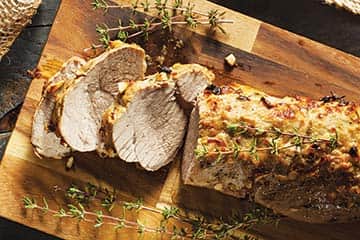
Cooking a pork loin is about the same as cooking a beef loin, but there are a few minor differences on how I go about it.
Think of a whole pork loin and a whole beef loin next to each other. The loin is the section of the animal between the ribs and the hind quarters. To make it easier, think N.Y. strip and the pork loin. The pork loin looks long and almost round as compared to the beef loin that looks bigger and flatter. A beef loin will generally have more fat on it all the way around and some of that gets trimmed off before cooking.
The pork loin has a distinctive fat cap on the top, but mostly has little else all the way around. The pork fat cap isn’t thick, so it can be left on. Unlike the prime rib or rib roast, the loin is much denser with less fat marbling throughout, so leaving the fat cap on will help keep the roast moist and also help in flavor transfer into the meat.
The first thing I do before cooking a beef roast is to let it warm to room temperature. I’m not quite so critical of this with the pork loin because it is so much smaller, but I do let it sit for about 15 minutes while I get everything else ready. I’ll turn the oven on high and place the empty roasting pan in it while I get all the seasonings out. It is in the seasoning process that I do things slightly different for the pork.
The beef loin already has a ton of flavor in it, but pork can be fairly bland. For this reason, I add more herbs, such as rosemary, with the pork. Of course, thyme or other herbs can be used on both pork and beef also, but when herbs cook too long they tend to get a little bitter so they should be added later into the cooking time for beef. The pork roast is so small it doesn’t take long to cook, so the herbs are OK to add.
For beef, I’ll fine chop the garlic, rubbing it into the roast especially heavy on the fat cap, then season with kosher salt and fresh ground black pepper. Instead of fine chopping the garlic, I’ll chop it up a little and then add some kosher salt to it on the cutting board. Then, using the knife blade, I’ll pull the blade across the mix at an angle to grind it into a paste rather than chop it into clumps. I’m basically making a garlic-salt paste that will get rubbed over the pork and, again, especially heavy over the fat cap. The paste will make it harder for the garlic to burn and get bitter.
For the beef roast, I turn the oven down lower and roast longer due to its size and because of the fat difference and lower temps; there is less of a chance to burn the garlic. Once the garlic salt paste is rubbed in, I’ll season with fresh ground black pepper and rosemary. For fresh rosemary, there are kind of two thoughts: I can either try to chop it as fine as possible to avoid burning, or I can use the whole sprigs and if they appear to get a little too dark while the roast is cooking, simply move them off the roast to the side. If I’m using dry rosemary, I put it in a grinder and grind it nice and fine.
To me, the tough part is knowing at what temperature to pull the roast from the oven. Every chart says that this type of roast should be cooked to 145 to 160 degrees, but I like pork medium rare with a little pink inside, which means I’ll pull it at 130. Enjoy.
Garlic Rosemary Pork Loin
Sit pork loin on counter for about 15 minutes. Meanwhile, turn oven on high and place roasting pan in the oven and prepare garlic-salt paste.
Rough chop garlic (amount of your choosing) on a cutting board. Add some kosher salt. Run the knife blade across the mixture to make a garlic-salt paste. Rub the pork loin with the garlic paste, with a liberal amount on the fat cap.
Remove the roasting pan from the oven turning the temperature down to 350 degrees. Add a small amount of oil and then sear or brown the roast on all non-fat sides. Once the three sides are golden, place the roast in the pan, fat cap down, add chopped or sprigs of rosemary, and place it in the oven.
After 15 minutes or when the internal temperature reaches between 115 and 120 degrees, roll the pork loin over so the fat cap is up. For medium rare with a little pink, cook until 130 degrees, but no more than 145 to 160.
Remove from oven and let sit for at least 10 to 20 minutes before cutting to rest and let all the juices work their way back into the meat. It will continue to cook for much of this time raising the temperature.
Smitty is a personal chef specializing in dinner parties, cooking classes and special events. Trained under Master Chef Anton Flory at Top Notch Resort in Stowe, Vt., Smitty is known for his creative use of fresh ingredients. He has been a chef for PGA’s Memorial Tournament for more than 15 years and ran the main kitchen at the World Games. For more information and archived copies of Stir it Up, visit chefsmitty.com. Smitty welcomes questions and comments at smitty@chefsmitty.com, tmmsmitty@gmail.com or (530) 412-3598.


