


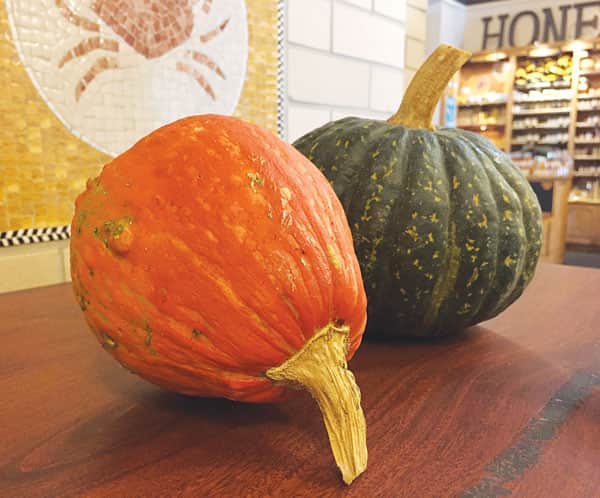
What is it about pumpkins that evoke a sense of nostalgia: the smell of pumpkin pie wafting from the oven at a holiday dinner, the sight of the colorful pumpkins sitting on your front porch or the fun of carving Jack O’ Lanterns?
[blockquote3]
“The pumpkin takes center stage during the fall season at the market where large boxes overflow with the orange orbs and at the holiday table.”
[/blockquote3]
The pumpkin, which is a fruit, takes center stage during the fall season at the market where large boxes overflow with the orange orbs and at the holiday table. It delights and terrifies young children at Halloween. What is Thanksgiving or Christmas dinner without the silky creamy taste of pumpkin pie laced with cinnamon, ginger, nutmeg and cloves.
Try Priya Hutner’s recipe for Roasted Pumpkin Seeds
This autumn squash comes in a variety of colors, shapes and sizes. Some are as small as a softball, while others grow to well more than 1,000 pounds. Recently, competitive pumpkin grower, Rick Swenson from Minnesota, took his 1,100-pound pumpkin, carved out the middle and took it for a paddle down the Red River.
History of pumpkin
Native Americans used pumpkins as a staple in their diets for centuries. They prepared the sweet flesh a number of ways: roasted, baked, parched, boiled and dried. The blossoms were added to stews. Dried pumpkin could be stored and ground into flour. The seeds were used for food and medicinal purposes. They also flattened strips of pumpkin, dried them to make mats; the shells were used as bowls and containers to store grain, beans and seeds.
The Native Americans introduced the pumpkin to the early settlers. They filled a hollowed-out shell with milk, honey and spices, then baked it in hot ashes. This is considered the origin of the pumpkin pie.
Good for your health
Pumpkins are low in calories at 49 calories per cup and high in fiber. Eating pumpkin can help keep you feeling full and satisfied. They are also high in beta-carotene, an antioxidant that is good for the skin.
This squash also contains vitamin A, important to maintain health and vitamin C, an excellent support for the immune system.
One cup of cooked, mashed pumpkin contains more than 200 percent of your recommended daily intake of vitamin A. Pumpkin seeds are one of the best plant sources of zinc. One-quarter of a cup of raw pumpkin seeds affords 2.57 mg of zinc, about 17 percent of the recommended daily allowance for healthy adults. The seeds are also high in protein, iron and B vitamins.
Cooking with pumpkin
Sweet or savory the pumpkin is versatile, healthy and delicious. All the goodness can be harvested when you carve your pumpkin for a meal. For entrees and main meals, consider pumpkin gnocchi in sage butter or pumpkin risotto. Stuffed pumpkin is not only good for you but also makes a great presentation. Pumpkin chili is perfect for a cold winter night. Roasted pumpkin with kale and goat cheese and a dash of olive oil, mashed pumpkin with butter and pumpkin soup are a few other ways to serve up some savory satisfaction. For lunch or a snack, try pumpkin hummus. The average pumpkin contains about a cup of seeds. Roasting them with olive oil and salt provides a satisfying nutritional snack. Get creative with spices, rosemary and lemon pepper, garlic, lime and chili pepper or cinnamon and sugar.
Spiced pumpkin oatmeal, pumpkin pancakes or pumpkin muffins can pack a punch at breakfast. Need to pump up your protein in the morning? Blend up a pumpkin smoothie with protein powder.
Priya Hutner is a writer, health and wellness consultant, and natural foods chef. Her business, The Seasoned Sage, focuses on wellness, conscious eating and healthy living. She offers healthy organic meals for her clients. She may be reached at pria78@gmail.com or visit theseasonedsage.com. Visit TheTahoeWeekly.com to read more.


