


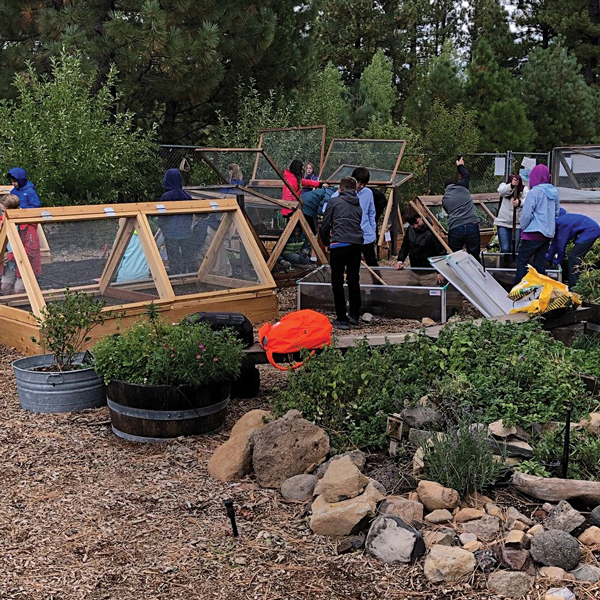
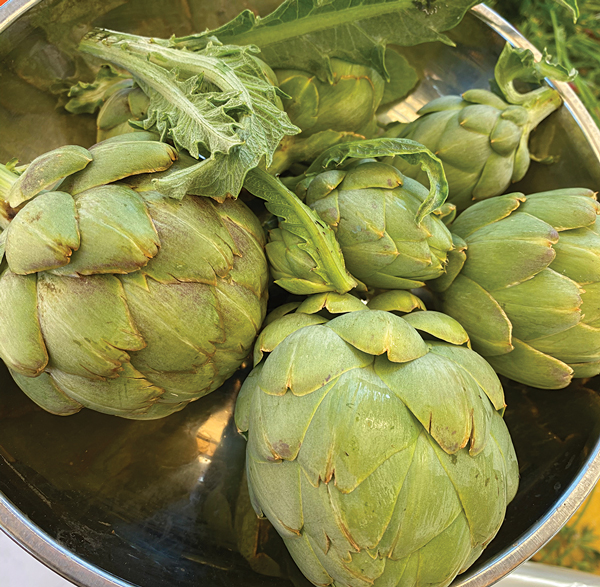
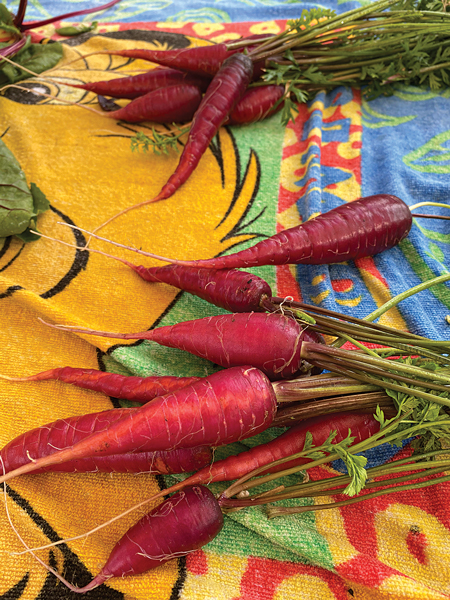
The summer bought a bounty of greens to the food insecure to the community garden at the Truckee River Regional Park. Large heads of lettuces, kale, arugula and spinach and hearty root veggies and squashes grew to epic proportions in Slow Food Lake Tahoe’s Food Bank Garden under the watchful eye of Katie Townsend-Merino, directress of the garden. The produce grown was donated to Sierra Community House, formerly known as Project MANA.
“We moved all of our food-growing classes online. We needed to readjust our volunteer schedule and rework how to package all of the food. … It was a lot of work in response to the virus.”
—Katie Townsend-Merino
Slow Food Lake Tahoe was not without challenges this year due to the pandemic. Staff had to cancel Truckee Community Farmers Market for the 2020 season, as well as the popular Community Soup Night. They had to rethink its gardening classes and workshop offerings and how to safely engage volunteers during COVID-19.
“We moved all of our food-growing classes online. We needed to readjust our volunteer schedule and rework how to package all of the food for Sierra House. It was a lot of work in response to the virus,” explains Townsend-Merino, who took classes through University of Nevada, Reno to learn how to sanitize appropriately and disseminate and package the vegetables, as well as learn safety precautions such as wearing aprons and masks.
Slow Food Lake Tahoe’s classes have always been wildly popular with how to grow vegetables at high elevations, as well as fermenting and canning classes.
“Since moving online and partnering with [UC Davis] Tahoe Environmental Research Center, UC Master Gardeners and the Tahoe Heritage Foundation, we have had 300 people in classes from throughout the Basin,” says Townsend-Merino.
The nonprofit has been through a lot and yet the commitment to serve has never been stronger. According to Townsend-Merino, grants and funding have been significantly reduced due to the immediate need to serve the COVID-19 issue. The organization is learning to pivot and rework its funding sources.
“We’ll be harvesting hops and partnering with Alibi Ale Works, which will offer a brew and the organization will get a percentage of each beer sold,” says Townsend-Merino.
Teaching people how to grow fruits and vegetables at high elevation is one way the garden educates the community.
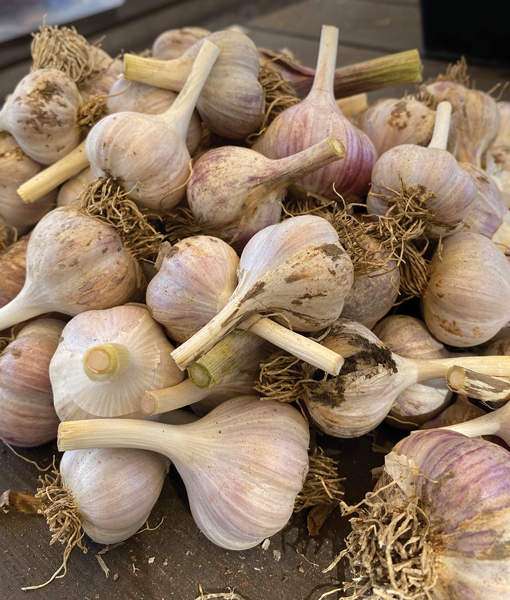
“Garlic gets planted in September and October. It takes 10 months to grow garlic up here. Fall is a great time to plant alliums like garlic and onions and come spring, they’ll all come back,” says Townsend-Merino, adding that they just harvested last year’s garlic a month ago.
Perennial herbs like oregano, thyme, tarragon, mint and sage will also come back in the spring after being trimmed down.
As Slow Food Lake Tahoe prepares for winter, online classes are not yet a given. (I personally hope they do). They will, however, work on funding opportunities, plans for expansion and a community garden where people will be able to rent a plot to grow vegetables. The plots will be wheelchair accessible with elevated gardens. She adds that the plots are perfect for anyone who has had a difficult time growing in our region.
Education is essential to Townsend-Merino, whose father was a farmworker and mother was a first cousin of Caesar Chavez. Slow Food Lake Tahoe’s Food Bank Garden will also create online courses for kids; they are committed to serving a diverse community.
“Most of our posters are in Spanish, as well as English, and we want to serve the Latin-X community,” she says. “People with money can access good food, but people without cannot. Nutrient-dense, organic and vibrant food is expensive and food insecurity will get worse due to COVID,” she says. | slowfoodlaketahoe.org


