


Asian cuisine is one of my favorite things to make and serve. I lean toward Korean and Japanese flavors when I cook. They tend to be creative, fun to prepare and delicious to eat. The idea of fusion allows for plenty of room for interpretation, which creates a blend of unique flavors.
American barbecue is usually low and slow while Korean barbecue meat is generally marinated, sliced and grilled or pan-fried and cooked quickly at a higher temperature.
The salty, sour, sweet and bitter flavors are essential parts of Asian food. In Japan, the coining of a fifth flavor came into being, which is umami. Umami means, “essence of deliciousness” and is often described as meaty and savory. Soy sauce, miso, kimchi, seaweed, mushrooms and high-protein foods are just a few items that lend themselves to umami.
Try Priya’s recipe for Scallion Pancakes
My latest food crush is definitely Korean. Bulgogi and Korean barbecue, two of my favorite meals to prepare, are quintessential Korean meals. Korean barbecue is quite different than American barbecue. The difference lies both in the cuts of meat and the preparation. American barbecue is usually low and slow while Korean barbecue meat is generally marinated, sliced and grilled or pan-fried and cooked quickly at a higher temperature. Like Japanese food, condiments and sides are an important part of the meal. Pickled vegetables are often served as a side.
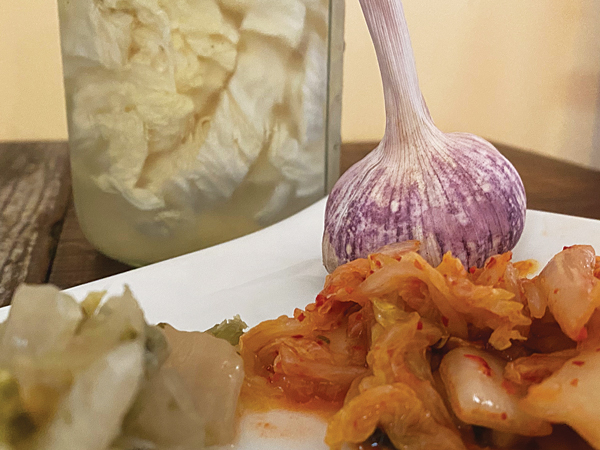
Kimchi is generally served with Korean main courses, noodles or rice; vegetables are also part of the experience. I love kimchi. I eat it for breakfast with an egg and rice bowl. Kimchi soup with tofu is amazing and it’s an easy soup for any season. And kimchi pancakes with dipping sauce makes a delicious dinner. Homemade kimchi is relativity easy to make (see recipe below) and healthy.
Dipping sauces are queen with most Asian meals I prepare. Gochujang is a red chili paste and can be purchased in an Asian market or online.
Some of the key condiments and spices in Korean and Japanese cooking include rice wine vinegar, fish sauce, soy sauce and sesame oil. Green onions, garlic and chili peppers are key ingredients in Korean cuisine.
Japanese cuisine
Japanese cuisine is an art. When it’s warm outside, it’s light and easy to prepare. Chicken or tofu satay with peanut sauce can be cooked on a grill to keep the house from heating up. Chilled sesame soba with green onions and vegetables is an easy dish that is delicious and satisfying. I love soba or ramen soup with all of the condiments that accompany these dishes.
Sides include wasabi, pickled ginger, sauteed sesame spinach, sauteed shitake and enoki mushrooms, kimchi and sides of pickled red onions and cucumber salad.
Lettuce wraps with an Asian flare are easy to make. Grilled fish, tofu or chicken served with an Asian cabbage slaw, seasoned sushi rice, avocado cilantro green sauce, lemon tamari sauce with green onions and spicy mayo are all served at the table.
Gyoza is a family favorite. For this dish you’ll need gyoza (dumpling) or egg roll wrappers. Grate red and green cabbage, carrots, daikon and scallions. Season with soy sauce and sesame oil and a dash of rice wine vinegar. Shrimp or pork can also be added but the simple veggie gyozas are fabulous. Place ingredients in the wrapper and pinch the dough closed in a half moon. To cook, either fry in vegetable oil or steam the dumplings.
Back to sauces, they rule. Sweet chili sauce, soy dipping sauce or a spicy mayo are all delicious sauces to accompany this dish. They go fast, so make a lot.
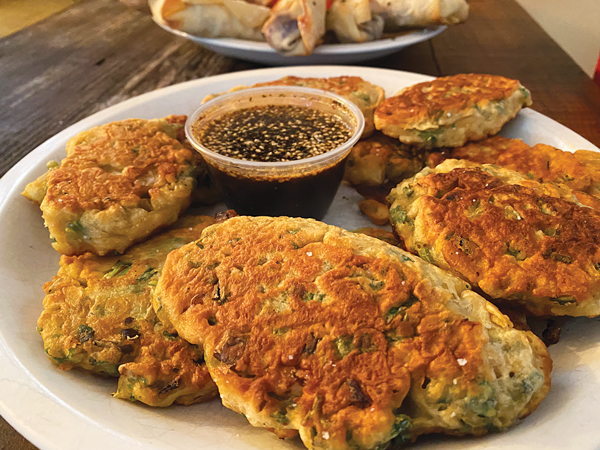
The last favorite dish I want to mention is Japanese pancakes, which can be made vegetarian or with meat — and they are to die for. Japanese Scallion Pancakes — there are Korean and Chinese versions, as well — are easy to make and dipping sauces are required.
The key when preparing anything is to make it your own. A recipe is essential for most folks but to add and create and fuse ingredients is like a writer finding her or his voice. Find the desired flavors and definitely step out of your comfort zone.
Easy Kimchi Recipe
From the kitchen of Priya Hutner
1 large head napa cabbage, 2-3 pounds
½ C daikon radish, peeled & cut into matchsticks
5-6 green onions, sliced into ½-inch pieces
1 C kosher salt
4-6 gloves garlic, finely minced
3 T fresh ginger, grated
1 t sugar
2-3 T Gochugaru or red pepper flakes
4 C water
2 T fish sauce or salted shrimp paste (optional, but traditional)
Cut cabbage lengthwise and place in a large bowl. Salt the cabbage and let sit for 30 to 60 minutes. Squeeze excess water that is produced.
Place the cabbage in a container and cover with water. Let sit for a few hours.
Mix remaining spices together for a marinade and add remaining vegetables. Mix with cabbage and place in a container, covered with salted water. Seal jar and let ferment for one to five days. Serve with everything. Refrigerate after opening.


