


I love opening my weekly farm box. Some weeks I order two. There are unique seasonal items in each box that often surprise and challenge me to figure out what to prepare, especially if I forget to look at the list of what’s coming.
There are unique seasonal items in each box that often surprise and challenge me to figure out what to prepare.
There are several types of farm-to-consumer services called CSA boxes (community-supported agriculture), which support local farmers in the region. In Truckee, Tahoe Food Hub founder and director Susie Sutphin orders fresh, seasonal, sustainably grown produce and pasture-raised proteins from more than 50 farms and ranches in the Sierra Foothills and Northern Nevada for CSA boxes for its customers. Once an order is placed, local farms harvest to order. Back at Tahoe Food Hub’s Farm Shop in Truckee, a team of people called hubsters put together the weekly harvest farm boxes, which are packed in green bags. This summer, the nonprofit Tahoe Food Hub has made it easier to order several times a week, guaranteeing freshness with its Harvest to Order program.
One thing I’ve noticed with CSA boxes is how much longer the produce stays fresh, unlike store-bought vegetables, a true testament to why ordering fresh food is essential.
I love teaching cooking classes and while planning my most recent series, I wanted to teach people how to utilize a farm box and bring it to the table. The class I put together was called Farm Box to Table. I called Sutphin to plan my class. They build boxes with a variety of fruits and vegetables, in addition to offering an opportunity to build your own box. For my class, I ordered several boxes. The goal for the class was to take out the contents and explore the different ways to utilize the products to make a meal. My tools of choice for the summer classes include a Vitamix Blender, a food processer, an Instant Pot and traveling cooktop.
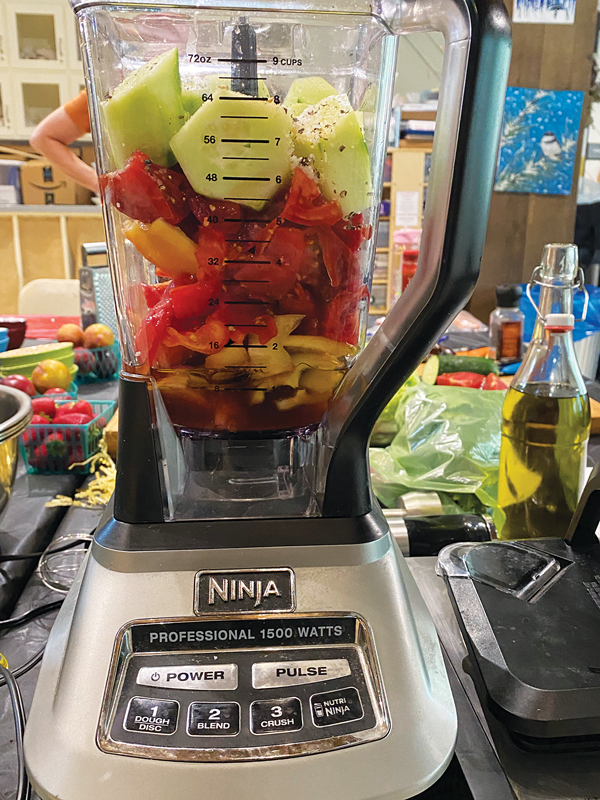
the blended salad.
On the week of my class, the farm box included cucumbers, strawberries, cherry pluots, red onions, sweet gypsy peppers, shishito peppers, salad mix, green butterleaf lettuce, cabbage, carrots and radishes. I culled a recipe from my ashram days and taught the class how to make a blended salad. It’s light, refreshing and lemony. I often add some basmati rice and Braggs Amino Acids, which offers some added depth to the recipe.
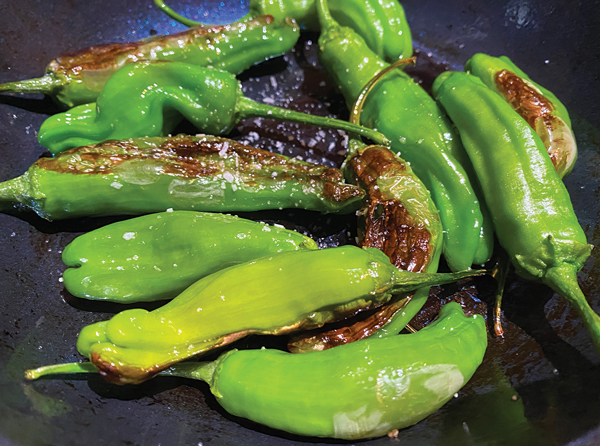
I also wanted to prepare something more substantial for the class. I offered a quinoa tabbouleh with lots of cucumbers, lemon, olive oil, chopped parsley and feta cheese. I decided to prepare a strawberry mousse parfait with granola, sliced berries, chocolate chips, whipped cream and a chocolate sauce drizzle with the farm-fresh strawberries. I seared the shishitos in olive oil, minced garlic, kosher salt and red pepper flakes.
There are several staples that are important to have on hand to create a variety of dishes from any farm box including onions, garlic, soy sauce, lemons, rice wine vinegar, red wine vinegar, olive oil, salt, pepper and herbs such as cilantro and parsley. I love the spontaneity of cooking with items in the fridge or that come in the farm box.
Blended Salad
From the kitchen of Priya Hutner
2 T extra virgin olive oil
1 large tomato
1 cucumber, peeled
2 stalks celery
1 red pepper
6-10 leaves romaine lettuce
Juice of a half of lemon
Blend all the ingredients in a food processer until chunky. It should be the consistency of a chucky salsa, but not as blended as a gazpacho. Add salt and pepper to taste.
For variations, Braggs Amino Acids is excellent in a blended salad. Herbs such as cilantro and parsley are also delicious. Arugula and spinach make this refreshing salad even more delightful. Carrots are also a tasty addition.


