


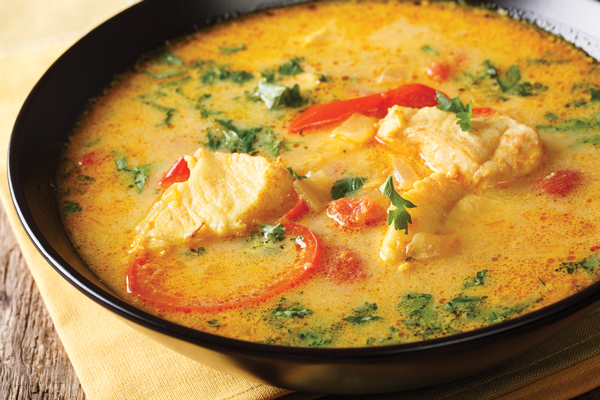
Curry, a stew prepared with a mix of different spices, is perfect for fall. They can range from super spicy hot to mild in flavor. Curries can be prepared vegetarian and most often are served with rice. The origin of curry dates to 2,600 BC in the Pakistan region.
Curries are generally equated with Indian cuisine, but many cultures around the globe prepare a version of curry dishes including Thailand, Japan, China, Malaysia, Bangladesh, Jamaica, Indonesia and Vietnam.
Curries are generally equated with Indian cuisine, but many cultures around the globe prepare a version of curry dishes including Thailand, Japan, China, Malaysia, Bangladesh, Jamaica, Indonesia and Vietnam. Britain and South Africa are also homes to curry cuisine.
Basic store-bought curry powder is made with turmeric, cumin, coriander and red chili pepper. Other versions can also include ginger, fenugreek seeds, cinnamon, black pepper, mustard seeds and a host of other spices.
Indian curries
Korma, madras, vindaloo, masala makhani, Rogan Josh, Jalfrezi, tikka, tandoor and saag are some of the many types of Indian curry. Korma is lusciously creamy, using yogurt and spices, including garam masala. Madras is a tomato-based curry that leans heavily on cayenne, cloves, fenugreek and chili. Vindaloo is prepared with cardamom, black pepper, chilies, ginger, cumin, mustard seeds, cinnamon, cloves, turmeric and tamarind. Vindaloo tends to be spicy hot. Masala and makhani are also tomato-based dishes. Both incorporate a host of spices and include yogurt and cream. Makhani uses cashews in most recipes. The most popular makhani dish is butter chicken.
Rogan Josh invites meats and proteins to dance with the warm flavors of cardamom, cloves and cumin, cardamom and bay leaf. Jalfrezi is made with meat, fish or veggies marinated in cumin, coriander and turmeric and fried in oil with chilies, onions, cabbage and tomatoes. The dish is cooked down and boasts a thick, dry sauce. Tikka curry coats the meats with yogurt and spices and is grilled on a kebab skewer. Tandoori curry marinates the meat in a mixture of oil, lemon juice and spices, which is cooked in an Indian clay pot.
Saag paneer, one of my favorite side dishes, is made with spinach. It incorporates red chilies, garam masala, coriander, ginger, garlic and green onions. Indian curries are served with basmati rice, assorted chutneys and naan bread.
Thai curries
Thai curries are lighter than their Indian counterparts and more like a soup. The three main curries are green curry prepared with green chili, lemongrass, lime leaves, coriander and basil. It can be extremely hot. I had it in a small storefront in Queens, N.Y., years ago. My date ordered the green curry and sweated profusely throughout the entire meal. These days most Thai restaurants will ask you how hot you want this dish.
Red curry is made with red chilis. Red curry paste is made with red chilies, coriander, cumin, garlic, shallots, kaffir lime rind, white peppercorn, lemongrass, shrimp paste, sea salt and galangal. Yellow curry recipes are made with garlic, turmeric, galangal, coriander, lemongrass, lime leaves and coconut milk. Massaman curry is a sweeter curry made with cardamom, cloves, cinnamon, coriander, cumin, peppercorn and dried Thai chiles and roasted peanuts. Panang curry is s a type of red curry that incorporates peanuts into the sauce.
Japanese curry
While hiking Mount Fuji, I was served a Japanese curry, which was made with a brown sauce with meats and vegetables served over rice. It is milder than most curries and made with a roux that uses spices like turmeric, cumin, coriander, fenugreek, fennel, cinnamon and ginger. Japanese curry is commonly served in three ways: curry rice, curry udon and curry bread.
Jamaican curry
Jamaican curry is made with Scotch bonnet peppers and spices like cumin, anise and mustard seeds, too. The soupier curry also uses vinegar and Worcestershire sauce. It’s a tangier flavor.
Trinidadian curry
Trinidadians make a curry using chicken, curry leaves, hot peppers and spices. Both offer a taste of the islands.
Many curry dishes temper the spices in oil before cooking them. This brings out the intense richness of the spices. Curries are the perfect meal for the fall season.
Easy Thai Fish and Vegetable Coconut Curry
From the kitchen of Priya Hutner · Serves 4-6
1 lb. halibut or mild white fish
1 T vegetable oil or coconut oil
1 medium onion, diced
2-3 cloves garlic, minced
1 t fresh ginger, grated
1 T lemongrass, chopped
1 small red pepper, deseeded & sliced
2 carrots, cut into ¼-inch rounds
1 zucchini, sliced into rounds
2 t turmeric curry powder, Thai yellow curry or 1 T red or green curry paste
1 can coconut milk
1½ t salt
1 t pepper
½ C fresh Thai basil leaves
Red chili pepper, optional
Optional: Celery, snow pea pods, bok choy, diced potatoes or chili peppers. (Personally, I would add them all.)
In a large pot on medium heat, sauté onions in oil for 5 minutes. Add garlic, lemongrass and red pepper. Simmer for another 3 minutes. Add carrots and stir in coconut milk. If you want to add celery, bok choy or potatoes do so now; simmer for 5 minutes. Add fish, curry powder or paste, salt and pepper; simmer for 5 minutes or until fish is almost cooked. Add zucchini and snow pea pods (if using) and turn off the heat. Let zucchini and snow peas steam in heat.
Serve with jasmine rice or rice noodles and Thai basil leaves.


