


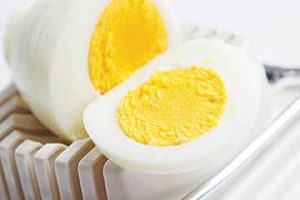
The article on deviled eggs has only been out for a few days and I’ve already gotten quite a few inquiries about boiling eggs; so instead of writing the article I was going to submit, I would like to answer those questions.
The first question asked was is there was a way to boil eggs so the shells don’t crack during the boiling process, spilling out a lot of the whites.
That answer is yes … mostly. Eggs are delicate, so there are never any guarantees, but be sure to take your eggs out of the refrigerator long enough before cooking to let them get to room temperature before they get near the boiling water.
We all know that if you take your glass coffee pot off the burner and run it under cold water to clean it, it will crack. Now, just think about how thin and delicate an egg shell is. Also, once the water comes to a hard boil with the eggs in, turn down the heat to a low boil so the eggs aren’t getting smashed into the pot and each other so much.
The second question was: How long do you boil the eggs for?
There are quite a few answers to this question depending on who you ask. I know some people will place the eggs into boiling water, boil for 1 to 2 minutes or whatever his or her specific time is, and then turn off the heat, let them sit in the water for a certain amount of time, and then cool. I know some people that start with the eggs in cold water, bring it to a boil and then either follow a similar scenario as the first one or boil for so many minutes and then cool.
I bring the water to a boil, put the eggs in and when the water starts to boil again I cook them for 12 minutes and immediately cool. That’s for a hardboiled egg at altitude.
Back in Vermont, it was always 9 minutes once it came back to a boil, and then immediately cool. The thing is, there are a few variables you always have to remember. First, what size eggs are you boiling? The 12 minutes is what I use for a large egg. If I’m using extra large eggs, I add a minute to a minute and a half.
Secondly, it depends on what kind of pot you are using, especially if you are using the method of turning the heat off. A heavy pot will hold its heat longer and will affect the timing. The pot I usually use is an old revere ware thin stainless pot with a copper bottom, but since I just cook and cool without the eggs sitting in the hot water for a certain amount of time after turning off the heat, it isn’t all that important. The key is to get used to using the same pot each time so that you get the timing down.
Also, cheat … that’s right, cheat. Put an extra egg in and when you think you’re there, break one open. If the yolk is already cooked all the way through, immediately remove from the heat, pour out the hot water, and cool as quickly as you can with cold water and ice. It is a lot easier to get those perfect eggs when you do add the extra one for checking the timing. Also, don’t forget to liberally salt your water to make peeling a whole lot easier.
There also was a question about the green tint you often see around the yolk of a hardboiled egg. That occurs when you overcook the egg. I remember when I was doing my apprenticeship, I was in charge of boiling the eggs for a buffet. I already knew to cook them exactly 9 minutes because that’s what I’d been told. The chef told me to leave one egg in the water for an extra 2 minutes and once it was cooled to cut it open. That was the first time I noticed the green tint. Then, just like my mother would have done, he made me go find out why.
So, then, just like now because I couldn’t remember exactly, I looked it up. It is the iron from the yolk mixing with the hydrogen sulfide that is released by the whites when heated. It won’t affect the flavor, but will just look not quite right. That tint will be more discernible with older eggs.
One last note about boiled eggs: Although you rarely see it anymore, soft and medium boiled eggs used to be a regular breakfast item in some restaurants. Boil the eggs for 4 to 6 minutes for soft boiled and 6 to 8 minutes for medium. These you would serve hot and eat by delicately cracking the egg all the way around the top and lifting the top off. Then use a spoon to eat the egg out of the shell. If you are careful, you can peel the medium just as a hardboiled egg.
My thoughts on the soft boiled egg is that you might as well just poach them because it is way easier to judge when it’s done and 10 times easier to eat unless all you’re after is the yolk.
Boiled Eggs
Using large eggs
Hard boiled eggs: 12 minutes
Medium boiled eggs: 6-8 minutes
Soft boiled eggs: 4-6 minutes
Boil water and salt liberally to help peel the shells. Add eggs to boiling water. Return water to a boil and begin timing at that time. When time is up, remove from the boiling water and chill immediately in cool water and ice.
Smitty is a personal chef specializing in dinner parties, cooking classes and special events. Trained under Master Chef Anton Flory at Top Notch Resort in Stowe, Vt., Smitty is known for his creative use of fresh ingredients. He has been a chef for PGA’s Memorial Tournament for more than 15 years and ran the main kitchen at the World Games. For more information and archived copies of Stir it Up, visit chefsmitty.com. Smitty welcomes questions and comments at smitty@chefsmitty.com or (530) 412-3598.


