Recent discussions regarding addictions made me think about them and realize that there are good ones and bad ones.
Regarding the more positive ones, in the 1950s, ski fever spread across North America and Central Europe relentlessly. It was easily spread and in many cases incurable.
The fever was sometimes caught by simply watching one of my ski movies in a high school auditorium or a YMCA, but became chronic by getting up into the mountains and enjoying the freedom of the sport. In the late 1940s, the entire infected population of North America could be hauled up hills on less than 15 chairlifts and probably 25 or 30 rope tows.
I consider myself lucky to have become infected with ski fever in 1939 when I traversed across a small hill on a pair of $2 pine skis with leather toe-strap bindings and no metal edges.
Ski fever has been blamed for divorces, sunburned faces, broken legs and near bankruptcy for many people. Some people in land speculation have made fortunes by building chairlifts, a gondola or a parking lot and charging people hard-earned money to ride the lift.
Terminal ski fever is epidemic in a person who enjoyed a day of untracked powder, then went home, studied his current financial statement and decided to sell his meager apartment furnishings and start a business catering to other people with ski fever. Sadly, there are many cases of people with this variation of the disease that had their marriage collapse by the third or fourth winter of having to work all day running his or her business instead of carving ski fever tracks early in the morning.
In the 75 years I have had an incurable case of ski fever, I have had a few accidents of the heart and one serious bodily injury when I broke my back a few years ago. I consider myself lucky with one good accident of the heart when I met my future wife, Laurie, at the top of Baldy in Sun Valley in 1984. She also had a case of terminal ski fever because she employed 105 ski instructors at Snoqualmie Pass and operated a ski shop in downtown Seattle with dozens of employees.
Two years later, we moved into our own ski-in, ski-out home in Vail, Colo. It was designed for people with a case of terminal ski fever. We had to walk about 100 feet from our front door, put our skis on and coast down to the Lionshead Gondola and at the end of the day we could ski back to our front door.
For the last 14 years, we have suffered through our ski fever while living at a ski resort in Montana with its 15 chairlifts, one of which goes right by our front door. We put our skis on and ski down to the bottom and are the first people on the lift in the morning. (Well, not my wife, she says she doesn’t do mornings anymore. She’s an afternoon skier.)
I managed to produce hundreds of ski films to infect as many people as I possibly could with the disease. You can always tell passengers at airports if they have ski fever disease because they have it by their weird, colorful looking clothes, the pair of 15-lb. plastic ski boots that they won’t let out of their hands and the infectious smile on their faces.
If there were enough government bureaucrats who control how much land we people with ski fever get to use, tens of thousands of acres of incredible mountain terrain could be developed and could comfort ski fever patients without the overcrowding that exists at many ski resorts today. There’s a simple solution to the ski fever patients overcrowding the Western mountains and that is to put more of the mountain terrain up for sale. This would be easy money for the government and the number of people with ski fever could populate the Colorado Rockies, Montana, California, Washington, Oregon and Wyoming.
I was lucky to have been born in Hollywood, and most people don’t realize that it is less than 35 airline miles from Mount Waterman, where the second chairlift in California was built in 1940. Like me, the worst sufferers of ski fever are people who live a long way away from a mountain with a chairlift and reliable snow to get his or her daily ski fever antidote.
Everett Kircher was a Studebaker dealer in Detroit, Mich., when he became so infected with ski fever that he went to Sun Valley, Idaho, in about 1948 and paid $4,800 for the original Dollar Mountain chairlift that was being replaced.
I’m proud of sharing a little bit of the blame for spreading the disease, because a lot of people used to come to my movies with a friend who wasn’t yet infected and just did not understand why normal people would quit their job, sell their house, and disappear into the mountains for a job shoveling snow. After watching my films, they quickly understood.
My suggestion to people with ski fever is that they should do everything they can to keep the fever alive and move to a mountain with long ski runs and deep snow. You can’t cure ski fever, so learn to live with it.
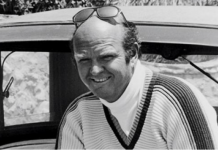
Warren Miller is history’s most prolific and enduring ski filmmaker. Visit warrenmiller.net or visit his Facebook page at facebook.com/warrenmiller.