


By Chef David “Smitty” Smith
Now that the holidays are over and we are all essentially trying to get back to a somewhat normal schedule, one of the biggest areas we concentrate on is our eating habits.
Over the holidays, there is one basic truth and that is that all of our eating habits and schedules are thrown so completely out of whack that getting back on a normal routine is a positive thing. One of the easiest ways to come back down to earth is to set up a couple easy meals, and what is a better winter meal than soup? Make it once and have enough for a few meals, which can be good for either lunch or dinner. The hardest part of making soup is trying to decide what kind to make and I’m not talking flavor here. When I think of soups, I think of three basic types: broth, cream and chowder.
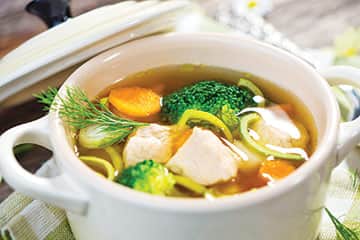
Broth soups
The broth soups are those that use no blending, have a clear liquid base, and you can pretty much see all the ingredients. I start by sautéing the onions and garlic in butter (you can use oil for a slightly clearer soup, but I prefer the flavor butter gives) on medium to medium high heat just until the onions start to soften and then I’ll add all the harder veggies such as carrots, broccoli, cauliflower and things like that.
After maybe a minute or two, I’ll add the softer veggies such as zucchini and even leafy items such as kale and let everything sauté together. Sautéing all the vegetables before adding the broth will really allow those veggies to bloom and create a more flavorful soup. By adding in stages, you are going to keep the various vegetables a little crisper for a better final texture.
I’ll always cook any starches such as rice or noodles separate and cool them completely before adding to the soup at the last minute in order to keep them from getting mushy. Once the soup is done, keep whatever you want for that meal out and cool the rest quickly, again to avoid everything from over cooking. You can keep the rice and noodles separate if you want and just add when you reheat tomorrow.
Chowder
Chowder is the thickest, at least for me, of the soups. I will again, sauté anything such as onions and garlic first and then add the veggies in the same order as above.
For clam chowder or any other chowder I want to use bacon in, I’ll sauté the onion and bacon together and use no butter, as the bacon will supply the fat for sautéing, as well as adding the smoky flavor.
Also, just like the rice and noodles, I’ll cook the potatoes to just barely done separately and completely cool them before adding them in at the end with any other ingredients I want to be sure that don’t get over cooked like the clams.
Thickening chowder is the tricky part because you want to be sure not to leave it lumpy with roux. After the sautéing, add the broth and bring to a pretty good boil. Scoop a few ladles of broth into a separate bowl with as few veggies or other ingredients as possible and thicken that thick but smooth with roux.
Mix it back into the chowder until the entire chowder is the same consistency and then repeat as often as it takes to get your desired thickness. Note that as the chowder gets thicker you want to be sure to lower the heat and keep stirring so it doesn’t burn on the bottom. Once thick, add all the other ingredients and a little cream, serve what you want at that time and cool the rest quickly.
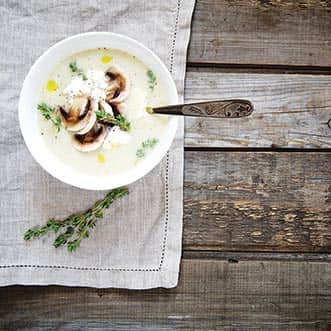
Cream soups
The last of the soups is the cream soups. Because I’m running out of space, I’ll get to those in the next article. Just one thing to think about though, is that just because it is called a cream soup, doesn’t mean there is a lot of cream in it. Enjoy and good luck getting back on schedule.
Roux
Equal parts butter & flour
Melt the butter over medium heat. Slowly add the flour, whisking constantly. Cook about 2 to 3 minutes, while whisking.
Smitty is a personal chef specializing in dinner parties, cooking classes and special events. Trained under Master Chef Anton Flory at Top Notch Resort in Stowe, Vt., Smitty is known for his creative use of fresh ingredients. He has been a chef for PGA’s Memorial Tournament for more than 15 years and ran the main kitchen at the World Games. For more information and archived copies of Stir it Up, visit chefsmitty.com. Smitty welcomes questions and comments at smitty@chefsmitty.com, tmmsmitty@gmail.com or (530) 412-3598.


