


Two of the past three articles were breakfast recipes – Muffin Tin Omelets and Baked French Toast – designed to make your life a little easier, while also keeping your guests happy and full for the upcoming day’s activities. All I will say about them now is to remember them this winter when the weather is telling you that tomorrow is going to be a powder day and you have a house full of guests.
The third article, which you can use all year but seems a little more popular in the summer, is a simple side dipping sauce, Tartar Sauce, used mostly for seafood dishes. So, since it has been a while, I thought I’d go back to an entrée that is awesome all year, is pretty quick and easy to make, and will surely impress your guests.
I had kind of forgotten about it, but while I was in Stowe, Vt., I ran into Chuck, who was my Sous Chef back at the Cliff House restaurant. We were talking about that year and I mentioned to him that one of the articles I wrote was his Chicken in Phyllo Dough. He then said that the dish he still makes all the time is the raspberry pork. I made it twice this week to check it out and I really wish I had remembered this one a few months back when I was in physical therapy. Nicole asked me what else she could do with pork tenderloin and this would have been perfect for her, so I hope she reads this article.
As I mentioned before, this dish is easy to make, but to really make it awesome, it does take a good demi. I know I have done the recipe for making Demi Glace in the past (albeit, way in the past) and it is an article in itself, so I’m not going to give you that entire process now (visit TheTahoeWeekly.com for the recipe). Even though it really isn’t a ton of work to make, it takes a long time, mostly unattended as it reduces, so most people won’t bother. In a pinch, you can reduce a can of beef consume by half as a quick substitute. I have never found a beef base I like, but if you use one you like, by all means use that.
Raspberry Pork Tenderloin
For 4-7 people depending on tenderloin size
2 pork tenderloins, cleaned
1 C flour
1/3 C raspberry vinegar
1 T + 1 t Dijon mustard
¼ C demi
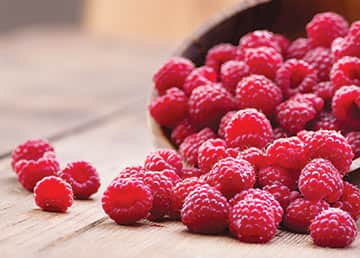
1 pint raspberries
3 T vegetable oil
5 T butter
Cut the pork into 4-inch thick medallions. Butterfly each medallion by cutting them three-quarters the way through and folding them open. Pound them thin (about to half the thickness they started). Season the pork with salt and pepper and dredge in the flour, shaking off any excess.
Get a skillet hot on the stove and add 1 T oil and 1½ T butter. Once the butter is melted, add the pork medallions, brown on each side and then remove to a plate. Repeat the process until all the pork is browned, adding oil and butter as needed. Just be careful and don’t let the butter burn.
Add the vinegar to the pan and let reduce by half. Pour the grease out of the pan, add the Dijon and about 10 raspberries and, using a fork, squish the berries and mix in the mustard and let simmer for a minute or so to thicken.
Add the demi and once it comes to a low boil, turn the heat down to low, melt in ½ T butter, add the pork and let simmer for a few minutes. Plate and sprinkle the remaining raspberries over the pork for a garnish before pouring the sauce over.
Beef Stock and Demi Glace – By Chef David “Smitty” Smith
With today’s techniques of freezing, preserving and packaging food, the distance between store bought and homemade can be minor and sometimes not worth the time to make some things from scratch. In the case of beef stock, the difference is still miles apart. This is how to determine what your results are: The liquid in the pot reduced by half is a stock. Thicken that with roux and it is a brown sauce. Reduce the stock by half again and it is a demi.
I think the thing that makes most people shy away from making their own beef stock is the total time it takes to complete, which most people translate into much more work for them. It’s true it does take a while, but most of that time it can be left alone. The only equipment you need is a stock pot and a roasting pan.
Obviously, the bigger the stock pot, the bigger the batch of stock. I had used a 3.5-gallon pot for years but got a 5-gallon pot and I love it. I will never use a pot bigger than this on my house stove and will only use this for low-heat cooking. The reason is that if the pan is much bigger than your burner it will reflect too much heat back at your stove and that can cause damage to the stove or even a fire (the same is true for large sauté pans). This pot is used strictly for stock, chowder or other things that simmer on low heat.
How I determine how many bones to use is by how many it will take to fill the pot no more than three-quarters to the top. The size of the roasting pan matters as far as you can only roast as many bones as will fit in it, or roast them in two batches or two pans. With the larger pot, I used my roasting pan as well as another pan I found under the cabinet. I just moved the racks so they could both fit in the oven together. I did rotate the two pans a few times during cooking and stir the bones more often so they cooked evenly but if you don’t rotate them you will just have one pan finish a little sooner than the other.
The main keys are to brown the bones and vegetables as dark as possible without burning them and to simmer the stock on the stove as slowly as possible. It took me three days for the liquid to simmer down to where I had my final product. The first batch I got about 24 oz. of demi and once cooled was like a rich, beef Jell-O. I then cover the bones with water again and let it simmer again, but not quite as far (about halfway between a stock and a demi). This will not be quite as strong, but still usable for most sauces or other things you want to use it for.
The first batch is strictly for sauces and you only need about 1 T per serving, so it goes a long way. Often, I will repeat the process one last time, sometimes adding a few fresh veggies for use in soups and stews (a stock). The third batch can be a little bitter without fresh veggies and I will add a touch of sugar if needed. Total time on the stove for all three batches was one week, but I got a large quantity of quality stock and demi that I froze in small batches. The next time you want some great beef stock, try making it from scratch and enjoy.
Brown Stock & Demi Glace
2 onions, chopped (1 with the peel)
4 carrots, split lengthwise & chopped
8 celery sticks, chopped
1 can cranberry sauce
15 juniper berries (if you have them)
15-20 peppercorns
2 small cans tomato paste
1/8 C red vinegar
2 T dried rosemary, crushed
1 T salt
4-5 bay leaves
2 C red wine
Brown the bones until golden. Stir once in a while. Add 2 chopped onions, one with the peel (too much peel will be bitter), 4 carrots split lengthwise and chopped, 8 chopped celery sticks minus the leaves (they are bitter), 1 can of cranberry sauce, about 15 juniper berries if you have any, and 15 to 20 peppercorns.
Let this brown but not burn, and then spread two small cans of tomato paste onto the bones, and add one-eighth cup red vinegar and brown a little more. Scoop all this into the stock pot and discard the oil.
Cover the bottom of the roasting pan with water and bring to a boil, scraping all the pieces off the pan. Pour this into the stock pot and fill the pot to just below the top. Add 2 T crushed dried rosemary, 1 T salt, about 4 or 5 bay leaves, and 2 cups red wine. Bring this to a boil and turn down to the lowest simmer.
Let slowly simmer until the liquid has reduced by at least half and then strain. The more you reduce this, the stronger the flavor.
Smitty is a personal chef specializing in dinner parties, cooking classes and special events. Trained under Master Chef Anton Flory at Top Notch Resort in Stowe, Vt., Smitty is known for his creative use of fresh ingredients. To read archived copies of Stir it Up, visit chefsmitty.com or TheTahoeWeekly.com. Contact him at smitty@chefsmitty.com or (530) 412-3598.


