


Story & photos by Priya Hutner
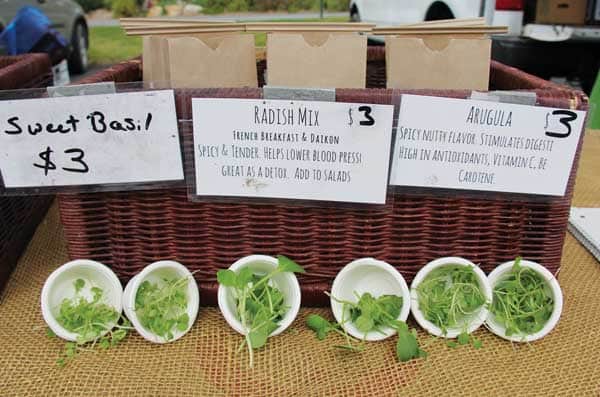
Microgreens can be any variety of seed, generally leafy greens and herbs, harvested after the first leaves develop.
[blockquote2]
“The basil greens offered a surprisingly delicate fennel flavor, while the radish mix was slightly spicy.”
[/blockquote2]
[dropcap1]W[/dropcap1]ith the arrival of the fall, those of us eat seasonally witness the shift from heirloom tomatoes, delicious summer vegetables, fresh peaches and plums to darker, leafy greens, root vegetables and squashes as we prepare for the winter ahead.
I’ll miss the Slow Food Lake Tahoe Farmers Market. It was here that I came across The Little Roots Farm booth where Todd Karol and Stacie Schultze offered a beautiful display of microgreens.
What are microgreens? Microgreens can be any variety of seed, generally leafy greens and herbs, harvested after the first leaves develop. They are in between the sprout and baby green stage. They are different than sprouts, which are grown in water and in the dark. Little Roots microgreens are grown in soil and in the light. Microgreens have a distinct flavor and texture due to the density of their nutrients.
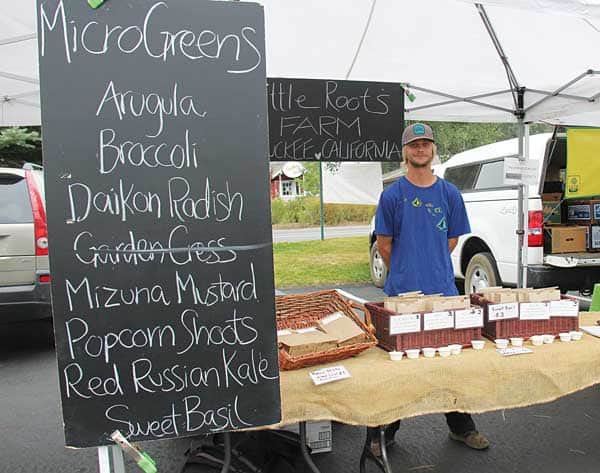
I had the opportunity to taste a variety of microgreens that The Little Roots Farm grows. The first thing I tried was a popcorn shoot. Technically categorized as a sprout, it is yellow in color and grown in the dark. It was both sweet and grassy and offers the same nutritional value as corn.
“It’s great for kids,” Karol said.
Karol, a graduate of Sierra Nevada College with a sustainability major, says that he was drawn to agriculture. He and his partner, Schultze, are embarking on a four-season growing community in the region in order to offer healthy, nutritional and accessible produce year-round. At their farm, they’ve installed a passive solar green house that they can add heat to on the coldest of winter days to continue to grow their amazing produce.
“There is anywhere from six to 20 times more nutrients you can get from microgreens. For instance 2 tablespoons of broccoli microgreens have almost 50 times more calcium than a whole head of broccoli,” Karol explained.
The soft, tender sprouts have a strong broccoli flavor and are one of the highest in nutrients, antioxidants and vitamin C.
The arugula microgreens were fabulous; they were spicy, nutty and peppery. Karol explained they are great for digestion and high in beta-carotene. The basil greens offered a surprisingly delicate fennel flavor, while the radish mix was slightly spicy and purported to help reduce blood pressure and aid in detoxification.
The Red Russian Kale microgreens stems were a lovely shade of purple. They were tender, high in calcium, magnesium and vitamin K. They tasted like the kale leaves I am accustomed to. The Mizuna Mustard sprouts had a subtle flavor, a tinge of spice and are said to offer anti-inflammatory properties, anti-oxidants and vitamins.
Little Roots Farm sources its soil from Full Circle Compost in Reno, which is 90 percent local-based compost. Their microgreens are all organic. In addition to their solar greenhouse, the farm plans to set up a vertical aquaponic system and grow a wide selection of leafy, green vegetables and microgreens. They will also cultivate heirloom varietals native to North America.
“Little Roots Farm is the only local-based farm of its kind in Truckee,” said Jessie Phillips, president of Slow Food Lake Tahoe.
Little Roots Farm will continue to grow and offer their produce through the fall and winter months. They plan to make local deliveries to restaurants, health food stores and directly to consumers.
For more information, visit littlerootsfarm.com or like them on Facebook.


