


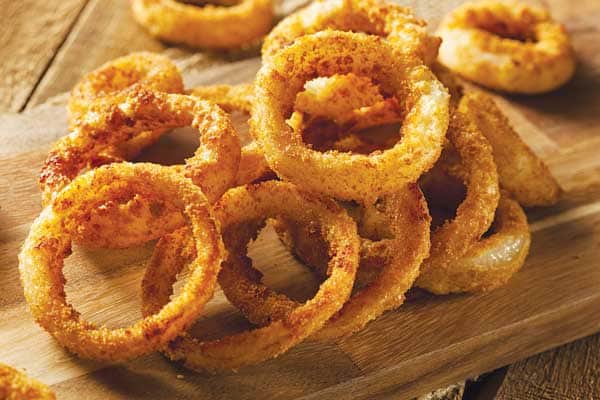
Onion rings are usually served as an appetizer or often substituted for French fries as the side to a burger or sandwich. Out here, I think the only kind of rings I’ve ever seen are either beer-battered or breaded, except as a steak topping. In defense of West Coast restaurants, I don’t get out that much. There are also fried onions, which I consider being in this category. I’ll get to them later.
[blockquote3]
“With beer-battered rings, you will want to avoid overlapping. Fit only four or five rings at a time in your skillet.”
[/blockquote3]
The fact is, a lot of restaurants don’t make their own onion rings because there are a lot of frozen products that are pretty good. Besides, making onion rings, especially in a rush, can be a big pain in the butt — space and time consuming and a little messy. Also, the two biggest things that will kill your frying oil the fastest are fish and onions. And onion rings can be temperamental.
How many times have you ordered onion rings only to get a pile of soggy battered onions? Onion rings made from scratch should be done to order, not in batches that have yet to be ordered. The steam from the onion will quickly turn a nice crisp into unappetizing mush. Another reason frozen rings are used is because they hold up better. The batter on some can seem like a hard casing.
Still, onion rings can be an awesome treat once in a while. They are not hard to make; just be sure to have everything ready when the oil reaches between 350 F and 375 F. Then you can start frying.
Back in New England at the fried clam shacks, they will have their fried plates that include fries, but they will also give you the option of ordering everything a la carte. They will offer onion rings dipped in a milk bath, coated with a light flour mixture. The results are a pile of thin crisp onion rings, instead of five to eight thickly battered rings. This is much closer to the fried onions you might get on top of a steak, but with more spices in the flour mix.
Although cutting the rings may be a little harder because you want them as thin as possible, if you are topping a steak, they can be much easier and faster to fry. Make a pile at a time and use a fork to keep them moving to avoid ending up with a big, sticky ball of onions.
With beer-battered rings, you will want to avoid overlapping. Fit only four or five rings at a time in your skillet. You can strain the oil through a fine mesh strainer when done and keep it to use again later.
Give both a try and enjoy.
Onion Rings
1 large sweet or yellow onion
Beer batter
1 C flour
1 T salt
½ T baking powder
1, 12 oz. beer (I like using a Newcastle Brown Ale or a slightly dark beer, something not too hoppy)
Sift the first three ingredients together and make a well in the middle. Add three quarters of the beer and gently stir it in until everything is well mixed, adding the rest of the beer as needed.
Cut the onions into slices, about one-quarter inch thick, and separate into rings.
Once the oil is hot, try dipping one ring into the batter. If the oil doesn’t boil, it isn’t hot enough. Use a fork to dip the rings in the batter, and then carefully into the oil. Use a separate fork for stirring and flipping to keep extra batter out of the oil. Place as many rings as you can fit without overlapping and fry until golden. Flip and let the other side fry until golden. Remove to a paper-towel-covered plate.
Milk Batter Onion Rings
1 large onion
½ C flour or fish-frying coating or Krusteaz pancake mix
T paprika
¼ t cayenne
1 t salt
½ t pepper
Any other spices you like for fish
¼ C milk
Place flour and spices or coating in one bowl and milk in another. Fine ground thyme, basil and poultry seasonings are good also. Slice your onions very thin and break apart into rings in batches.
Dip into the milk and then into the flour. Shake in the flour mix well to completely coat and add to the fryer. Stir with a roasting fork and flip as needed. Scoop onto paper-towel-covered plate.
For onions on steaks, I will use only flour and no spices or milk. Dust the thin rings with flour and shake off the excess. Fry as above, stirring with a fork to keep from clumping.
Smitty is a personal chef specializing in dinner parties, cooking classes and special events. Trained under Master Chef Anton Flory at Top Notch Resort in Stowe, Vt., Smitty is known for his creative use of fresh ingredients. To read archived copies of Smitty’s column, visit chefsmitty.com or TheTahoeWeekly.com. Contact him at tmmsmitty@gmail.com or (530) 412-3598.


