


I remember when I was in elementary school. We never had unconventional vegetables. We had vegetables for dinner every night with few exceptions, but they were always the usual suspects: broccoli, corn, green beans, peas, yellow squash and carrots — my brother’s personal nemesis.
We always knew we were in for a good show every time we had carrots.
Richard, who is the sibling in line after me, had this thing about carrots and he would do absolutely anything to get out of eating them: hide them in a paper towel, his pocket or under a bone or some other inedible item on the plate. Sometimes, he would rub his leg and slip them into his socks or pretend to scratch his neck to drop a few down his shirt.
When I refer to a vegetable as an “unconventional vegetable,” I am referring to how you prepare a vegetable in a way other than you would normally prepare it.
My personal favorite was when he tried slipping them, a couple at a time, under his plate when he thought no one was watching and pushed down on his plate so the carrots would smash and stick to the bottom. My mom asked him to lift his plate and he did, tipping it ever so slightly in her direction so she couldn’t spot any orange color underneath it. Somehow, by sheer luck, not a single carrot dropped. Even mom fell for it. My dad never said anything and let everyone finish dinner. As we were about to get up to do the dishes, he asked Richard to turn his plate over. Richard tried the same approach but Dad said, “No, turn it upside down.”
My brother responded saying he was concerned that all the juices and things on the plate would make a mess on the table. My dad held firm: “Just do it.”
Well, he turned the plate over and there, inside the ring on the bottom of the plate, were all his squashed carrots. While his face was a lot brighter than the carrots, the rest of us burst out laughing. Richard had to sit there and eat his carrot purée before cleaning the mess he had made. We never could pull the wool over dad’s eyes.
I think every vegetable I had ever eaten growing up had been boiled. Probably 95 percent of the vegetables were frozen. Corn on the cob and the occasional summer squash or bean might be fresh in the summer. Sautéing was a term I learned sometime after college, but at least the veggies we ate weren’t canned.
One of the cool things I have discovered since I started cooking is just how many vegetables there are and how many ways you can prepare them. When I refer to a vegetable as an “unconventional vegetable,” I am referring to how you prepare a vegetable in a way other than you would normally prepare it.
Celery is a great example. Celery is usually thought of as a great veggie to add to raw tuna or egg salad for crunch and flavor. When people think of cooking celery, they normally associate it with a soup, stir fry or a casserole, but celery can also be a tasty main vegetable served with the entrée, as are cucumbers and tomatoes. Here are two easy ways to make your own unconventional vegetables. Enjoy.
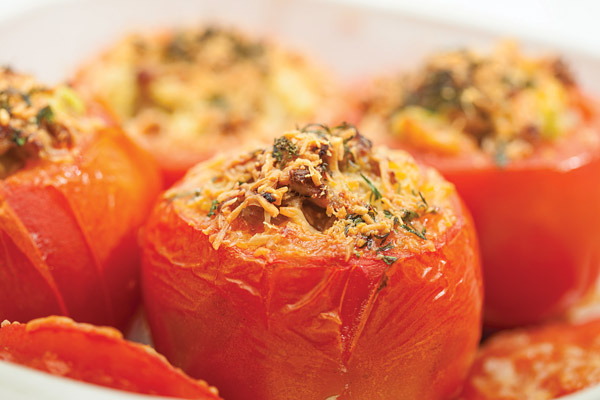
Stuffed Tomatoes
4 tomatoes, sliced in half, width-wise
¼ C fresh parmesan cheese, grated
1 T fresh basil, chopped
2 T extra virgin olive oil
Salt and pepper
Scoop out and chop the meat from the tomato halves. Toss it with the fresh basil and place back into the tomato. Season the tomatoes with a touch of salt and pepper, top with the cheese and drizzle a touch of olive oil. Bake for 10 to 15 minutes, until tender, at 400 degrees F.
Celery & Cream or Cucumber & Cream
10 celery sticks, sliced at an angle
or
4 cucumbers, peeled, sliced & seeded
½ sweet onion, sliced lengthwise & halved
1 T fresh dill
2 T butter
2 t flour
¼ C heavy cream
Salt and pepper to taste
Sweat the onion, celery and one-quarter of the dill in the butter until they just start to soften and then dust with a thin coat of flour. (If using cucumbers, sweat the onion first and then add the cucumber and one-quarter of the dill, letting them start to get warm before dusting with flour.) Add heavy cream and bring to a quick boil. Turn down to a simmer and add the rest of the dill. Let this reduce and thicken a little and season with salt and pepper.


