


I got a request from a reader of my Herb Butter recipe, who thought it was a great way to save and use the herbs, but wondered if there was an alternative to butter. The answer, of course, is there is an alternative to butter. There is usually an alternative to anything when it comes to cooking.
You can use the same basic method and recipe and substitute different herbs you might like or have on hand.
The reader was surprised to find out that there are less calories in butter than in any of the oils. There also are less total grams of fat per serving and no trans fats. But before you start dumping your oils down the drain, read the rest of the butter label, because butter has more saturated fat and cholesterol along with a little sodium. Personally, I like butter and often use it in cooking. I also will clarify butter for cooking, which will take care of some of the bad stuff while retaining the flavor. Still, there are plenty of ways to use oil instead of butter.
TRY: Chef Smitty’s recipe for Herb Butter & other variations on Pesto
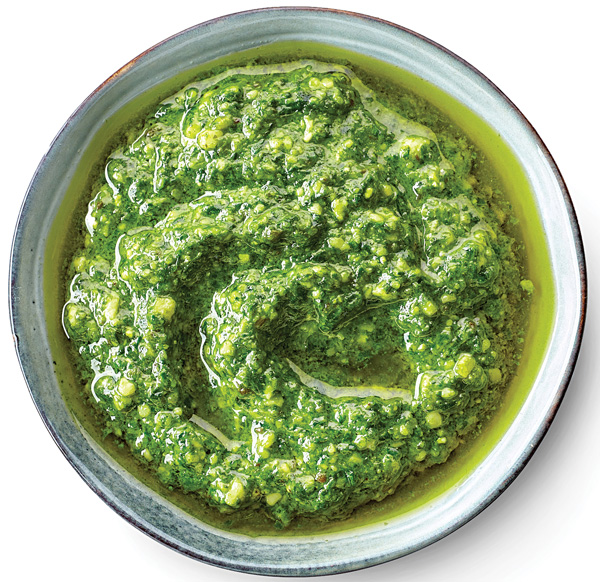
As long as we are trying to save our herbs from going bad while also using oil instead of butter, how about making one of the most popular sauces around. I’m talking pesto. Pesto is from the city of Genoa in the Liguria region of northern Italy. It comes from a Latin word that means to pound or crush, which is in reference to the crushed herbs and garlic used for the sauce. Traditionally, cooks would make the sauce in a marble mortar. I’m going to go out on a limb by saying that using a food processor or blender is easier and faster. As a matter of fact, I can honestly say I’ve never prepared presto in the traditional method.
You can use the same basic method and recipe and substitute different herbs you might like or have on hand.
Pesto is herbs, garlic and oil. Traditionally, the oil used was extra virgin olive oil from the Liguria and the basil was probably from northern Africa. The rest of the ingredients include pine nuts — which are better if you toast them a little first — one or two types of hard cheese, such as Parmigiano-Reggiano, Grana Padano or Pecorino Romano, and salt. Add the salt at the end because hard cheeses can be salty.
Pesto is great used in a variety of ways. It was most often used for a pasta sauce, but now it is used as a spread on almost anything, including sandwiches. It also is good in minestrone soup.
Pesto will add a week to your herbs in the refrigerator, but it also can be frozen for up to six months. One thing to keep in mind when using pesto is that basil will get bitter if it is cooked too much. It is best to add to the dish near the end, so it just gets warmed enough to release its flavor. It also is great cold.
Pesto is crushed herbs, but they don’t have to be basil. This is where it gets fun. You can use the same basic method and recipe and substitute different herbs you might like or have on hand. You also can change the nuts from pine nuts to cashews, walnuts, pecans or whatever your fancy happens to be. You can add roasted red pepper or sun-dried tomatoes. Use different combinations, but try to use things that complement each other like basil and thyme.
I want to stress that the strengths of herb flavors can vary. I like to taste the various herbs before I start to get an idea of the proportions I want to use. As with most recipes, add things a little at a time, use the recipe as a guide and go by your taste buds.
Here is one example of a great pesto mix I use with lamb, veggies, sandwiches and appetizers. Make a traditional basil pesto or try one of your own and enjoy.
Pecan Mint Pesto
1 bunch of mint
½ bunch of basil
4-6 cloves garlic
1/8 C pecans slightly toasted
1/8 C grated parmigiano or other hard cheese
4-6 T extra virgin olive oil
Salt & pepper to taste
Place the herbs and half of the oil, nuts, cheese and garlic in the blender. Slowly add the rest to taste. The consistency should be a paste, not runny. Add the oil a little at a time and season with salt and pepper to taste.


