


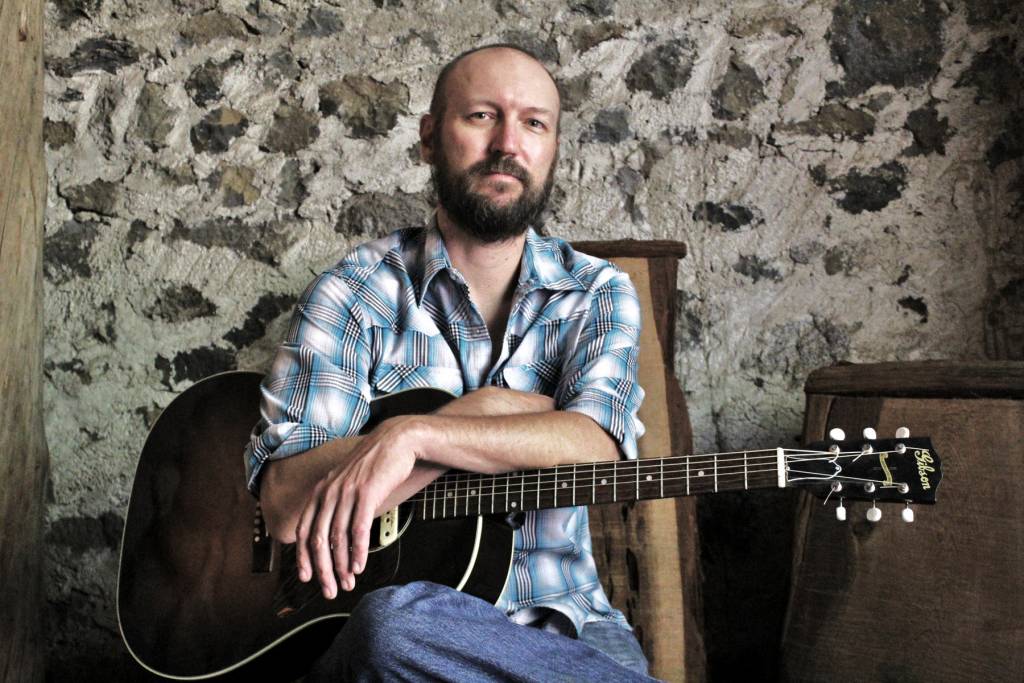
“What makes a good song is a very subjective question,” says Stateline, Nev., songwriter Darren Senn, “But to me, if it’s relatable and hits you in the abdomen, then you done good.”
Senn grew up on the classic country his family played at home, songs by windswept, unsentimental wanderers like Willie Nelson, Merle Haggard and Waylon Jennings. He spent those summers in West Eugene, Ore., with his cousin, Chad, roaming the countryside on BMX bikes to buy candy, meet girls and swim in the Willamette River. These fond memories inspired the lead single for his upcoming album, a downhearted and tender ballad called “Gone are the Days.”
“They always say write for yourself and not for other people, but I want to write something that’s pleasing to hear. I want it to be relatable. The sadder stuff not everybody digs, but that’s what I really enjoy writing most.” –Darren Senn
“It was just young summer days, so fun and innocent and carefree,” says Senn. “There aren’t many guarantees in life, but it will never be the same as when you were a kid. It’s just different when you’re an adult. I’m lucky I had that childhood.”
Watch Darren Senn perform “Gone are the Days”
That’s not to say that everything was always so simple. Senn’s father was a blue-collar alcoholic, Vietnam veteran and mechanic who passed away when he was still a teen. He wrote the haunting song “Dirty Wrench” off his 2018 album “Detrimental Tendencies” in remembrance. Like many of his compositions, it evokes the real-life struggle of the common man in stark, plain and sober terms reminiscent of Bruce Springsteen’s acoustic landmark “Nebraska.”
“What really touches me is Townes Van Zandt, John Prine and Todd Snider,” says Senn. “Those guys write the way I like. Their work is very emotive and deep. Stuff that makes you laugh and cry in that same song. That’s magic to me. Those songs are as good as it gets about the human condition.”
Another new piece, “Winnemucca,” tells the story of two high-school football stars who meet up at a high-desert bar years beyond their glory days. With only a guitar, a harmonica and a weathered voice, Senn penetrates deeply into the heart of humanity as he compares himself to the vacancy sign on a passing I-80 motel. On meeting, the good times and strong drinks flow easily until his friend leaves with a prostitute and he gambles all his money away. The narrator is left in his cold pickup truck, haplessly drunk and alone again.
“If I want to write seriously, it usually goes dark,” says Senn. “It makes for good song content. It’s universal.”
Senn moved to South Lake Tahoe in 1996 where he worked as poker dealer at Harveys Lake Tahoe Hotel & Casino until gaming shut down in March. He didn’t learn to play the guitar until he was 27 years old.
“Once a friend taught me a couple chords, I didn’t put it down,” he says. “I basically locked myself in my condo and learned how to play. I was into Neil Young, Bob Dylan and Gordon Lightfoot. That’s the first time I remember music becoming a part of me.”
He played in The Rusty Strings and befriended Tahoma Americana group Dead Winter Carpenters who have been known to cover his work, all the while developing a reputation as one of the most poignant folk songwriters in the Tahoe Sierra.
“They always say write for yourself and not for other people, but I want to write something that’s pleasing to hear,” says Senn. “I want it to be relatable. The sadder stuff not everybody digs, but that’s what I really enjoy writing most. It makes me happy. It’s healing. It’s therapeutic. That’s what funny about it. You have to put the universal emotion in your words with your own personal spin on it. Therefore, you’re satisfying yourself and you’re also appealing to other people. It’s all about connection.”
Lately, out of work and another day older, Senn’s been thinking a lot about the past and his own impermanence as he records his third album in five years.
“You start wondering, ‘What is my life going to be like?’” he says. “But you gotta put success and money aside. You always want that stuff, but you gotta do it for the right reason which is affecting another human being. That’s tough because in this working folk genre there’s just not a lot of money. You gotta make sure to do what you can to take care of yourself and be real. If you can do that, it’s worthwhile, absolutely. It goes to show you that sometimes the art tells you what needs to be done.” | darrensenn.com


