


Middle Eastern cuisine is rich with flavorful warm spices such as cumin, harissa, cardamon and za’atar and fresh fragrant herbs such as parsley, mint and oregano.
Kayla Elias, the owner of Lulu’s Lebanese Kitchen, is of Middle Eastern descent and has transformed her passion for cooking and her family’s recipes into a new catering business based in Truckee.
Try the recipe for Mena’eesh Flatbread in this edition.
Watch Kayla Elias on how to eat mena’eesh.
Elias’ father was born in Aleppo, Syria, where the spice Aleppo is grown. Other family members settled in Lebanon. The food Elias creates is taken from her heritage. She went to school in Beirut, studied abroad in Syria, and learned Arabic and the art of Middle Eastern cooking from her great aunt. Her business is named after her aunt.
Her family is passionate about food. Elias recalls her father talking about his mother’s cooking and how it was an event around the dinner table.
“Food is a gateway to understanding a culture that is often misrepresented and not associated with what people see on the menus. I want to give people a cultural experience.” –Kayla Elias
“Food is how they show you they love you,” she said.
The cuisine on Lulu’s menu is as colorful and fresh as her passion for sharing her love of her heritage and cuisine. She came to my house to teach me how to make muhammara, a red pepper and walnut dip and mena’eesh flatbread (try the recipe in this edition). Muhammara means reddened. Mena’eesh is prepared in Lebanon, Syria, Palestine, Jordan and Iraq.
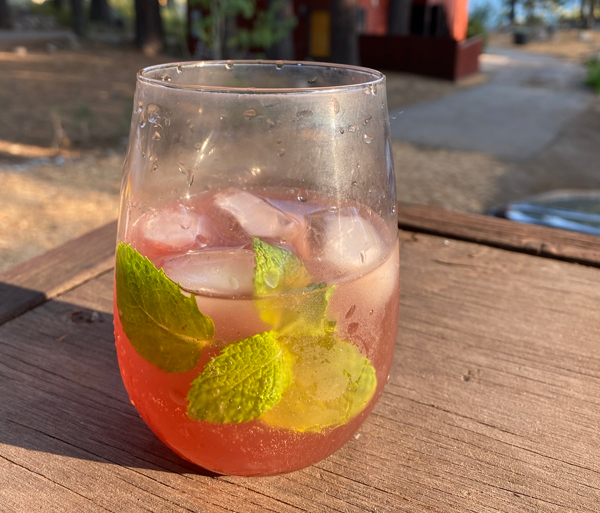
Elias began our evening with a sour cherry gin drink with fresh mint, the perfect summer cocktail. Sour cherry syrup is a Middle Eastern condiment.
“Sour cherries have a brief season in Syria. Because of this, locals extend that flavor by making juice, jam, syrups and liqueur with the fruit so they can enjoy it throughout the year,” said Elias.

She prepped the dough before arriving, so it could rise. She used flour, water, sugar and yeast. Once the oven was set to 400 degrees F, she turned her attention to the muhammara.
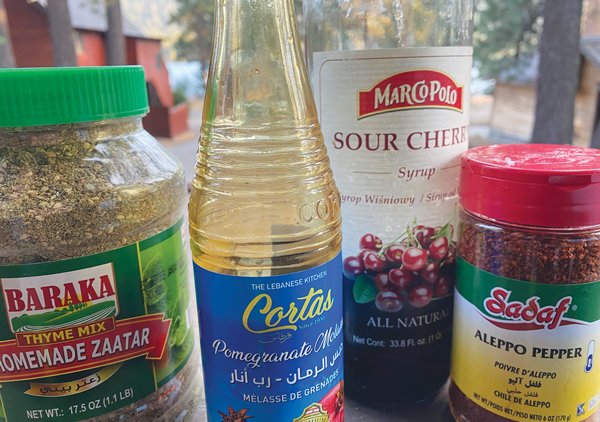
The first step was putting the walnuts in the food processer, pulsing them and setting them aside. She said she likes the dip to have a chunky texture instead of blending it to a smoother consistency. Next, she added roasted red pepper and bread crumbs (she makes her own using her homemade pita bread). Aleppo pepper, pomegranate molasses, lemon juice, salt and cumin and a good extra virgin olive oil rounded out the ingredients. Aleppo pepper and pomegranate molasses are available online or at Aladdin’s Market and Kitchen in Reno, Nev.
Once the dip is blended, Elias added the walnuts and sets it aside. She said she likes the muhammara to sit overnight so the flavors have time to marinate.
Elias poured a bit of the Aleppo pepper in my hand to taste. It was not hot spicy but had a delightful sweetness and warmth to it.
Next, Elias pulled out the dough and made six round balls. She turned them into large flat rounds akin to pizza and laid them out on a baking sheet. She added a mixture of za’atar (available in the spice section at most major supermarkets) and olive oil on top and popped them in the oven to bake.
“In Beirut, there is someone on every corner selling mena’eesh. It’s in every bakery. It’s served with akawi cheese and za’atar, vegetables, pickles or minced lamb,” she said.
She pulled out some pickled vegetables and Moroccan olives, fresh mint, sliced tomatoes and labneh, a thick yogurt dip to serve with the mena’eesh and muhammara. Before enjoying the bounty of beautiful food Elias prepared, she raised her glass and said, “Sahteyn,” which means twice your health.
“It’s what people say when they break bread together and is a loving word with a lot of emotion,” Elias said.
The warm flatbread smelled of herbs and spices. I layered on the dips and condiments and ate muhammara open-faced. Clearly, Elias’s passion for her culture is evident in every delicious bite.
“Food is a gateway to understanding a culture that is often misrepresented and not associated with what people see on the menus. I want to give people a cultural experience,” she said.
For her, it’s not just food on the plate, it’s a way of eating and enjoying food.
In addition to the dips, flatbread and pita bread, Elias offers a variety of Middle Eastern entrees for private parties. | Lulu’s Lebanese Kitchen on Instagram
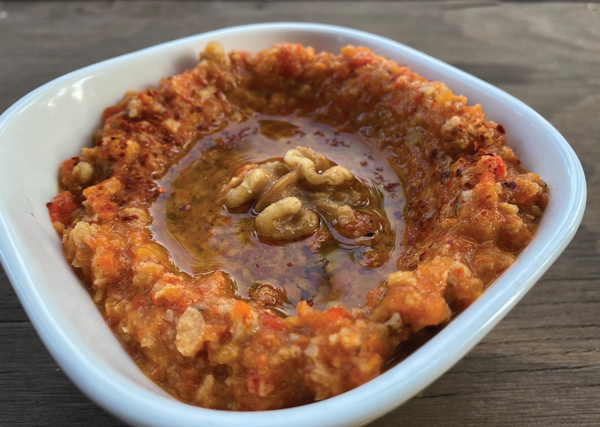
Muhammara
Courtesy of Lulu’s Lebanese Kitchen
6 red bell peppers
½ C chopped walnuts
½ C breadcrumbs
3 T pomegranate molasses
2 T extra virgin olive oil
3 cloves garlic, roughly chopped
1 T lemon juice
2 t cumin
1 t salt
1 t Aleppo pepper
Roast bell peppers on a tray in the oven at 375 degrees F for 30 to 40 minutes, rotating every 10 minutes. You’ll know they’re ready when you see the skin bubble.
Place peppers in a bowl with a lid to steam for 10 to 20 minutes. Remove skin and seeds from peppers and set aside to cool. Cool, dump out any liquid from the peppers and add it to the food processor along with all the ingredients, except for the chopped walnuts. Blend ingredients together until mixed. If you prefer the dip to be smooth, add the walnuts when you blend everything together. Pour into a bowl and fold in the chopped walnuts. If your dip is too thin and watery, you can add more breadcrumbs.
It holds for up to a week in the fridge and tends to be better the next day after the breadcrumbs have a chance to soak up all the flavors.
Serve in a bowl, topped with olive oil and Aleppo pepper, along with one whole walnut in the center.


