


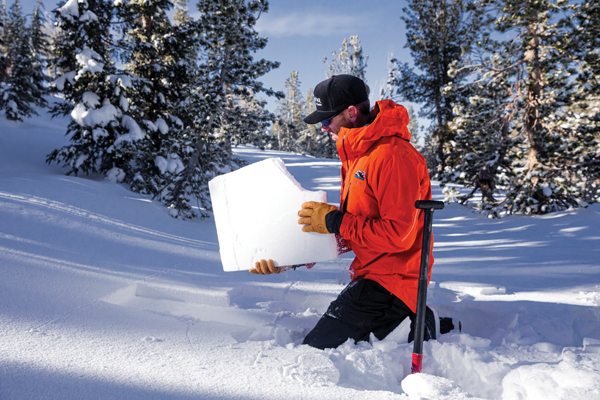
Tahoe has seen record-breaking snowfall after an epic 214 inches of snow in December. Snow for most means it’s playtime in the mountains. Skiing, snowboarding or snowshoeing are just a few activities that make winter fun. The resorts are spinning their lifts and the back country calls to winter enthusiasts looking to get out in nature.
The allure of fresh powder, snowshoeing in the quiet, crisp snow and being outside in uncrowded areas calls to many ski and snowboard adventurers. Planning to venture into the back country is no joke. It requires awareness. Avalanches are real and dangerous. According to the National Avalanche Center, at least 45 people die in avalanches every winter. If you plan to go into the back country, here are a few things to consider.
Know the avalanche forecast
The first thing is to always check the daily forecast on Sierra Avalanche Center’s website or sign up for the daily newsletter.
“We put out the avalanche forecast every morning all winter long. And you know, that should be the starting place for everyone planning their trips into the back country. This information helps people make smart decisions,” says David Reichel, Sierra Avalanche Center’s executive director. “The Sierra Avalanche Center’s role is to provide the forecast, what we think the danger is, what the specific avalanche problems are present that day and any additional weather information.”
“Get the gear. Get the training. Get the forecast. This is the back-country mantra.”
–Eric Petlock
He says this information is more useful for someone who has taken classes, read books and developed a snow avalanche literacy. There is a field staff of six people; three are forecasters responsible for getting readings and writing a daily report.
“A forecaster goes out every day, taking a reading at 5 or 6 in the morning and publishes their report by 7 a.m. In addition, we have three professional observers who do the same field observations as the forecasters but don’t write the forecast,” says Reichel, who is also a professional observer. “We cover a large area: Donner Summit to Sierraville and north of Truckee, all around Lake Tahoe and the mountains on all sides of Lake Tahoe itself, down to Carson Pass, around Kirkwood and a thin strip that goes down Bear Valley. It’s a large area.”
An important message Sierra Avalanche Center staff reminds everyone before going into the back country is: Know before you go.
Get the training
Local guide Eric Petlock is well versed in the back country as a guide for Pacific Crest Snowcats and International Alpine Guides. He also teaches back-country education with Sugar Bowl Ski Team & Academy Snow Rangers program and skiing at Palisades Tahoe. Petlock can’t stress enough the importance of education before heading into the back country.
“Get the gear. Get the training. Get the forecast. This is the back-country mantra,” says Petlock, adding that there are several local companies offering back-country courses, avalanche rescue training and American Institute for Avalanche Research and Education (AIARE) courses.
“There are some basic things that people should do when considering going into the back country. The first is to take an Intro to Backcountry course from one of the guide services in the area,” says Petlock.
These courses teach people how to properly use climbing skins, bindings and gear, including what type of backpack to use — that it fits properly and is for the right application. They also teach what gear is necessary and how to use equipment, including beacons, probes and shovels. Petlock stresses the importance of warm clothing, water and food, in addition to learning some basics in terms of navigating in the back country.
“There are a number of reputable guide services in Tahoe. They have insurance and standards for guides in terms of training. These are the people that you want to go with if you’re going to go on a guided ski tour,” he says.
Back-country basics
- Get educated. Take courses and AIARE trainings.
- Know before you go: research avalanche danger with Sierra Avalanche Center daily reports.
- Know the terrain.
- Don’t go alone. It’s best to have a partner.
- Make sure to have the appropriate gear.
- Clothes matter. Make sure to layer.
- Bring food, water and snacks.
TO READ THE COMPLETE 1st TAHOE SIERRA BACK-COUNTRY GUIDE, PLEASE SEE THE DIGITAL EDITION.


