


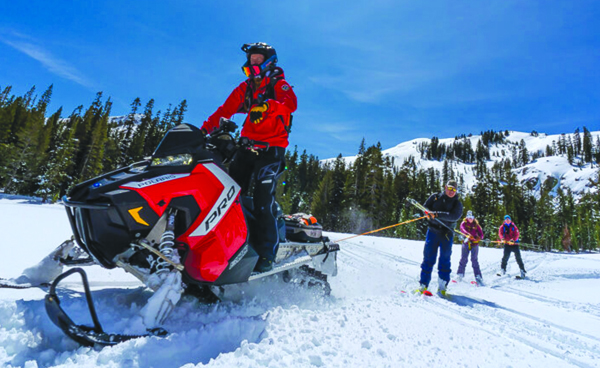
It’s a beautiful day, a fresh layer of snow blankets the mountains and forests. It’s the perfect opportunity to get into the woods, skin a mountain or take a snowshoe hike. Going out in the backcountry offers a sense of solace, beauty and awe, but if you aren’t paying attention to the weather, it can be a life-threatening situation.
Weather in Tahoe changes rapidly and getting caught in a snowstorm can be problematic. Getting lost in a storm happens, whether one is at a ski resort, in the backcountry or taking a hike in the meadow.
Tahoe Nordic Search & Rescue (TNSAR) is one of the local organizations at the forefront of searching for people who get lost in the winter or summer. They also educate people about what they need and what to do if they find themselves lost.
Tell someone your plan
According to Sarah Krammen, a board member of TNSAR and an A team skier for the organization, one of the most important things when venturing out into the backcountry is to tell someone. TNSAR volunteers go out in the worst conditions imaginable looking for people who get lost.
“Be prepared for not what you think is going to happen but be prepared for what you would have to deal with in the event of an injury or equipment malfunction.” – Eric Petlock
“Having a buddy, telling a friend or putting your plan somewhere is important. We end up going out to search for someone who generally told their wife what trailhead they were going to and we find their car, but then the question is, ‘Where did they go?’” says Krammen.
Be prepared for any weather
Whether you are backcountry skiing, cross-country touring, snowmobiling, hunting or snowshoeing, it’s essential to check the weather and be prepared. Even when venturing out for a couple of hours in familiar territory, bad weather can quickly become a challenging situation.
Read Priya’s story on “Power food for the backcountry” in this edition
“Be prepared for the weather. Make sure you have something that you use to get warm. Pack an extra puffy, carry hand and toe warmer packets and a lighter to start a fire,” says Krammen.
Krammen recommends carrying a mini Garmin that links to a satellite and is helpful in the event the cell phone dies or doesn’t work. TNSAR uses the tracking app, Cal Topo, which helps the team keep in touch with each other and track a lost person.
STOP if lost
What is the best approach if you get lost or injured while recreating? Krammen says that TNSAR uses the STOP acronym: Stop, Think, Observe and Plan. Stay put. Evaluate your options. Check the surroundings and equipment and formulate an action plan.
If you are stuck or lost in a storm, Krammen says, call 911. If you need to shelter, it’s important to know that it’s hard to find someone under a tree. Set up clear markers with branches making an X or tie a piece of clothing to mark where you are.
Krammen says that if you get lost, avoid assuming you need to go downhill. Follow your tracks back if they aren’t covered by snow. Look for lights to guide you back to the ski resort, road or house. Make sure to keep warm.
Avy courses, gear essential
Backcountry skiing has grown in popularity and with more people visiting the Tahoe region, it’s important to understand what to do when issues arise. For backcountry skiers, avalanche courses and proper gear are a must. Eric Petlock has been ski guiding in the backcountry for 30 years.
“There are a couple of really important things for people to be aware of. The first is to realize how easy it is to get disoriented when in the backcountry,” says Petlock.
He suggests using an app such as Gaia, onX, CalTopo or the iPhone mapping app and knowing how to use them and how to read a map. Petlock suggests setting a pin on your phone for the location of your car.
When he backcountry skis, he brings a small, insulated inflatable air mattress, which can keep someone off the snow in the event of an injury.
“When backcountry skiing, the possibility of injury is higher. The possibility of equipment malfunction is higher. And you’re generally much farther away from help. Either an equipment malfunction or a minor injury can create a serious situation,” he says. “Be prepared for not what you think is going to happen but be prepared for what you would have to deal with in the event of an injury or equipment malfunction.”
Jeff Brunings spends a lot of time in the backcountry. He suggests if you are going into the backcountry alone, leave a temporary voicemail recording on your phone that says what you are doing: “I’m heading out to Judah Peak and I’ll be back by 4 p.m.”
If your cell phone dies, people will receive a voicemail message and realize you might be in trouble. | tahoenordicsar.org
Tahoe Rim Trail Association courses
Feb. 4 | Snow Camping 101
Feb. 25 & 26 | Wilderness First Aid
Resources
AIARE courses | avtraining.org
Avalanche information & education | avalanche.org
Backcountry shuttle | (530) 550-5300
Sierra Avalanche Training Center | sierraavalanchecenter.org
Sno-Park Permits | (916) 324-1222, ohv.parks.ca.gov
Tahoe Backcountry Alliance | tahoebackcountryalliance.org
Take Care Tahoe backcountry safety | takecaretahoe.org/backcountry
Tahoe Rim Trail Association | tahoerimtrail.org
PREPARE IN ADVANCE
- Get avalanche training
- Carry & check avalanche gear
- Leave details before heading out
- Check the weather
- Read the Winter Awareness Guide at tahoenordicsar.org
IF YOU BECOME LOST
- STOP: Stop, Think, Observe & Plan
- Call 911
- Clearly mark your location
- Follow your track back, if possible
- Look for lights to guide you
- Stay warm
WHAT TO PACK
- Extra batteries
- Headlamp
- Phone charger
- Emergency blanket
- Protein bars
- Whistle
- Mini Garmin
- Tarp
- Hand & foot warmers
- Extra hat & gloves
- Extra layers
- First-aid kit
- Lightweight portable stove
- Lighter
- Paper maps
- Compass


