


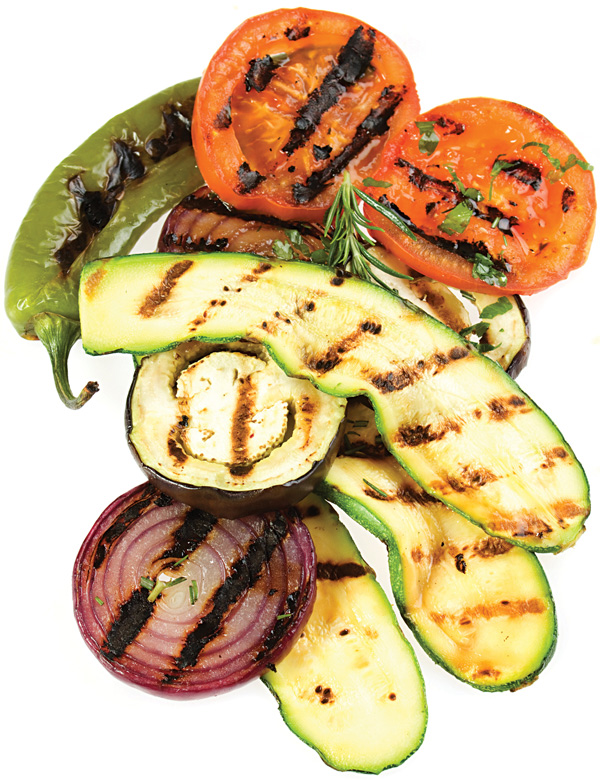
From burgers and dogs to chicken and steak, meat tastes better cooked on the grill, which is perfect for carnivores. But what if you are not a meat eater? As much as grilling improves the flavor in meats, I think vegetables gain even more flavor when grilled. As a matter of fact, I think grilling improves vegetables more than any other food item as far as flavor goes.
If you stop and think about it, most of the time when veggies are cooked in the kitchen, they are boiled or steamed. Once in a while, we will bake something such as acorn squash or sauté a veggie using no water at all, but in general, boiling is the way veggies are cooked. A lot of flavor is going to be lost into the water.
There is a lot more for a vegetable to gain from being grilled.
Grilling allows you to either season or marinade the veggies before they are cooked so the flavor is cooked in by the open flame. There also is the natural flavor of the vegetable that won’t be leaching into the water. There is a lot more for a vegetable to gain from being grilled.
One of the more popular summer veggies is corn on the cob. You might see corn grilled in the husk or without it. I like to cook it in the husk for a few reasons. First, it is easy to prep. Just snip the silk from the end and any loose leaf ends and toss it on the grill. You don’t have to watch it so carefully to keep it from burning. If the husk gets a little black, it is not a big deal because it is protecting the corn. Keep a bucket of cold water close by to dip your fingers when you finally peel the leaves the hot corn.
There also is a lot of flavor you can get from the husk as anyone who has ever eaten a tamale knows. Some people will peel the husk back, season and butter the corn and then put the husk back in place. This is good if your corn is not sweet — you can even sprinkle a tiny bit of sugar on it. A good sweet corn cooked on the grill is one of the few things in the world I will even consider eating with no seasoning.
As for other veggies such as zucchini, yellow squash and carrots, cut them lengthwise and a little thicker than normal. Leave mushrooms, cherry tomatoes, beans, asparagus and smaller, more delicate veggies, whole. Blanch hardy veggies, such as cauliflower and broccoli, a little first. Cauliflower you can slice; do not bother to break it into flowerets.
Once the vegetables are cut, they can be seasoned or marinated. Salt and pepper them, add fresh chopped herbs and a light brush with olive oil and they are ready for the grill.
If you want to marinade them, do it for no more than 15 minutes so the veggies don’t absorb all the liquid and turn to mush. You can use your favorite vinaigrette as the marinade or make something up.
The marinade will be similar to vinaigrette, but I will change a few minor things. For instance, I will either eliminate all together or at least cut in half the amount of Dijon and sweetener. This is especially true if the vinegar I use is balsamic, since it is sweet anyway. If I do use a sweetener, it will be a maple syrup or honey, not sugar. I will use no more than three herbs and only up to three as long as they don’t fight each other. Basil, thyme and rosemary are my favorites and I will use some combination of them going a little heavier on the basil since it is the mildest. Rosemary can be fine chopped or the twigs broken in pieces to release the flavor. Make sure the twigs are easy to remove when cooking.
No matter what herbs you prefer or whether you season or marinate your veggies, try grilling them at your next cook out and enjoy.
Vegetable Marinade
1/3 C balsamic vinegar
2/3 C olive oil
1 clove garlic, chopped
1 T salt
1/2 T pepper
Basil, thyme and rosemary, chopped
1 T maple syrup (optional)
Combine all of the above. The earlier you make this, as with a vinaigrette, the more flavorful it will be. Allow time for the flavors to meld. Marinate the vegetables for up to 15 minutes and then grill.


