


I just picked up a filet pretty cheap. Usually, I will sear a serving of the filet off on the stove top and finish it in the oven.
I also like to serve the filet with a béarnaise sauce, which is basically a hollandaise sauce with a tarragon and red-wine vinegar reduction. Just pour about 2 tablespoons of tarragon — you can use dried tarragon — in a sauté pan and add about one-half cup of red wine vinegar to it. Let it reduce on the stove until there is just the slightest hint of liquid left and set it aside. Add a pinch of this at a time to your hollandaise sauce to taste and that’s it. Some people will add a little brown sauce to it but I like it without, although I do use a little Worcestershire sauce in my hollandaise.
Try Smitty’s recipes for:
Hollandaise Sauce
Demi Glace
If I happen to have some good demi still in my freezer, I will sometimes make a peppercorn sauce or a simple red-wine demi instead of the béarnaise. Either of these sauces is great on most cuts of beef and, again, is pretty easy to make.
Unlike store-bought chicken stock or base, I have never found a beef base product in the store I really like for use as a sauce, so I make my own and keep small containers in the freezer. For this dish, you can use one can of beef stock or consume in the mushroom reduction with no problems.
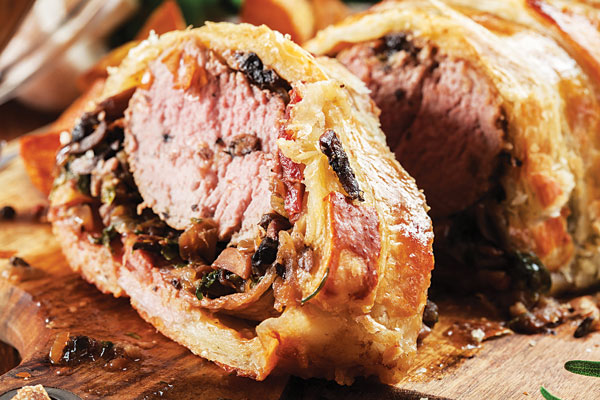
Beef Wellington is usually thought of as a fancy meal that is complicated to make, but in actuality is not that hard. There are many ways of making this dish and like just about every other recipe, different chefs use different ingredients. This method is simple and a lot of the time is spent in waiting for things to cool.
A lot of Wellington recipes call for the use of pâté, which just adds one or two more simple steps, so if you want to use the pâté, I’ll give those directions, too. As for the sauce, again there are various options. If I have a good demi, it is a toss-up between the béarnaise and a bordelaise sauce, which is a basic red-wine demi reduction. So, no matter which recipe you use, give this dish a try for your next dinner party and impress your guests.
Beef Wellington
3-lb. piece of filet, center cut
2 lbs. mushrooms, finely chopped
1 shallot, finely diced
½ T thyme
1 T butter
1 C sherry
½ C beef stock or 1 can beef broth
1 sheet puff pastry dough (let thaw overnight in refrigerator)
1 egg, beaten
1 T vegetable oil
*½ lb. pâté
*1½ T mustard
Season the filet with salt and pepper. Get a sauté pan hot on the stove top and sear off the filet in the oil, browning all the way around. Set it on a plate to cool. You can use a food processor if you want when chopping the mushrooms. Sauté the shallot and mushroom in a pan until all the liquid is gone. Add the sherry and let reduce until there is no more liquid and then repeat this process with the beef stock also adding the thyme as you add the stock. Let this mixture cool.
Roll out the dough on a floured table to about 2 inches longer than the filet at each end. Once everything is cool, you can start assembling.
*If you want to use the pâté, brush the filet liberally with the mustard and then spread the pâté evenly over the meat. Spread the mushrooms onto the pastry dough so they are in the center of the dough as long as the filet is and twice as wide as the filet’s width. Bring one side of the dough up and over the filet.
Brush the outside edge of the dough with the egg wash along with the inside edge of the other side of the dough. Bring that side up and over to completely encase the filet.
Brush the ends of the dough with the egg wash and fold them up to close off the ends. Roll the pastry-covered filet onto a parchment-paper-lined sheet pan so the seams are on the bottom. Set in the refrigerator for 20 to 30 minutes so the dough can rest.
Brush the top with the rest of the egg and cook in a 350-degree F oven until golden brown, which should be about 20 minutes. Insert a thermometer to check internal temperature, which should be about 120 degrees F. Remove from the oven and let rest for at least 20 minutes.
Slice the Wellington thick and serve the sauce under it if it is a brown sauce or on the side if you use béarnaise.


