


Editor’s Note: This is the third part in a series covering the tourism impacts that locals and visitors alike have experienced this summer. Read more in the series:
Part I, “Tahoe’s tourism tipping point,”
Part II, “Grappling with garbage & grievances,”
Part IV, “Microplastics: Tahoe’s tiniest trash,”
and Part V “Fire, fear & red flags.”
Read the February 2021 followup to the original series:
“Tahoe’s trash trouble continues.”
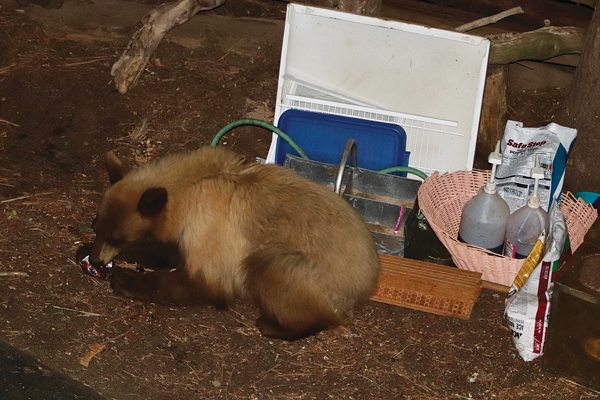
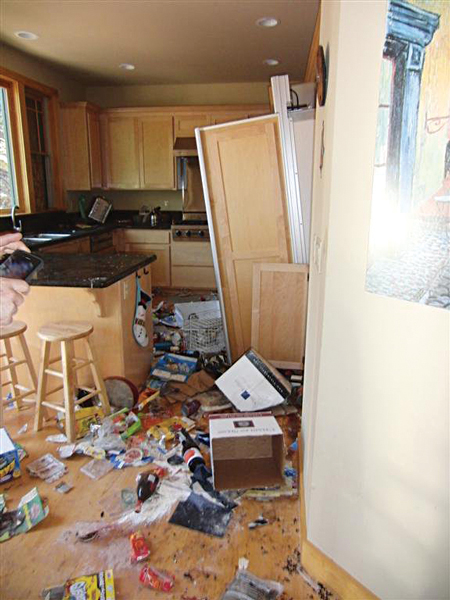
Trash kills wildlife. In Tahoe, bears are most at risk. Unsecured garbage, bird feeders, fruit trees, vegetable gardens, compost, or even feeding domestic pets outside can attract foraging wildlife, especially bears. Once a bear finds an easy food source (i.e. garbage) they’ll come back repeatedly. And, if bears don’t find it in the garbage the next time, they will start searching in nearby cars and homes looking for the next easy meal.
“The animals are trying to profit from the easy access, but then they’re dying because we’re killing them.” –Ann Bryant
Bears that return time and again can prompt a depredation permit to be issued, which means a bear will be shot. Most people who live in bear country don’t want this to happen.
Many visitors to our area, however, are not bear savvy and don’t know that unsecured trash or even trash cans in a garage can attract bears. Due to the pandemic, the Tahoe Sierra has seen a record number of visitors to the region and more trash being dumped illegally and left lying around on beaches, trails and next to bear-proof garbage containers and the bears are foraging off that human garbage.
And while there is something magical about seeing a bear in a yard or in the wild, according to the Tahoe-based BEAR League, it is imperative not to engage with them, feed them, get close to them or leave trash out. Feeding bears or leaving garbage unsecured can be a death warrant for wildlife. If bears get too familiar, they break into cars and homes looking for food. If they become a nuisance or pose a safety threat and this is reported to authorities, there is a chance it will be euthanized.
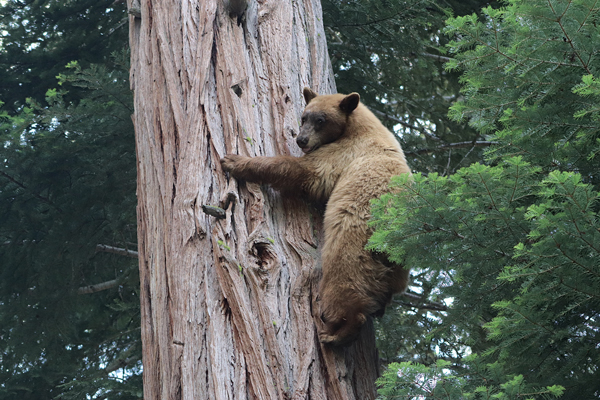
There are an estimated 10,000 to 15,000 black bears in the Sierra Nevada. They are omnivores and subsist on a diet of grass, berries, blossoms, grubs, fish, small mammals and birds including chickens. In the fall bears prepare for hibernation by consuming more than 20,000 calories a day, and in Tahoe that includes feeding off trash. Black bears rarely attack, according to California Fish & Wildlife, but at times, may become food aggressive.
The BEAR (Bear Education Aversion Response) League, seeks to protect bears and educate visitors and locals, and the group of volunteers want to be the first call someone makes if they have a bear encounter or a nuisance bear, operating a 24-hour hotline. Volunteers use methods to scare off bears and to educate people about how to keep them from returning. The organization has 200 trained volunteers and 2,000 members whose mission is to educate people about bears, and rescue injured or orphaned bears in the Tahoe Sierra.
“Twenty years ago, there was no education whatsoever in the Tahoe Basin about bears. People would put their trash out with no bear bins and no protection, and some of them would freak out and call the Department of Wildlife who would come and kill the bear,” explains Ann Bryant, executive director and founder of the BEAR League, who has been working to save bears for 35 years.
Educating Tahoe’s visitors on how their actions impact wildlife is imperative say local advocates, which includes not leaving trash unsecured. Both Bryant and Will Richardson, executive director of Tahoe Institute of Natural Science (TINS), are seeing the effects of visitors and garbage as it relates to wildlife and their natural habitats
“At this point, I feel like there may be more people than ever on the trails. And it seems that people are inspired to go a little further off the trail into the wilderness to spread out and get away from people as more people try to escape from high-density urban areas. With more people on the trail, it seems it may have real behavioral impacts on some of the creatures,” explains Richardson, who adds more garbage attracts more wildlife, and they associate food with garbage.
Richardson also notes that while bears are the most impacted in the Tahoe Sierra so are raccoons, birds, squirrels and chipmunks. Richardson also points out that South Lake Tahoe saw the first bubonic plague case in human since 1980 this year. The human and wildlife relationship is fragile and increased interactions are a direct result of the pandemic as more visitors flock to local beaches, parks, trails and waterways, he says.
The BEAR League has been “busier than ever,” says Bryant. “All I know is that there are more people up here this summer than I’ve ever seen. We’ve been busier than ever with phone calls, and wildlife situations, busier than I have ever seen in the last 35 years. People come here with a city mentality; they’ve got a lot of fear,” she says, noting that many people’s first response is to call authorities for non-emergencies. Bryant would like that first call to be to the BEAR League.
“We have a very robust bear population in the area. For better or worse, wildlife lives on the human population in terms of the garbage, restaurant food and people feeding the wildlife,” says Peter Tira, spokesperson for California Department of Fish & Wildlife, an agency that is often called on to deal with wildlife issues.
“The bears in Tahoe are way above the carrying capacity of the natural habitat, and they survive because they’ve learned to adapt and thrive off the human environment,” explains Tira. “They’ve learned to break into people’s homes, cabins and campers. It’s really on us, as people, to be vigilant in securing our garbage, use bear canisters when hiking, and not leave food in our trucks or cars.”
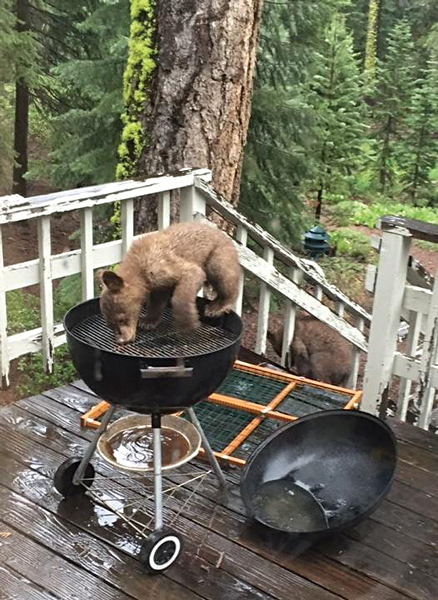
According to Tira, if California Fish & Wildlife receives a bear complaint, the agency will try to work with the homeowner or tenant to address the root cause of why the bear is there. Officers will assess food sources, garbage, vehicles and unclean barbecue grills. They may also recommend an electric fence. Bears have a keen sense of smell and will think nothing of breaking into a garage if trash is stored there.
But to be clear, the agency does not relocate bears. If a bear keeps returning, they may issue a depredation permit if it becomes a public safety issue, which legally allows for the bear to be euthanized. Tira noted that it rarely happens in Tahoe and it’s the last thing they want to do. However, Tira says if someone feels like they are in danger, they should call 911.
The Nevada Department of Wildlife also uses a number of methods when they receive a call about bear issues and does relocate problem bears.
“We don’t issue depredation permits. We use aversive conditioning. We trap the bear in a capture culvert, and release the bear in a nearby area. We use noise, bear dogs and rubber bullets to scare them,” says Ashley Sanchez, public information officer for the Nevada Department of Wildlife. Once the bear is caught, they are collared before they are released. Sanchez says euthanizing bears is a last resort.
“We have seen a huge increase in bear activity this year. Bears are coming down from higher elevations due the dry year and finding their way into the lower valley and into neighborhoods,” she explains, adding that unsecured garbage and fruit trees are two of the main factors.
The Nevada Department of Wildlife received 400 bear-related calls from June through August of this year. Most were sightings or questions. The organization trapped and relocated 50 bears. Two bears were deemed a public safety threat and had to be euthanized. Sanchez says she can’t stress enough the need for people to secure garbage and other items that attract bears.
California Fish & Wildlife reports that it has received 88 bear-related calls between May and August: 56 in El Dorado County and 32 in Placer County. Tira said that they received a number of requests for depredation permits – 37 in El Dorado and 21 in Placer. After investigating the complaints, 17 permits were issued in El Dorado and 10 in Placer due to public safety concerns. Of those, 3 bears were killed in El Dorado and 2 in Placer.
Impacts on wildlife
It’s not just bears that are impacted by a lack of awareness, however. Tira says that deer and other wildlife are also a victim of people’s negligence.
“There’s plenty of food for the wildlife. People don’t need to feed these animals. And it’s illegal to feed bears and deer, but people like to do it nonetheless,” Tira noted. “This happens with deer all the time, and then they go looking for food in backyards, their antlers tangled up in all sorts of things like hammocks and playgrounds. Animals get their neck stuck in chicken feeders or wiring fencing and rope swings.”
Tira adds that if people have chickens it’s essential to secure them at night and ensure they are not accessible by wildlife, especially bears and coyotes who feed off chickens.
Richardson also points out that there is are some serious effects on the environment.
“There are very direct and indirect impacts of litter on wildlife, up and down the food chain, and on us, too,” says Richardson. “As far as wildlife and litter, a lot of this stuff will get washed down in the storm drains into [Lake Tahoe] and into our watershed. Some of it may degrade the landscape. Things like cigarette butts are going to degrade into microplastics.”
Lack of bear boxes
Bear-proof trash containers, commonly called bear boxes, secure trash so bears can’t get into it. However, bear-proof containers are not required in most of the Tahoe Sierra.
Placer County only requires that homes above 5,000 feet in elevation install a bear box for new construction or additions larger than 500 square feet. The county does offer a bear box loan program for homeowners, as well.
In the Town of Truckee, there is no bear box regulation. Truckee Mayor Dave Polivy says that he thinks bear boxes would help, noting that the town council is looking at making bear boxes mandatory as part of its forthcoming short-term rental regulations. Polivy, however, cites concern for local resident’s ability to afford a $1,500 bear box on top of their mortgage.
“If we want to require everybody to have bear bin some can afford it, and some will do it, but at the end of the day, we’re probably going to have to fork over half a million dollars to get the whole community into compliance,” says Polivy.
Incline Village General Improvement District (IVGID) does not mandate bear boxes, but according to the Public Works Department, they will fine people for unsecured garbage. First offense is a mandatory upgrade to a wildlife-resistant can. A second offense, more fines and homeowner will be required to get a bear box. IVGID does offers a $300 rebate for bear boxes for new homeowners. Washoe County homeowners can obtain bear-proof containers by contacting Waste Management.
In the City of South Lake Tahoe, bear boxes are only mandatory for vacation rentals. El Dorado County requires bear boxes for new homes built within the Tahoe areas of the county. South Tahoe Refuse does offer a bear box loan program for homeowners in El Dorado and Douglas counties, as well as in the City of South Lake Tahoe.
The other issue is that bear boxes only work if secured and there is a lot of operator error, says Jeanette Tillman of South Tahoe Refuse.
“Wrap up smelly food, use ammonia or pine sol in the bottom of your garbage can,” says Tillman, to dissuade bears from attempting to break into the bins. And, if you are using garbage cans, don’t put them out the night before trash night.
“Ninety percent of the local people that live here don’t have that problem with bears and garbage,” adds Tillman, who notes that before the pandemic there were less bears in neighborhoods.
“Bears were starting to leave certain neighborhoods, and we had a good handle on the situation before COVID. And now it’s because people are not using their bear boxes properly,” she says. “And they’re stuffing them with as much as they can or not closing them all the way, the bears are learning that inside these bear boxes is lots of garbage.”
When asked about her thoughts on why bear boxes aren’t mandatory in bear country, Bryant said that it shows a lack of leadership from local officials.
“No agency has the backbone to step up and say this is what we need to do,” she says. “We’ve gone to TRPA. We’ve gone to every county. We’ve talked to every mayor and every supervisor that we want bear boxes to be mandatory. All of our governing agencies want to pass the buck. It’s a no brainer that every home should have a bear box, and everybody needs to lock up their trash.”
Educating the public
Another issue is trying to educate the public – locals and visitors alike – about how to secure trash and live with bears in bear country.
With numerous jurisdictions and agencies all trying to deal with the issues of tourism, litter and the impact on wildlife, it can be frustrating and overwhelming. Two states, five counties and three cities is just the tip of the iceberg of governing bodies in the Tahoe Sierra, and they all need to work in conjunction with California and Nevada state parks, the Forest Service, California Fish & Wildlife, the Nevada Department of Wildlife and a myriad of nonprofit land trusts.
“We’re all doing it from different vantage points, with local government, parks, the Forest Service, wildlife agencies and the sheriff’s departments, which are typically the first ones who get called to deal with a situation. We’re all working together,” says Tira.
He added that California Fish & Wildlife tries to reach the public through press releases, media events, festival booths, television and working with schools, but some of these outlets have been hindered due to COVID restrictions.
But Tira says getting the message out about bear awareness is a never-ending process. California Fish & Wildlife also works with the TRPA, California State Parks, Nevada Department of Wildlife and the U.S. Forest Service to educate people about bears through its website tahoebears.org.
TINS is working to educate the public through its programs including working with the Take Care Tahoe campaign to try to educate visitors about trash and wildlife interactions.
The BEAR League has been working for more than 20 years to educate people about garbage and bears.
“We try to educate people. If you’re going to live in bear territory, you have to think about these animals that have been here for millennia,” says Bryant. The organization uses literature, signage on dumpsters and messaging through its website and Facebook page. “The animals are trying to profit from the easy access, but then they’re dying because we’re killing them.”
“Our goal is just to let everybody know that this is forest. And wildlife makes the forest what it is. And we can help you understand the animals, and we can help you feel comfortable with the animals and appreciate them,” says Bryant.
Bear Dos & Don’ts
- Never feed wildlife.
- Never approach wildlife.
- Store trash in properly closed bear-resistant garbage containers.
- Never leave groceries, animal feed or anything scented in vehicles and keep doors locked. Bears can open vehicle doors.
- Keep barbecue grills clean and stored in a garage or shed when not in use.
- Keep doors and windows closed and locked when the home is unoccupied.
- Vegetable gardens, compost piles, orchards and chickens can attract bears. Use electric fences to keep bears out.
- Don’t hang bird feeders.
- Don’t block a bear’s escape route if it enters your home.
- Do yell at bears in your yard to scare them off.
- Wildlife are attracted by suntan lotion, toothpaste, shampoo, soap and moisturizers, so secure them in bear canisters while camping.
Contact
- 24-hour hotline | (530) 525-7297 (BEAR League)
- Emergencies | 911 (a bear in your yard is not an emergency; only if they are trying to enter your home)
- BEAR League | org
- California Department of Fish & Wildlife | (916) 445-0380, ca.gov
- Keep Tahoe Bears Wild group | org
- Nevada Dept. of Wildlife Bear Hotline | (775) 688-2327
Bear boxes
El Dorado & Douglas counties and South Lake Tahoe | South Lake Refuse (530) 542-8320, southtahoerefuse.com
Placer County | (530) 886-4918, placer.ca.gov
Washoe County | Waste Management (775) 329-8822, washoecounty.wm.com


